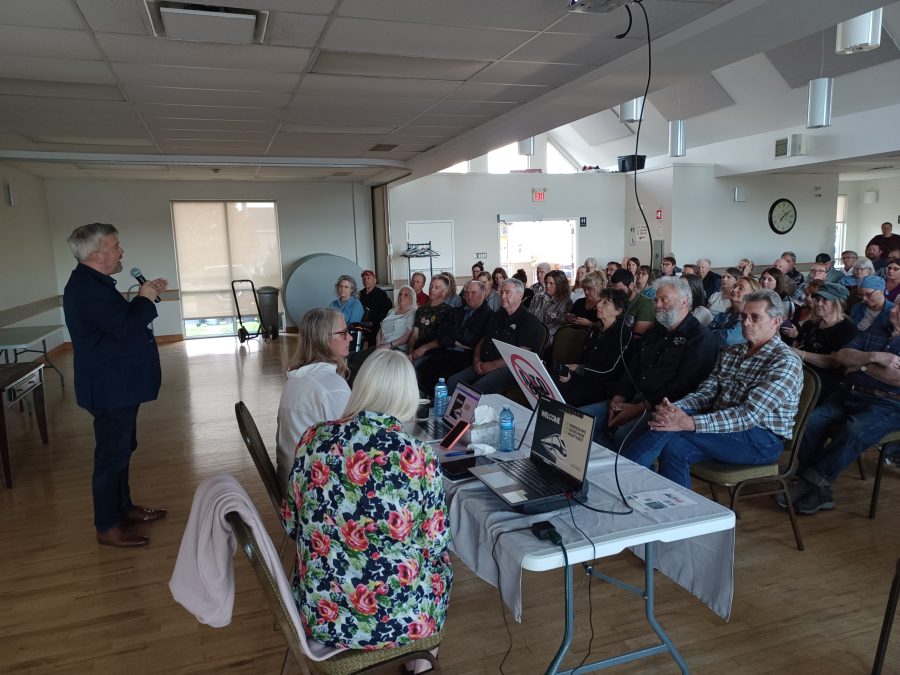

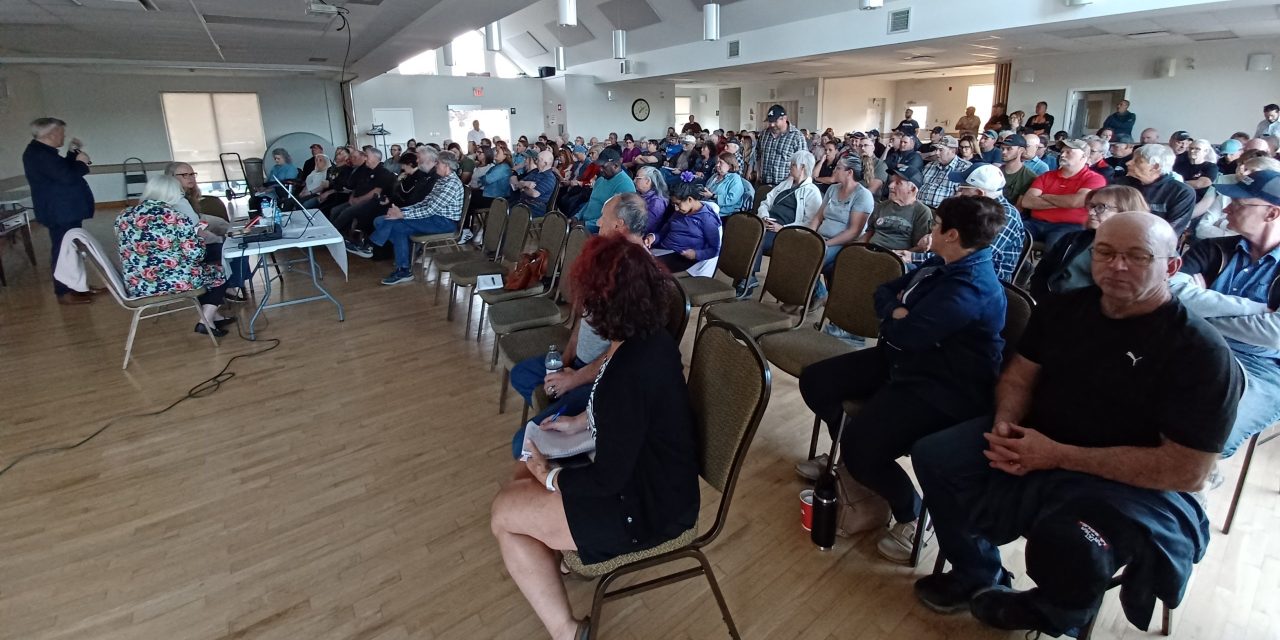
Area property owners concerned that their land could be expropriated for the proposed Alto high-speed rail line gathered in Chute-à-Blondeau on Wednesday, May 20 to learn about trespassing and expropriation laws.
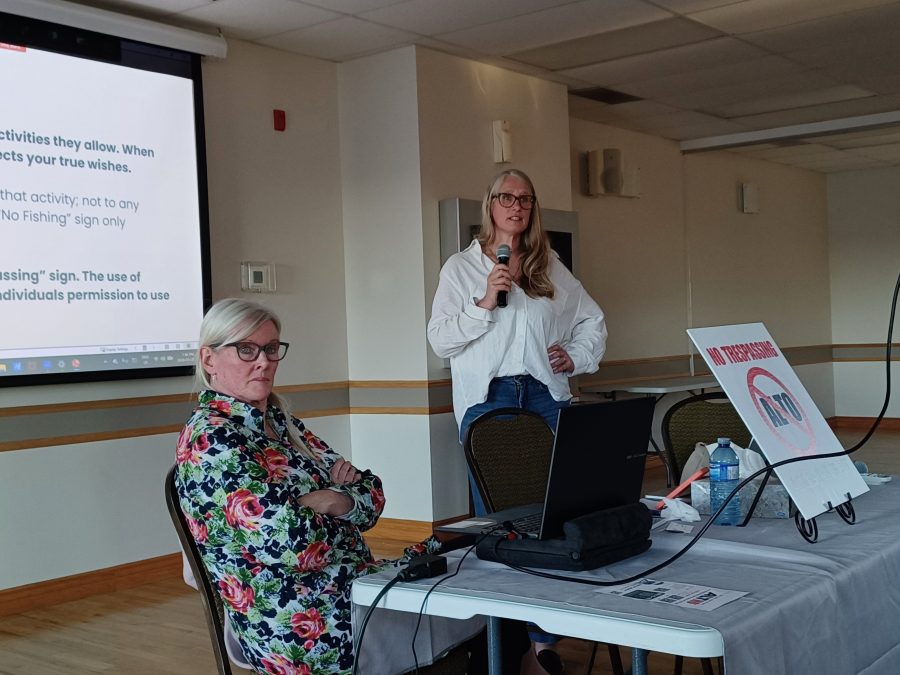
About 200 people attended the meeting, presented by local Alt-no representatives Kathleen O’Connell-Renaud and Kristin Muller.
Mirabel city Councillor Robert Charron also attended the meeting and encouraged everyone to attend a protest against Alto taking place on Parliament Hill in Ottawa on Wednesday, June 10.
“We’re going to make a lot of noise!” he said.
Muller said the consultant’s report following the initial public consultation process on Alto will be published in June. The crown corporation began sending voluntary access requests to property owners in March. The final route of the Ottawa to Montréal line is expected to be announced in the fall of 2026. A second public consultation is to take place after the route is announced and expropriations, if necessary, will also begin. The business case for the project is to be published by the end of 2026.
Property owners are not legally required to allow Alto personnel onto their property to perform studies. All access is voluntary. Property owners who are unsure about their rights and responsibilities involving trespassing are urged to consult with the Ontario Provincial Police (OPP).
Under the Trespass to Property Act in Ontario, landowners must post signage indicating entry is prohibited and what other activities are prohibited on the land.
Muller said that Alto is also allowed to use drones and aircrafts for planning studies and has authorization from Transport Canada to do this.
Some property owners have received phone calls from Alto expressing interest in obtaining access to their land for study purposes. Residents expressed concern about how those telephone numbers were obtained. East Hawkesbury Chief Administrative Officer Luc Lalonde was in attendance and assured audience members that the municipality did not give out telephone numbers of property owners.
“No information was given from the township to Alto,” Lalonde said.
An audience member from Mirabel noted that most people who attended Alto open houses in January provided their telephone numbers to Alto when they completed an attendance form at each event.
O’Connell-Renaud said it does not make sense that the business case for the project is to be presented after expropriations begin.
Alto has continually emphasized that expropriation is not the immediate option it wants to use in securing property for the rail line. The goal is instead to negotiate purchase and sale agreements with each affected landowner.
Representatives of Davies Howe, a Toronto law firm specializing in expropriation law, and of property appraisal firm Robson Associates appeared by video at the meeting.
“Once a decision has been made to expropriate a property, there is nothing you can do to stop it,” said Ava Kanner of Davies Howe.
She acknowledged the prospect of expropriation is difficult for property owners whose land has been in their families for many generations.
Samantha Lampert of Davies Howe explained the context under which landowners are allowed compensation under the federal Expropriation Act, not only for the loss of their property, but for damage to any remaining property, moving and relocation losses, and losses to their businesses.
The Expropriation Act was recently changed to expedite the process of acquiring land for the Alto project. Public hearings for objections have been eliminated, sales of properties to be expropriated could be nullified, and prohibitions on improvements to properties may also be issued.
Appraiser Ward Lansink said the role of a property appraiser is to assist landowners by providing an independent opinion of a property’s market value, and to advise on negotiations, and if necessary, a litigation strategy.
Muller urged potentially affected landowners to not give up and suggested they keep contacting elected officials and share their concerns.
Photos: James Morgan