

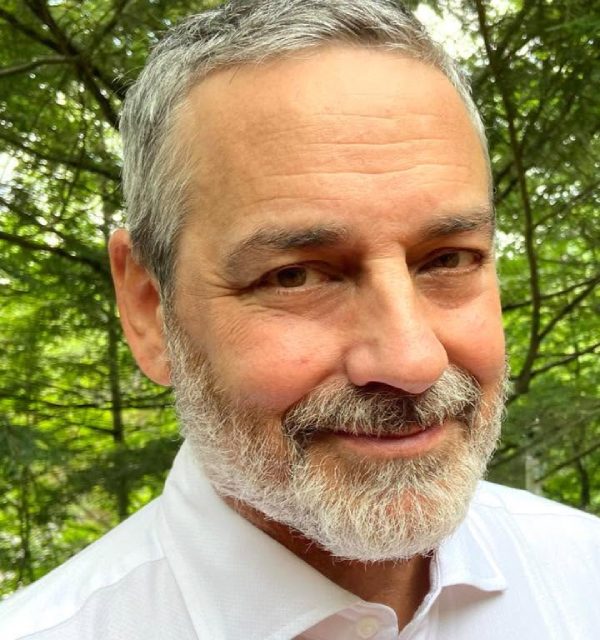
Parti Québécois (PQ) candidate Pierre Nantel says healthcare access, Autoroute 50 safety, cellular service, opposition to the proposed Alto high-speed rail project, and support for local agriculture and culture would be among his priorities if elected as Argenteuil’s Member of the National Assembly (MNA).
Nantel, a former New Democratic Party (NDP) Member of Parliament (MP) who has lived in Argenteuil for about two years, outlined his priorities during an interview with The Review ahead of the October 5 Québec provincial election. The PQ officially announced him as its Argenteuil candidate in July 2026.
Healthcare access
Nantel said one of the most pressing issues facing Argenteuil is what he described as a pattern of the region being overlooked when governments invest in public services, including healthcare. He said Argenteuil’s location at the eastern end of the territory can leave it caught between larger regions when decisions about services and investments are made.
“I think the first thing is to recognize the fact that Argenteuil is, I would say, kind of neglected,” Nantel said.
Nantel said he has repeatedly heard from residents that the region is at the “end of the line” when investments are made in hospitals and other public services. While he acknowledged having little personal experience with the healthcare system, Nantel said residents have shaped his perspective on the issue.
“I’ve never been sick,” Nantel said. “Luckily, I can knock on wood here. And my kids are in their thirties and grown. But all I hear is that Argenteuil is always at the end of the line for investments in the hospital or in schools.”
Nantel said his approach as an MNA would be to give Argenteuil a stronger voice within the provincial government and advocate with colleagues and the responsible minister to ensure the region’s needs are heard.
“The main thing is affirming it and making sure that you can lobby through your colleagues, through government, to the minister, to make sure that the area of Argenteuil is well heard,” Nantel said.
Nantel said healthcare cannot be considered separately from what he sees as the region’s broader lack of attention from the provincial government.
“The biggest symbol that it’s not is the 50,” he said, referring to Autoroute 50 as an example of what he considers a lack of attention to Argenteuil.
Autoroute 50
Nantel described Autoroute 50 as an “emergency” for the region and said completing improvements to the highway should take precedence over other large transportation projects. He cited the number of deaths and collisions on the highway and said the route also creates challenges for emergency responders.
Nantel said repeated exposure to serious and often traumatic collisions can take a toll on firefighters and other first responders who are called to the highway.
He said the frequency and severity of incidents on the 50 make the highway an issue that requires greater attention from governments. More broadly, Nantel said that if elected, he would advocate for Argenteuil’s needs with government colleagues and ministers, arguing that the region needs to be better heard in Québec City.
Cellular service and emergency communications
Nantel said poor cellular coverage can create problems for emergency services, particularly when conventional infrastructure is damaged during an emergency, such as the tornado that struck Harrington in July 2026.
“If the physical lines are down, there’s no signal,” he said. “You get nothing.”
Nantel said he believes additional cellular towers are being delayed by infrastructure issues involving electricity connections. He argued that improving cellular coverage should be treated as an emergency priority alongside healthcare and Autoroute 50.
Alto and existing rail infrastructure
Nantel is opposed to the proposed Alto high-speed rail project. His concerns include the potential loss of agricultural land, environmental implications, and the lack of a station in Argenteuil.
Nantel referred to a recent meeting with farmers and residents in Rigaud and said the prospect of another major transportation project requiring agricultural land brought back memories of the expropriation process associated with Mirabel.
He also raised questions about the potential environmental effects of chemicals used to de-ice railway tracks.
“To me, it’s a bad project, and it’s our money, no matter what they say,” Nantel said.
Nantel questioned what Alto would provide to Argenteuil if there is no station in the riding.
“It’s going to completely bypass Argenteuil,” he said. “It’s just going to go right through.”
Instead, Nantel said existing railway infrastructure should be used to provide more frequent service to communities in the region, giving residents a more direct transportation benefit.
He questioned whether adding stops to a high-speed system would undermine the purpose of the project, while arguing that more frequent conventional rail service would better serve residents.
Agriculture and trade tensions
Nantel said he does not consider himself an expert on the economic effects of Canada-United States tariffs, but is concerned about the impact of trade tensions on farmers in Argenteuil.
He said farmers he has spoken with feel neglected and uncertain about the future.
“We need to support them. We need to be less dependent on imports. We need to defend our way of doing farming,” he said.
Nantel said locally produced agricultural products should be valued as part of Argenteuil’s identity, comparing the region with areas that have built tourism and community identity around agriculture.
Culture, media, and French language
Nantel also emphasized protecting Québec’s cultural industries and local media as people increasingly consume media through digital platforms.
Nantel pointed to music streaming services such as Spotify and Apple Music, arguing that Canadian and Québec artists can have difficulty gaining exposure on those platforms.
“It’s normal that we had to fight,” he said, arguing that regulations supporting local cultural content need to adapt to changing technology. He also connected cultural policy to local journalism.
“The information about our local stuff, through local journalism, is so important to democracy,” Nantel said.
He argued that local journalism is particularly important as larger American media companies and digital platforms play a greater role in how people consume news and information.
Nantel said he supports protecting Québec’s French language and culture while recognizing Argenteuil’s English-speaking population. He said he was pleased that Élections Québec is providing information in both languages and argued that protecting Québec’s identity should include English-speaking residents.
“The protection of the nation of Québec also includes our English camarades,” he said.
Independence referendum
Nantel was also asked about the possibility of another Québec independence referendum. He said he had previously worked within the federalist side of the NDP but now believes Québec would be better served by becoming independent.
“I’d rather make a good divorce, a good separation, and say, we’re still friends, we can still use the pool,” Nantel said.
He described independence as a separation rather than a rejection of cooperation with Canada, saying Québec and Canada could continue to work together.
Local focus
Nantel said his relatively recent arrival in Argenteuil has given him a different perspective on the region’s longstanding concerns, as he has not spent decades hearing residents raise the same issues without seeing them resolved.
At the Avoca Community Centre, Nantel recalled meeting a resident who told him they would not vote for him.
“I said, I know, I know, but still, we need to talk, because I may represent you,” Nantel said.
“We all share the same issues, even though we may not speak the same language,” he added.
