

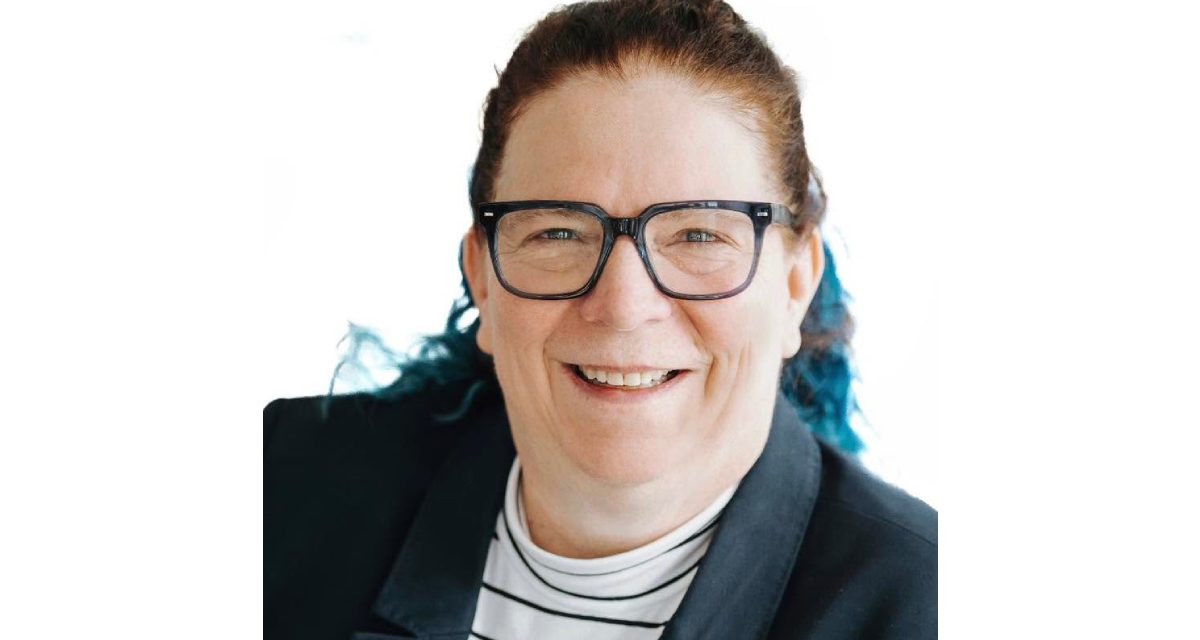
Argenteuil independent candidate Brigitte Roy says her campaign focuses on giving residents more direct representation, with healthcare, road safety, infrastructure, and economic development among the issues she would prioritize if elected.
In an interview with The Review ahead of the Monday, October 5, Québec election, Roy outlined her positions on several issues affecting the riding, while emphasizing that her platform is built around representing Argenteuil rather than following a party line.
Healthcare
Roy identified access to local healthcare as the most urgent issue facing Argenteuil.
She said healthcare in Argenteuil extends beyond the emergency department at Hôpital de Lachute, pointing to access to doctors and nurse practitioners, home care, psychosocial services, care for seniors, and services in rural municipalities.
As a Member of the National Assembly (MNA), Roy said she would support maintaining and developing services at Hôpital de Lachute, seek more nurse practitioners and multidisciplinary teams, and push for additional mobile services in rural municipalities, and home care. She also wants the new centre local de services communautaires (CLSC) in Grenville to become a genuine service hub for the western part of the riding.
Roy said she would seek Argenteuil-specific data on wait times for medical appointments, diagnostic imaging, specialists, and home care.
“The best indicator of a healthcare system,” she said, “is the actual time required to receive the service.”
Alto high-speed rail
The proposed Alto high-speed rail project is another major issue raised by residents in the riding.
Roy said the question for Argenteuil is not simply whether high-speed rail is desirable nationally, but under what conditions the project could proceed without imposing a disproportionate share of its impacts on the region. She pointed to the preliminary corridor, which she said affects Grenville, Grenville-sur-la-Rouge, Brownsburg-Chatham, Saint-André-d’Argenteuil, Lachute, and Saint-Placide.
Potential impacts include property owners, agricultural land, the environment, roads, infrastructure, and municipal planning, she said.
Roy noted that the final route has not yet been determined and said the ongoing studies and surveys are intended to inform the planning process. She said her position is neither unconditional support for the project nor opposition to the development of modern rail.
“I am for a project that respects the communities it crosses,” she said.
Roy said she would use provincial powers involving the environment, agricultural land, infrastructure, and approvals to advocate for Argenteuil, while acknowledging that the federal government remains responsible for the project and route.
If the project proceeds, she said she would focus on protecting affected property owners, transparent agricultural and environmental assessments, infrastructure impacts, and ongoing consultation. She also said Argenteuil should receive economic benefits if it contributes to a national project.
French-language policies
On Québec’s language policies, Roy said French is Québec’s official and common language and that protecting it remains important. At the same time, she said Argenteuil has a distinct linguistic history, with francophone and anglophone communities living together for generations.
Roy said she would examine whether some provisions of Bill 96 could be applied with greater flexibility or exceptions in certain communities, while maintaining French’s status as Québec’s official and common language.
She said the effectiveness of language policies should be measured by whether they promote the vitality, learning, and use of French while remaining reasonably applicable to residents, small businesses, and institutions.
Autoroute 50
Roy said immediate measures to prevent head-on collisions should continue, while arguing that temporary safety improvements should not indefinitely delay the eventual widening of remaining two-lane sections.
The Québec government has announced more than $70 million in 2026 and 2027 for safety work on the highway. A median barrier and resurfacing are underway on a 14-kilometre section between Grenville-sur-la-Rouge and Brownsburg-Chatham, with completion expected by the end of 2026. A median barrier between Lachute and Mirabel is planned for 2027.
Roy said she would seek a public timeline from Transports Québec identifying what will be built, where, when, and at what cost.
Trade and local businesses
Roy pointed to the effects of United States tariffs on local businesses in Argenteuil.
In May, OAM Aluminium in Saint-André-d’Argenteuil received a $650,000 federal contribution through the Regional Tariff Response Initiative. The federal government said the funding was intended to help the company acquire equipment, diversify its markets, and consolidate more than 60 jobs in the region.
Roy said the riding’s economy, with its small and medium-sized enterprises (SMEs), manufacturers, construction businesses, agricultural operations, and self-employed workers, could face higher costs, delayed investments, and pressure to find new markets during periods of trade uncertainty.
Her focus would be on strengthening businesses already operating in the region. She said she would work to identify SMEs with the potential to expand, automate, export, or hire, and help them access programs through Investissement Québec and provincial ministries.
Roy said economic development should not depend on attracting one major project, noting that the growth of a local company from 10 to 20 employees can have a significant impact in a small community.
Independence referendum
On the possibility of another referendum on Québec independence, Roy did not state her personal position on independence or how she would vote if a referendum were held.
Instead, Roy said two questions should be separated: whether a referendum would be held and how individual voters would ultimately vote.
Her platform, she said, is focused on issues over which a provincial MNA can act directly, including healthcare, infrastructure, housing, the economy, rural municipalities, and public services.
As an independent, Roy said she would evaluate proposals individually rather than follow a party line, explain important votes publicly, and support proposals based on their merits regardless of which party introduces them.
For now, she said her focus remains on issues directly affecting the region and on concrete solutions that can be pursued immediately.
Approaching representation
Beyond individual issues, Roy said she would make accountability a central part of her work as an MNA.
Argenteuil has 17 municipalities with different needs, she noted, and said the priorities of Lachute are not necessarily the same as those of Barkmere, Saint-Placide, Harrington, or Wentworth-Nord. She proposed publishing a quarterly dashboard tracking major Argenteuil files and meeting regularly with all 17 municipalities.
Government requests would be publicly tracked as requested, under review, approved, rejected, or completed, she said. An annual report would also identify commitments that had been completed, were underway, delayed, or not completed.
Roy said an MNA’s role is not to replace mayors or run organizations such as Santé Québec, Hydro-Québec, Alto, or Transports Québec. Instead, she said, the job is to determine who has the authority to address a problem, open the appropriate channels, obtain answers, negotiate, and make those answers public.
“I want the work of an Argenteuil MNA to be measured less by the number of announcements I make than by the number of files I actually succeed in moving forward,” Roy said.
