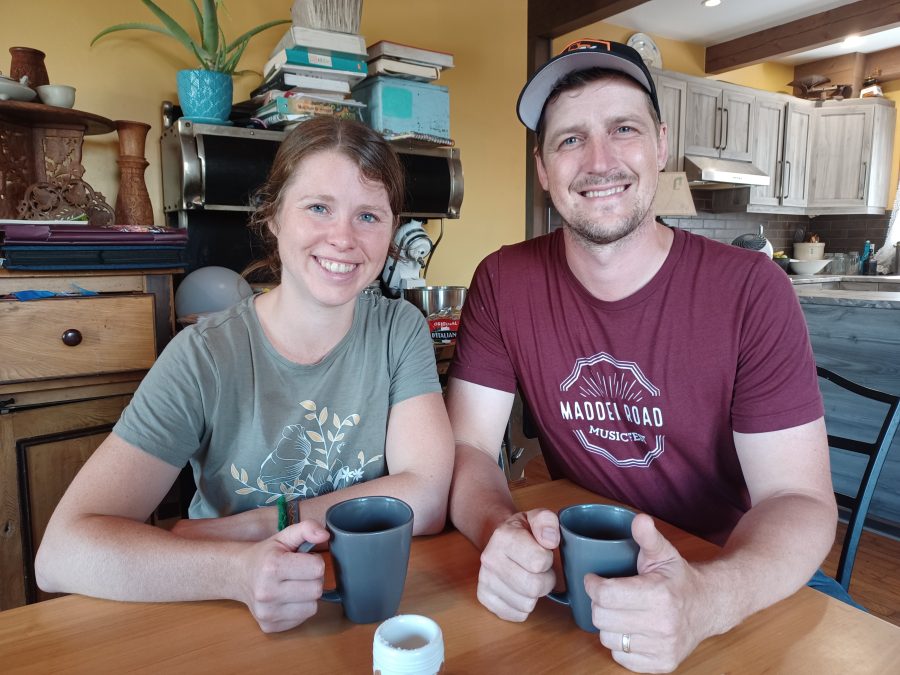

Property ownership is a barrier to Renaud Gagné and Anna-Marie Heron’s hopes of enlarging their fledgling Lindisfarn chicken farm in Glen Robertson.
Gagné was the co-founder of a website design and advertising agency. The couple and their young family previously lived in Rigaud. The emergence of Artificial Intelligence (AI) led Gagné to conclude that his trade was likely to be decimated by new technology, so he began to consider a career change. The couple were frequent visitors and customers at Danyca and Adam Lindeman’s farm in Glen Robertson, and they were interested in becoming chicken farmers. In March 2026, they made the move to the farm where they rent a five-bedroom house and raise up to 300 broiler hens on 80 acres of land they rent from the Lindeman’s. Gagné and Herron wanted a place to embark upon a new life farming and for their family to grow.
One of the reasons they relocated to Ontario is the Chicken Farmers of Ontario (CFO), which operates the chicken supply management system in the province, and offers the Artisanal Chicken Program, designed for farmers wanting to grow 600 to 3,000 chickens annually for select target markets such as local retail outlets, restaurants and farmers’ markets. The program does not sell production quota like with the conventional system, but it instead provides farmers with a one-year licence to raise chickens under the rules of the artisan program. However, Gagné and Heron are not eligible to participate in the Artisan Chicken Program because they do not own the land their farm is located on. Only farmers who own their land are permitted to participate.
“If your name is not on the deed, there’s nothing we can do for you. That’s the policy that was communicated to us,” Gagné said.
Gagné and Heron decided to appeal the decision to the CFO Board. However, that request was denied on August 28.
“They have declined to schedule one at this point, saying our request is ‘premature’ because we have not yet formally applied to the Artisanal Chicken Program,” Gagné said.
He added that the CFO has now confirmed in writing that the land-ownership criterion has been part of the program’s application process since 2015 and that the licence holder has generally been required to own the land.
Gagné said it has been difficult to identify exactly when and where that rule was made.
“What is still missing is the answer to the question we have been asking all along: where is that requirement actually established?” he said.
Gagné said the requirement does not appear in the Artisanal Chicken Policy and alleged the CFO still has not identified the specific Board policy, direction, order or other instrument that created the requirement.
“Their own Community Programs Manager had already told us in writing that the Board had directed staff to refuse applications where the applicant does not own the land, so the issue now is becoming less about whether the rule exists and more about where it comes from and how it was formally established,” Gagné said.
He and Heron now plan to submit a formal application to the CFO for participation in the Artisanal Chicken Program and hopefully force the issue to a formal decision.
Gagné said the situation is frustrating, especially when there are already so many financial and administrative challenges for new farmers to become established. He referred to Bill 109, which is currently before the Ontario Legislature. If adopted, it would aim to make it easier for farmers to set up operations in the province. Gagné has also communicated with the Ontario Federation of Agriculture (OFA) and the National Farmers Union (NFU) about his situation.
If they are unable to participate in the CFO’s Artisanal Chicken Program, Gagné and Heron plan to continue raising chickens within the limit of a flock of 300 and will add other products from their farm to sell to customers. All chicken orders for 2026 were presold ahead of time.
“Right now, we’re looking at other means of supporting the farm,” Gagné said.
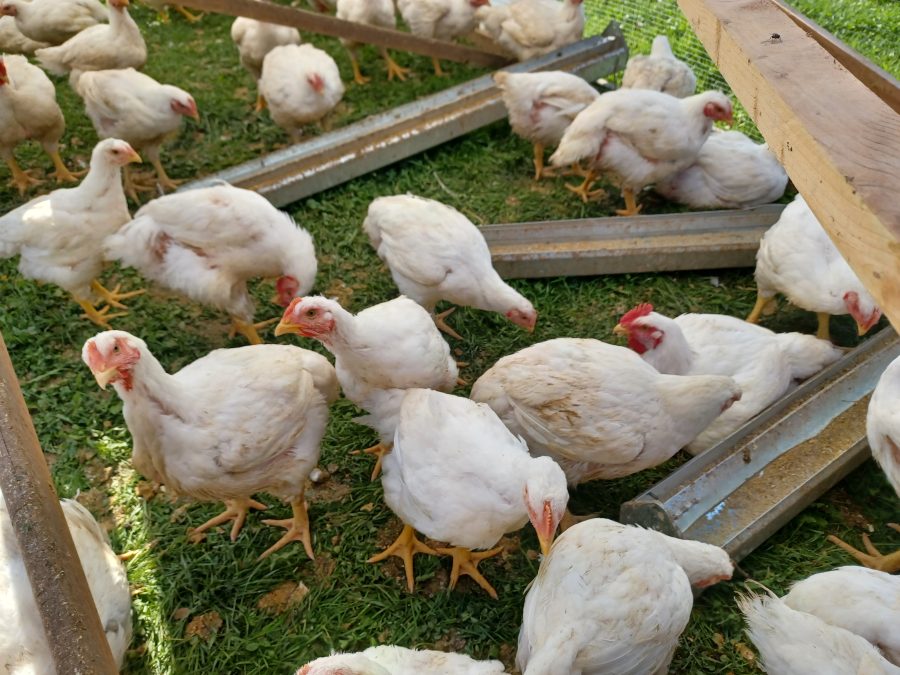
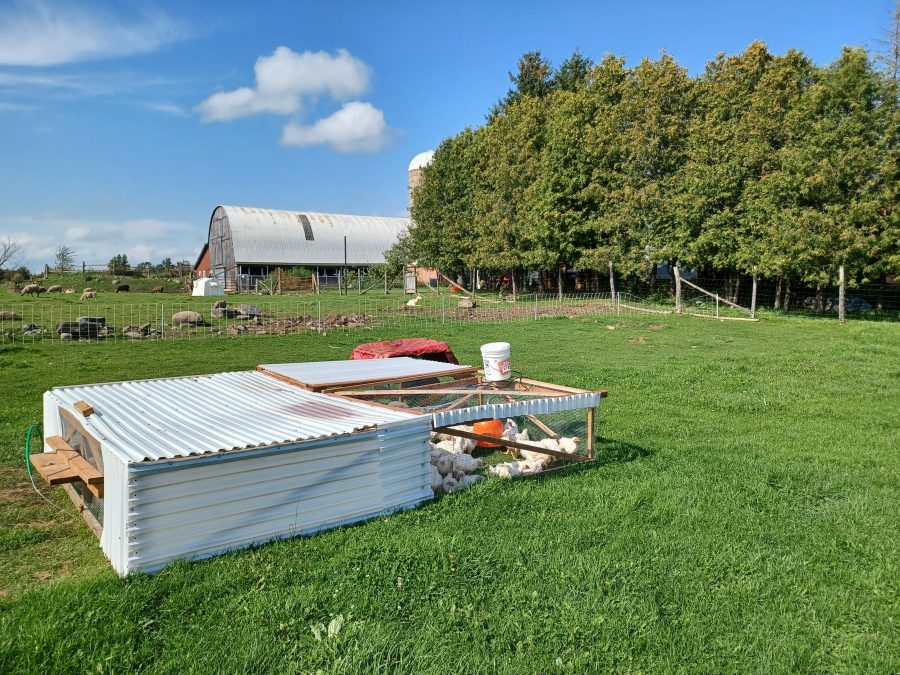
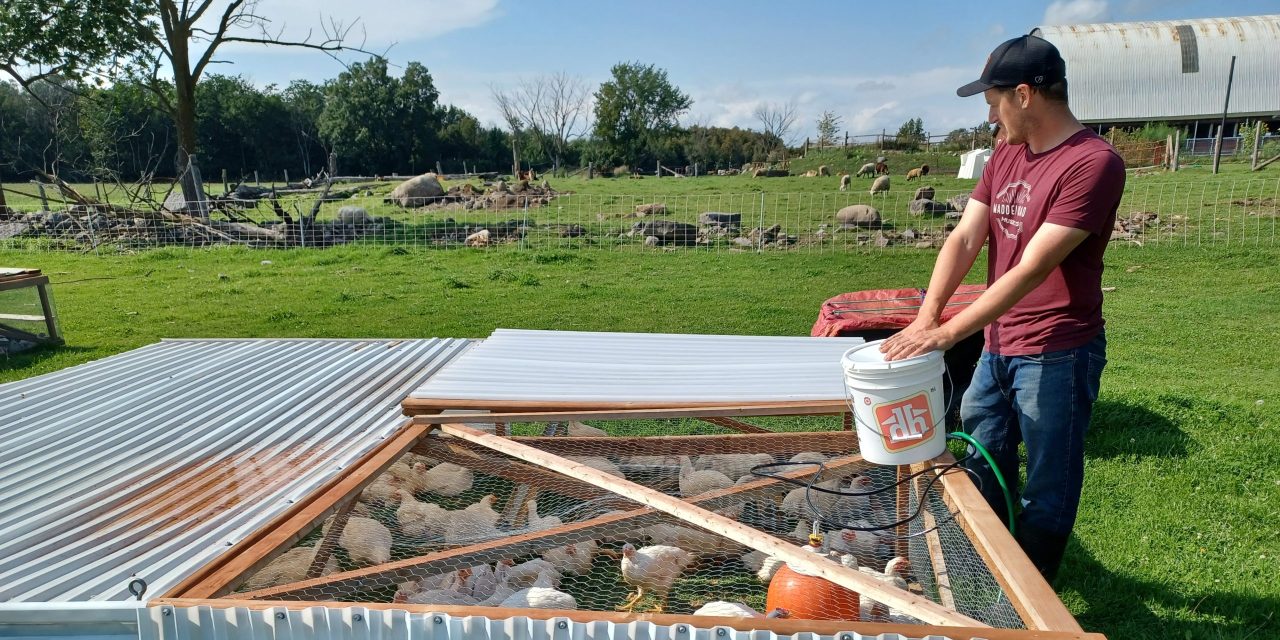
Those possibilities include garden produce and hot sauce made from ingredients grown on the farm. Organic and regenerative processes are used on the farm, although the site is not yet certified. As an example, the chickens are always in outdoor coops, and the location of them is regularly changed.
“They’re raised outside with a fresh salad bar everyday,” Gagné said.
The chickens largely eat a diet of grass and insects.
Gagné explained how chickens are a relatively easy commodity for new farmers to raise. After about 60 days, the birds are ready to be butchered.
“As a startup farmer, you’re able to have your money quickly,” he said.
Photos: James Morgan