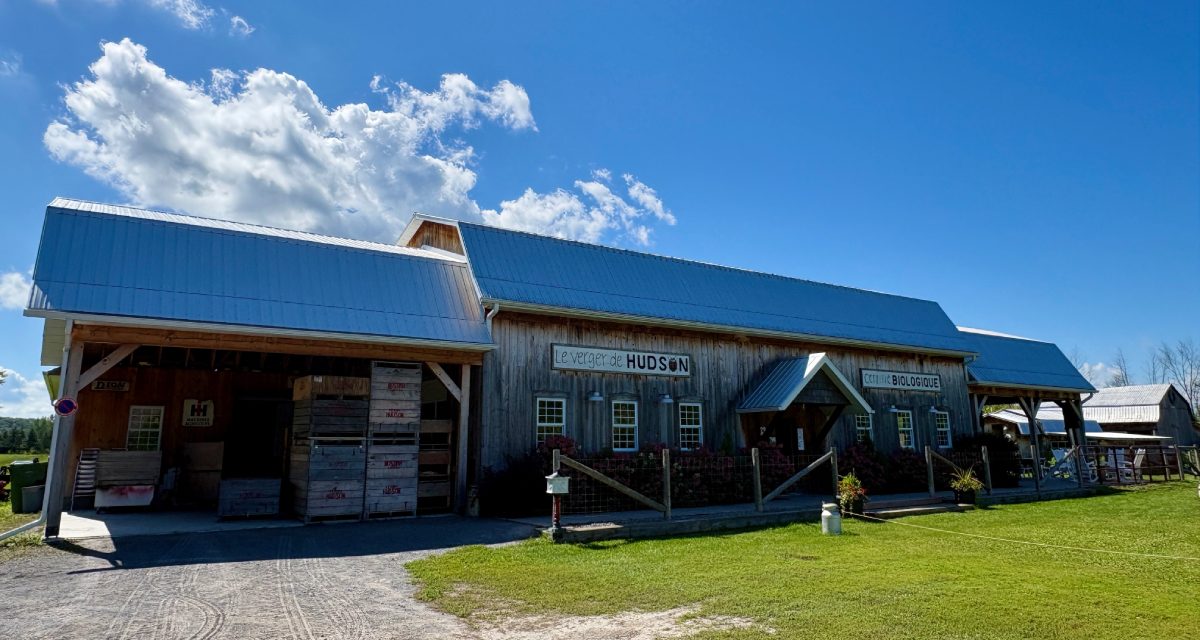
When Anick Joanisse and her husband, Éric Léger, planted their first apple trees in 2003, they started an orchard from the ground up with a vision of producing apples organically.
Neither came from a farming family. Léger had always been drawn to apple trees, inspired in part by his grandfather’s few trees at his country property, while Joanisse grew up around tourism through her family’s business.
The two experiences eventually came together in what would become Le Verger de Hudson, located at 839 Rue Main.
The couple had previously made an offer on an orchard in Notre-Dame-de-l’Île-Perrot that ultimately did not work out, but they spent a season working there. The experience confirmed that running an orchard was what they wanted.
Starting their own orchard allowed them to select varieties suited to organic production rather than attempting to convert an existing conventional orchard.
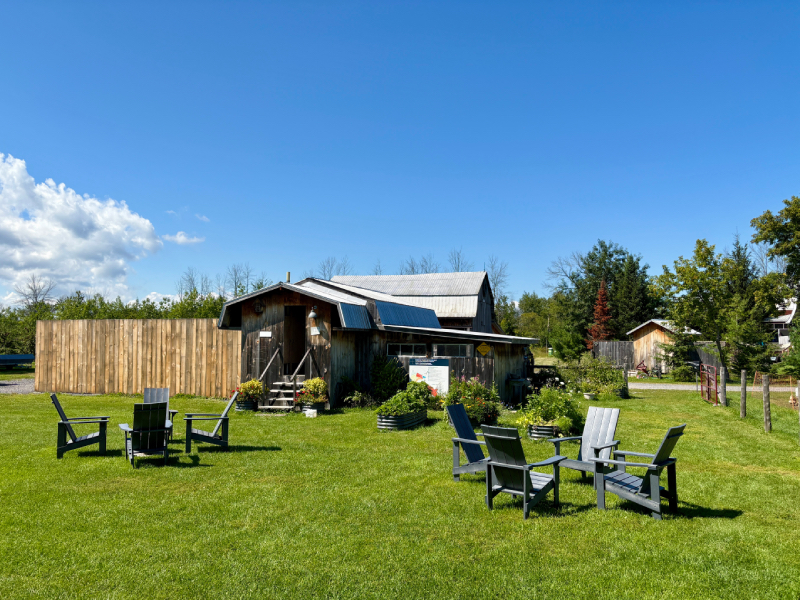
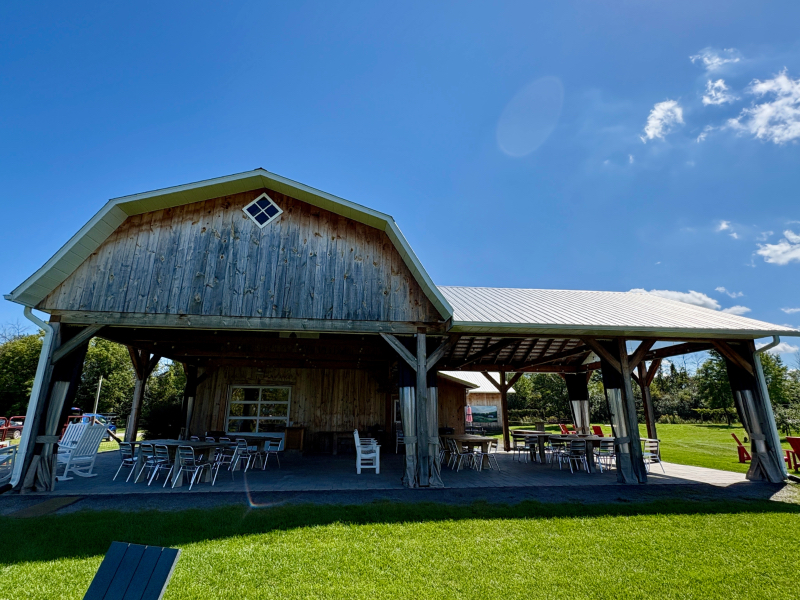
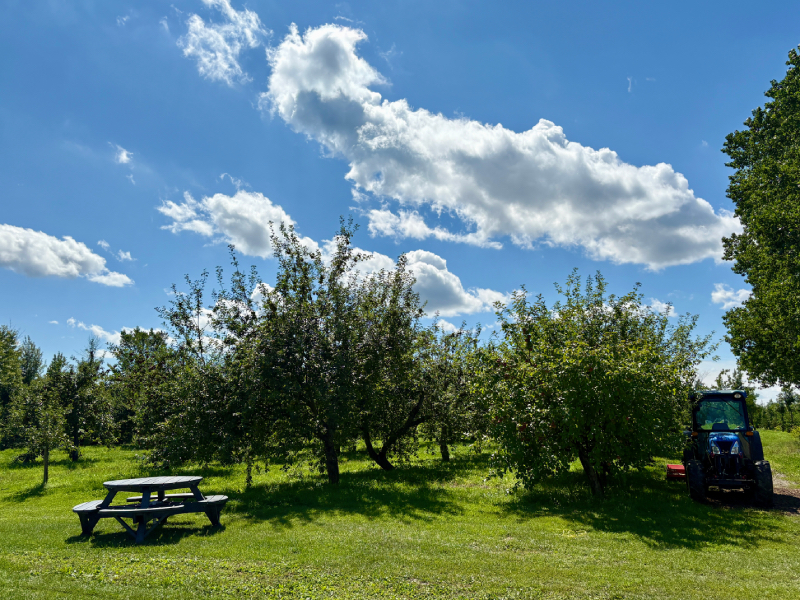
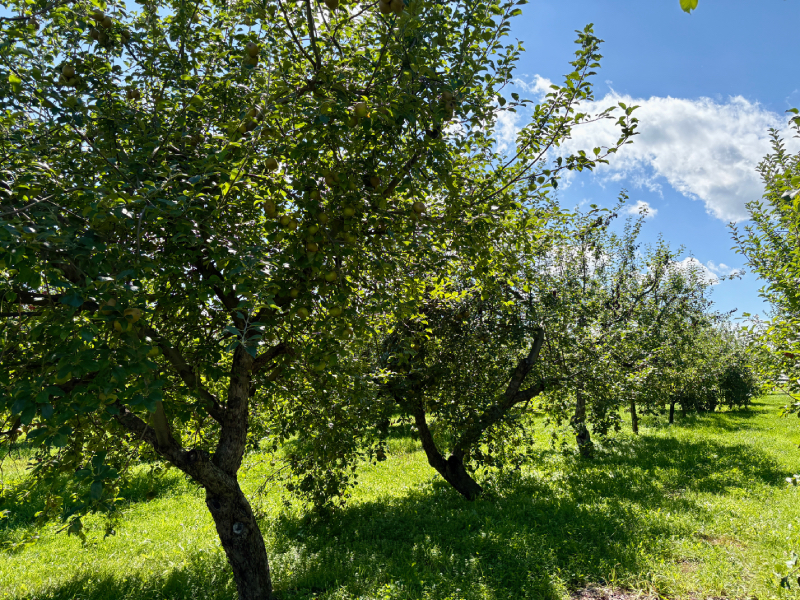
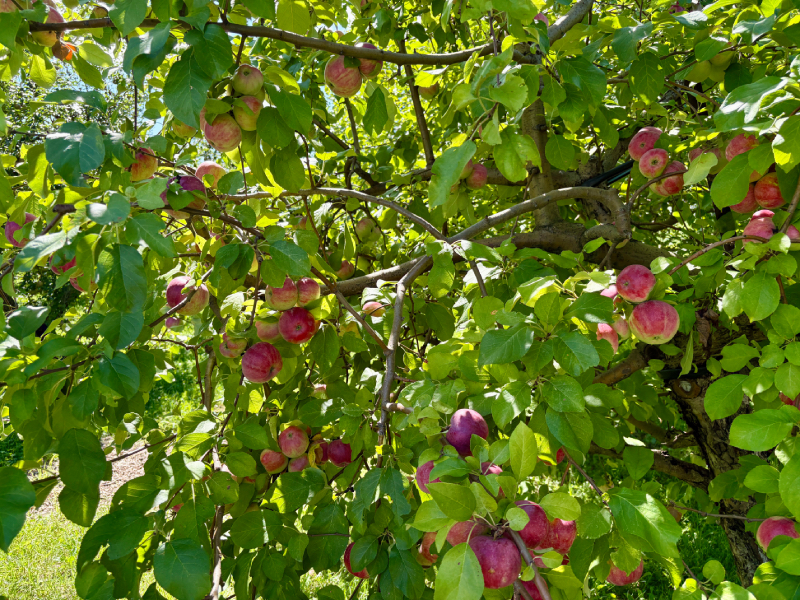
Today, Le Verger de Hudson encompasses approximately 45 acres of land, with about 21.2 acres under cultivation and more than 20 varieties of apples, including Cortland, Empire, Ginger Gold, Liberté, and Spartan. Some are little-known varieties, while others are newer or were developed in Québec.
A year-round job
For visitors who arrive during apple-picking season, it can be easy to overlook how much work happens before the first apples are picked. At Le Verger de Hudson, preparations begin months in advance.
February and March are devoted to pruning, which Joanisse described as “absolutely 100 per cent crucial” to the orchard.
Then comes May, one of the busiest periods of the year. The trees are in blossom, but the flowers also leave them vulnerable to disease and insects. The orchard does not use chemical insecticides or pesticides. Instead, the operation relies on mineral-based products such as clay and sulphur.
Clay, for example, is rehydrated and sprayed onto the trees to create a physical barrier between the trees and rain or insects.
May is also planting season. The orchard adds between 200 and 300 trees each year, either replacing trees that did not survive or introducing new varieties.
July provides something of a reprieve, although drought becomes a concern. By August, the work picks up again, including extensive mowing around the trees.
The orchard does not use Roundup underneath the trees, meaning the mowing has to be done around individual trees.
“It’s a complete process,” Joanisse said. “It’s a daily process, pretty much seven days a week.”
Drought a growing concern
Weather has become another challenge for the orchard, particularly drought.
Joanisse said the past several years have brought some “scary moments,” particularly when the orchard’s younger trees needed water.
“Younger trees are definitely more vulnerable,” she said.
To provide a backup water source, the owners dug a basin over the past two years measuring approximately 100 feet by 30 feet and six feet deep. It collects snow and rainwater and can be pumped into the orchard when necessary.
This year, the basin was only needed once, as the orchard received more rainfall. The previous four years, however, had been more concerning.
Joanisse estimates drought can result in the loss of roughly 10 per cent of the orchard’s younger trees.
“It was enough for us to react and do something about it,” she said.
Labour remains a challenge
Drought is not the only challenge facing organic apple growers. For Joanisse, finding enough labour is another major challenge.
Organic production relies heavily on manual labour, creating a significant need for workers throughout the growing and harvest seasons.
The orchard has considered bringing in seasonal migrant workers, but has decided to continue focusing on local labour for now.
Joanisse sees value in employing young people from the surrounding community and passing agricultural knowledge on to them.
“If we’re not teaching young ones who come to work for us how to pick, what to do in an organic orchard, if we’re not passing on that knowledge, what’s going to happen?” she said.
The timing of the orchard’s busiest season makes that particularly difficult. Many of the young people who work during the summer return to school just as September, the orchard’s high season, arrives.
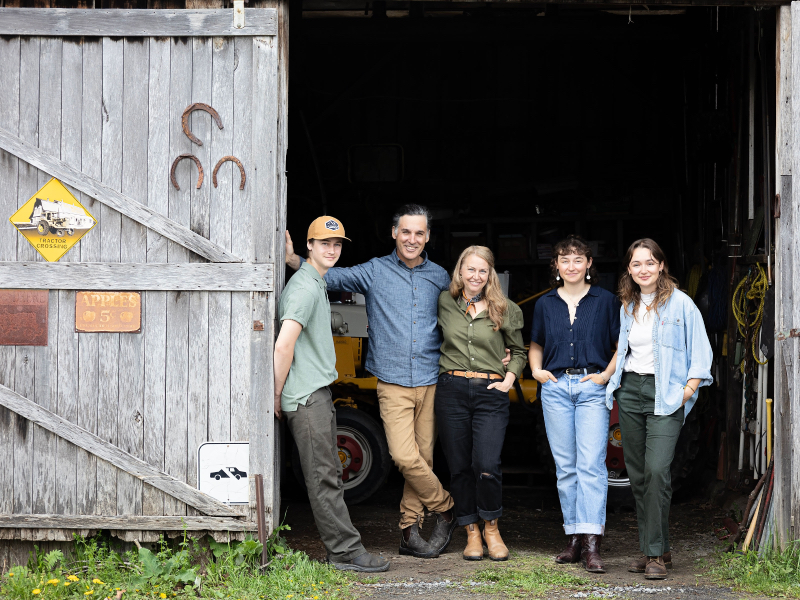
For now, the family itself provides some additional labour. Their daughter Beatrice, who works in British Columbia, returns for part of the season, another daughter studying at university in Sherbrooke comes home on weekends, and their 16-year-old son helps as well.
Looking beyond the honeybees
With approximately 21.2 acres already under cultivation, Joanisse said the focus is no longer on expanding the orchard’s footprint. Instead, the goal is to make the existing operation more productive and less reliant on external forces.
One area of focus is biodiversity.
The orchard has approximately 20 beehives, which can remain on the property because the operation does not use chemical insecticides. But the owners do not want to rely exclusively on honeybees for pollination.
A poor winter this year meant the colonies had to be started anew in the spring. With pollination needed only weeks later, the new colonies could not provide maximum pollination.
The solution is to encourage more natural pollinators.
Over the winter, Léger cleared sections of the orchard to make room for flowering meadows that can support indigenous pollinators. The idea is to diversify the ecosystem rather than put all of the orchard’s pollination needs on honeybees.
“You just don’t want to have all your eggs in the same basket,” Joanisse said.
The orchard is also home to 50 laying hens. The chickens are moved around the property, where they help clean up areas, fertilize the land, and eat insects.
The owners are considering adding another 49 hens, bringing the total to 99, the maximum they are permitted to keep.
After two decades spent building the business’ infrastructure, including buildings, refrigeration, and other systems, Joanisse said the focus has shifted toward smaller projects that improve the operation.
“We’re always trying to make the orchard better, more productive, and less reliant on external forces,” she said.
Agriculture behind the visitor experience
For Joanisse, the agricultural operation and the visitor experience are closely connected. She said Le Verger de Hudson Bio is quite different from larger commercial orchards.
The goal is to keep things relatively simple while giving visitors a chance to enjoy the property without overwhelming it. That is part of the reason the orchard uses reservations on weekends, helping control the number of visitors at any given time and ensuring people have space to picnic and enjoy the property.
A bistro menu was also introduced last year, offering lunch from Thursday through Sunday, with food paired with the orchard’s ciders.
Unlike some larger orchards, there are no tractor rides. Joanisse said there simply is no need for them on a relatively small property, and avoiding them helps maintain the peaceful atmosphere the owners want.
The approach reflects a broader philosophy behind the business: keep the operation manageable, diversify where possible, and work with the land rather than against it.
For Joanisse, one of the biggest misconceptions about running an orchard is that the fruit simply grows on the trees without much intervention.
“Apples are very hard to grow organically, especially,” she said.
Taking care of the trees, soil, and land is what makes the harvest possible. Twenty-three years after Joanisse and Léger planted their first apple trees, that work continues every day.
For more information about Le Verger de Hudson Bio, go to https://vergerbiologique.ca/, or https://www.facebook.com/LeVergerDeHudson.
Photos by Philip Oddi: