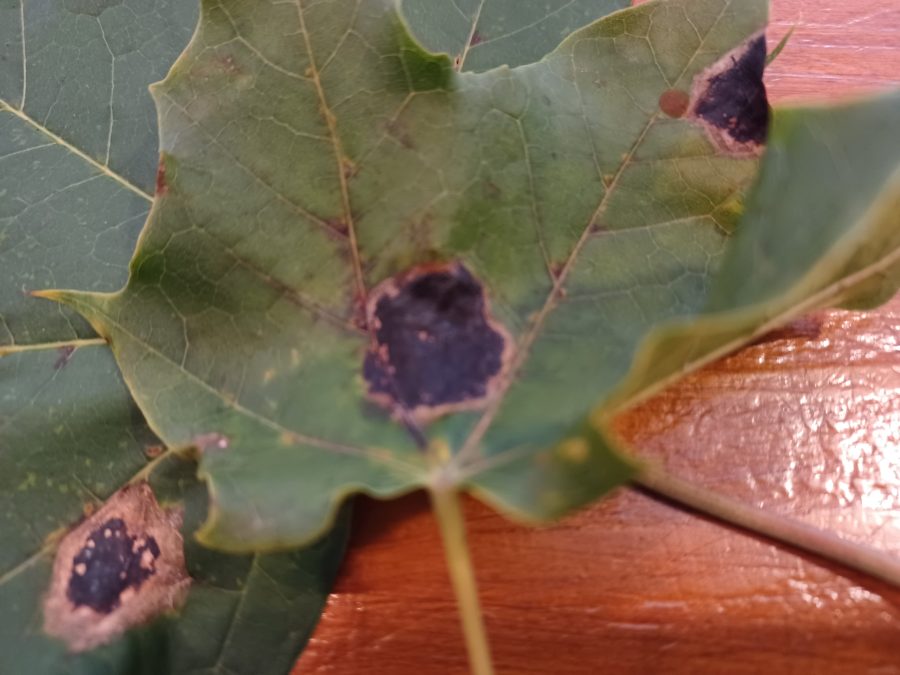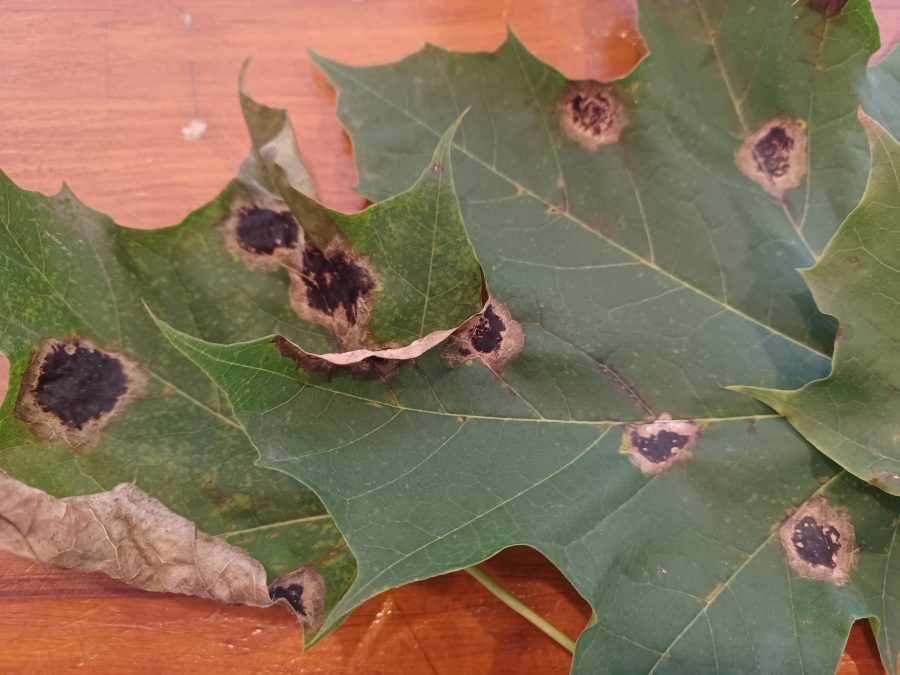
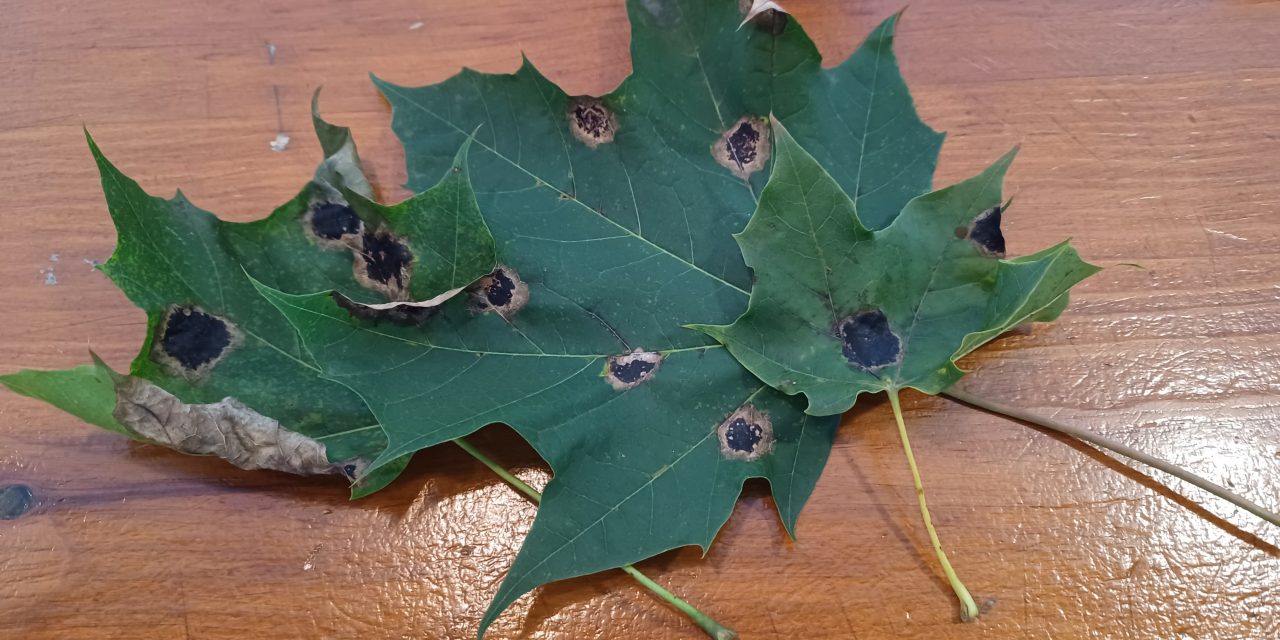
Area residents who have noticed black spots on the green leaves of maple trees on their properties should not be alarmed.
On Friday, September 18, a Vankleek Hill resident visited The Review office with several leaves from sugar maples on her property that had large, black spots on them. The leaves were still otherwise green and had not yet begun to change colour and die as usually happens this time of year. The resident said the black spots have been showing up on green maple leaves throughout Vankleek Hill and the surrounding area.
The Review contacted South Nation Conservation (SNC) to find out what the black spots on the leaves are and if they are a cause for concern about the health of local maples.
SNC Forestry Technician Alexandre Roy-Guay explained that it is most likely Tar Spot, a fungal disease commonly affecting maple trees. The black spots are primarily cosmetic and generally do not cause serious long-term damage or kill a healthy, established tree. Wet and humid conditions can favour development and infection, which may explain why people notice it more because of the significant amount of rain that has fallen during the past spring and summer.
Treatment is generally not warranted for a landowner, as fungicide applications are rarely practical or cost-effective for tar spots on established trees. Raking and removing fallen leaves in the fall can help reduce the amount of fungal inoculum available, although this is not always necessary for tree health.
In cases where tar spot causes significant premature leaf loss early enough in the growing season, some trees may produce a new flush of leaves. However, this is not guaranteed.
Reports from Toronto indicate that Maple Leafs in that city have been struggling for many seasons.
Maple leaves with Tar Spot photos: James Morgan