
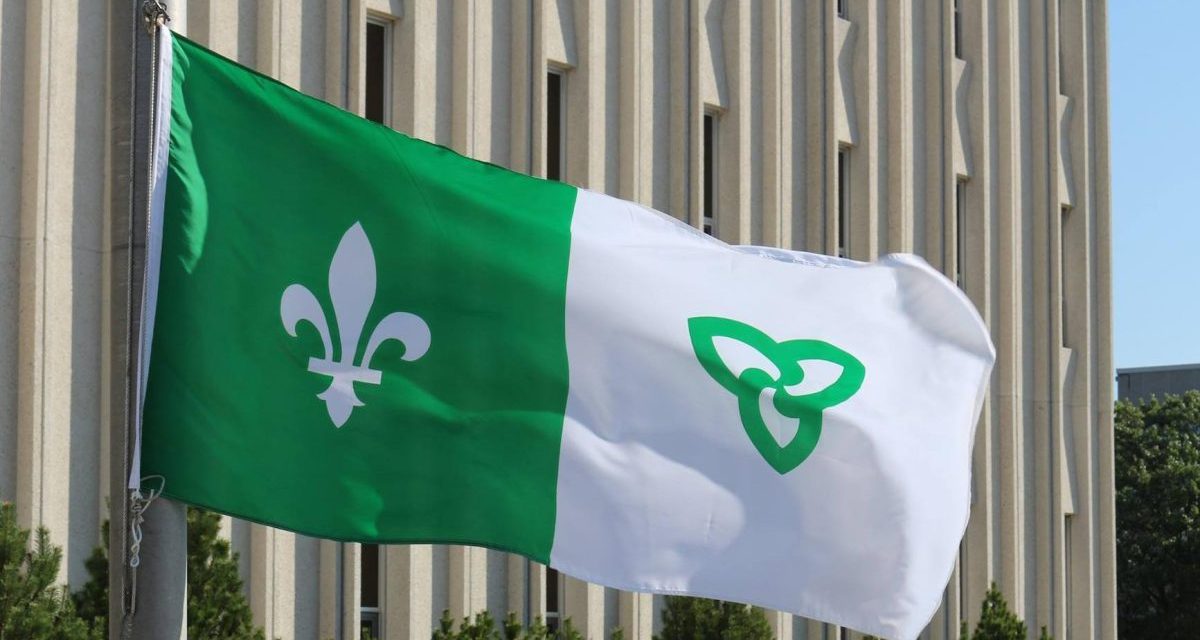
On Thursday, June 11, the Festival Franco-Ontarien announced it had ended its controversial sponsorship arrangement with the Alto crown corporation that is planning to build the high-speed rail line between Ottawa and Montréal.
The sponsorship had attracted criticism from many francophone residents of Eastern Ontario because of opposition to the proposed high-speed line potentially crossing largely francophone-owned land across Prescott and Russell counties and the rural part of Ottawa.
The Festival Franco-Ontarien celebrates francophone culture in Ontario and was taking place at Major’s Hill Park in Ottawa from June 11 to 13.
Reaction to the Alto sponsorship arrangement was mixed among local Franco-Ontarian organizations. The Association canadienne-française de l’Ontario (ACFO) Prescott et Russell chose not to comment about the arrangement between Alto and the festival. A statement from Director-General Sylvain St-Pierre said the decision was entirely an administrative responsibility of the festival organization.
Rene-Claude Goulet of the Union des cultivateurs franco-ontariens (UCFO), which represents Franco-Ontarian farmers said UCFO board members discussed the issue among themselves and the only comment is that the arrangement between the festival and Alto clearly demonstrated the problem of underfunding of Franco-Ontarian cultural and community organizations, which leads to the need to consider other funding options.
Boisés-Est is the association of francophone rural woodlot owners in Eastern Ontario. Many of its many members live in Prescott-Russell and are objecting to the proposed high-speed rail line because of the possible effects on their properties and forested land.
“Boisés-Est was quite surprised to learn that the Festival Franco-Ontarien had publicly promoted Alto as a sponsor on its Facebook page,” said Boisés-Est President Jean St-Pierre.
He explained that when the Alto high-speed rail project was first announced earlier this year, several Boisés-Est members—some of whom also operate farming businesses—began raising questions about the potential impact of the project on their lands. Many reported that their questions remained unanswered or received only vague responses.
“Consequently, it was difficult for many members of the francophone community to accept that a prominent Franco-Ontarian cultural festival was receiving financial support from the very organization seeking to purchase—or potentially expropriate—lands and forests from local residents,” St-Pierre said.
He added that in the views of Boisés-Est, the Festival Franco-Ontarien organizers did the right thing by deciding to discontinue the sponsorship arrangement with Alto on June 11.
.