

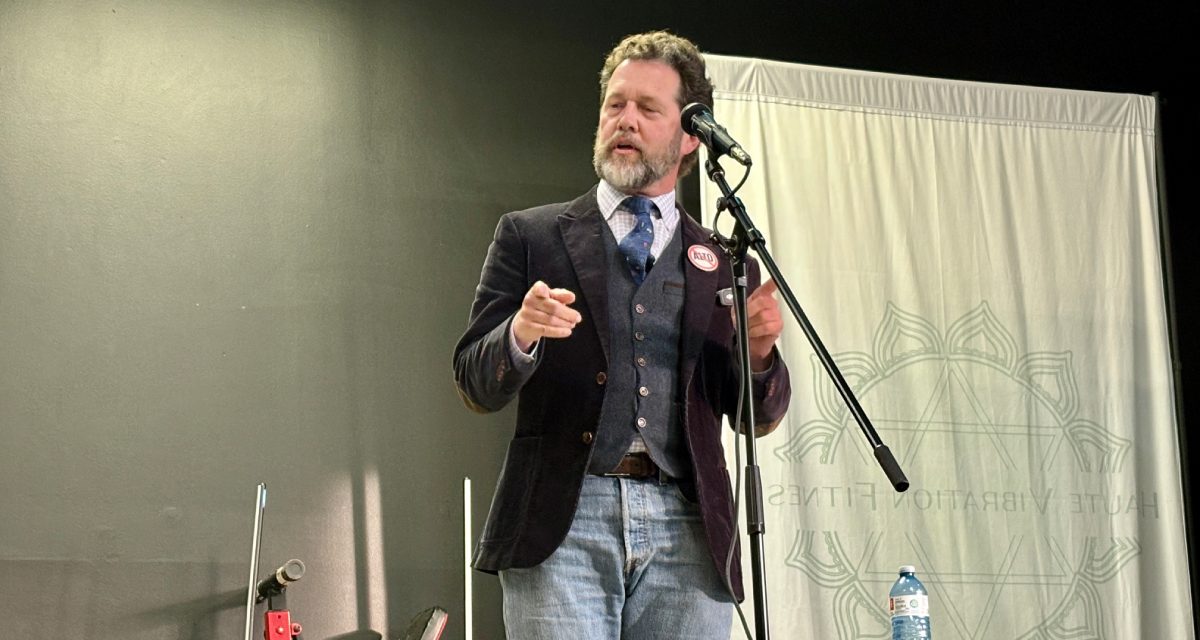
Prior to the high-speed rail meeting at town hall on Wednesday, May 6, in Casselman, Lanark-Frontenac Member of Parliament (MP) Scott Reid spoke in a one-on-one interview with The Review about what he described as major concerns surrounding the Alto high-speed rail project. He highlighted property expropriation, the future of regional rail service, project transparency, and overall cost as key reasons for his opposition.
“There’s a lot,” Reid said when asked what concerns he believes supporters of the project are overlooking.
Reid said one of his primary concerns is the impact the project could have on properties located along the proposed corridor.
“Some of them are going to be permanently expropriated. Others are effectively prevented from selling or improving their property for what could be years,” he said.
While there are compensation systems in place for affected property owners, Reid said that legally challenging those offers can end up being extremely costly, making it difficult for many people to pursue.
“In practice, if people are given lowball offers on their properties, I think that in many cases they simply won’t be able to pursue getting a more reasonable cost,” Reid said.
Reid also raised concerns about the possibility of roads being closed or rerouted as part of the project, which he said could divide communities and affect emergency response times.
Another major concern raised by Reid was the future of VIA Rail service to smaller communities if high-speed rail is implemented.
“Once Alto is installed, there is zero per cent chance the existing rail system will survive,” Reid said, arguing that riders travelling between major urban centres would likely shift to the faster service.
Reid said smaller communities that rely on intermediate rail stops could lose service entirely. He pointed to communities such as Smiths Falls, Brockville, Kingston, Napanee, Cobourg, and Alexandria as examples of places that benefit from existing rail access.
Casselman also has a VIA station stop.
“For those folks, it’s meaningful,” he said. “Seeing more trains stop at those stations would be helpful, as opposed to only occasional trains.”
The federal government has promoted Alto as a major infrastructure project intended to improve passenger rail service between major cities while supporting economic growth and reducing transportation emissions.
Reid, however, questioned whether the project’s environmental benefits would justify its scale, pointing to the emissions associated with large-scale construction projects.
“Building Alto will involve 1,000 kilometres of steel and concrete. In the short run, it will produce substantially more emissions. In the long run, it will save a little, if anything,” he said.
Reid also criticized the project’s projected cost, which he said could increase significantly over time.
“Even at $60 billion, that is a significant amount of money. But $90 billion is probably more realistic,” he said.
Reid argued that major infrastructure projects frequently exceed their initial estimates, saying, “History shows that very optimistic estimates are often put forward during the approval stage for projects like this.”
In place of high-speed rail, Reid said he would prefer to see investment in existing rail infrastructure improvements and more reliable regional passenger service.
“We should not be looking at trying to take the existing rail service and turn it into a luxury service that competes with the airlines,” he said.
Reid also criticized the level of transparency surrounding the project, particularly regarding agreements involving the consortium involved in Alto’s planning and development.
“The idea that the government can spend billions of dollars on projects that affect tens of thousands of people under secret contracts is astonishing,” he said.
When asked whether opposition to the project risked becoming politically divisive, Reid said the issue has become partisan due to the federal government’s support for the project.
“I’m just representing my constituents in the way that my constituents want me to represent them,” he said.
Further planning work on the Alto project is expected to continue in the months ahead as debate over its scope, cost, and impacts continues across affected communities.
