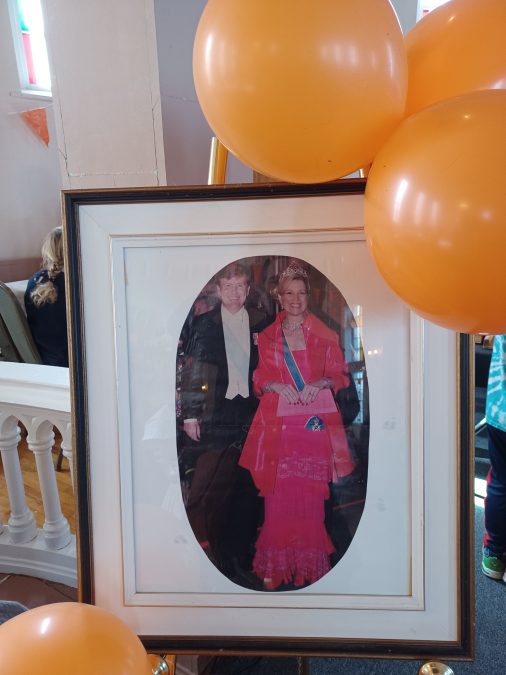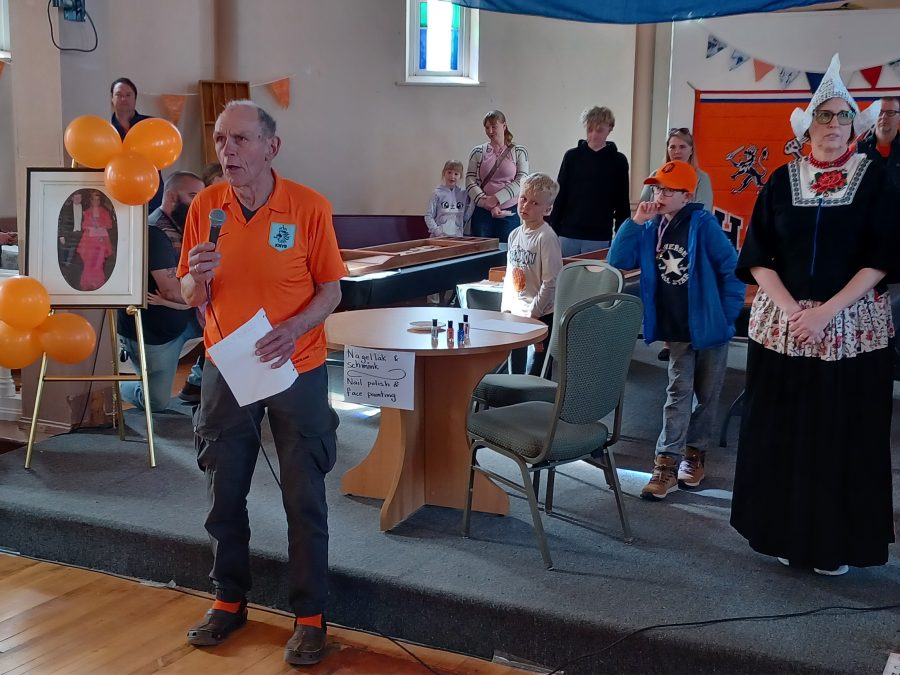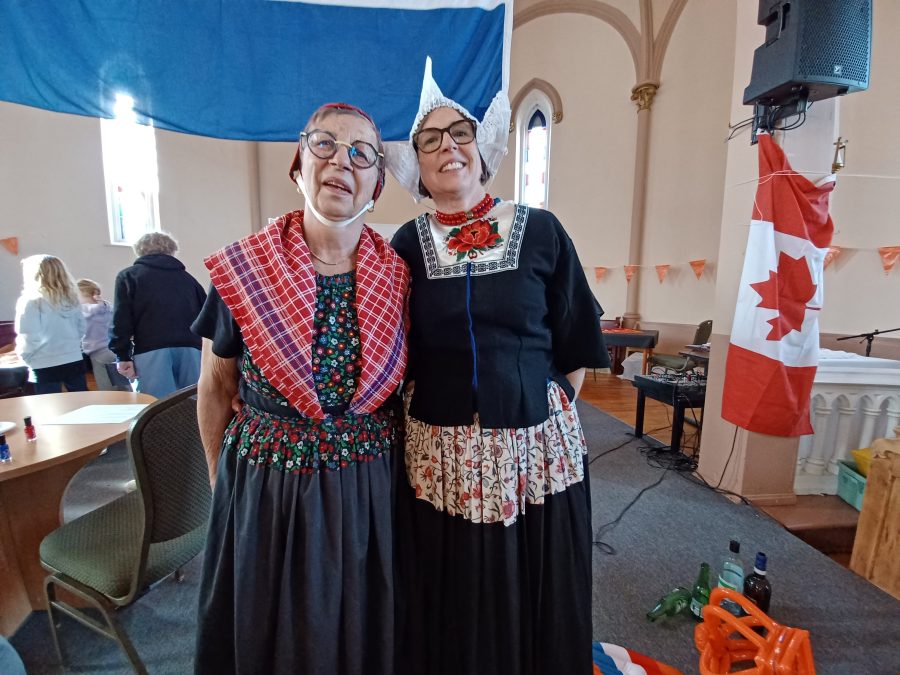
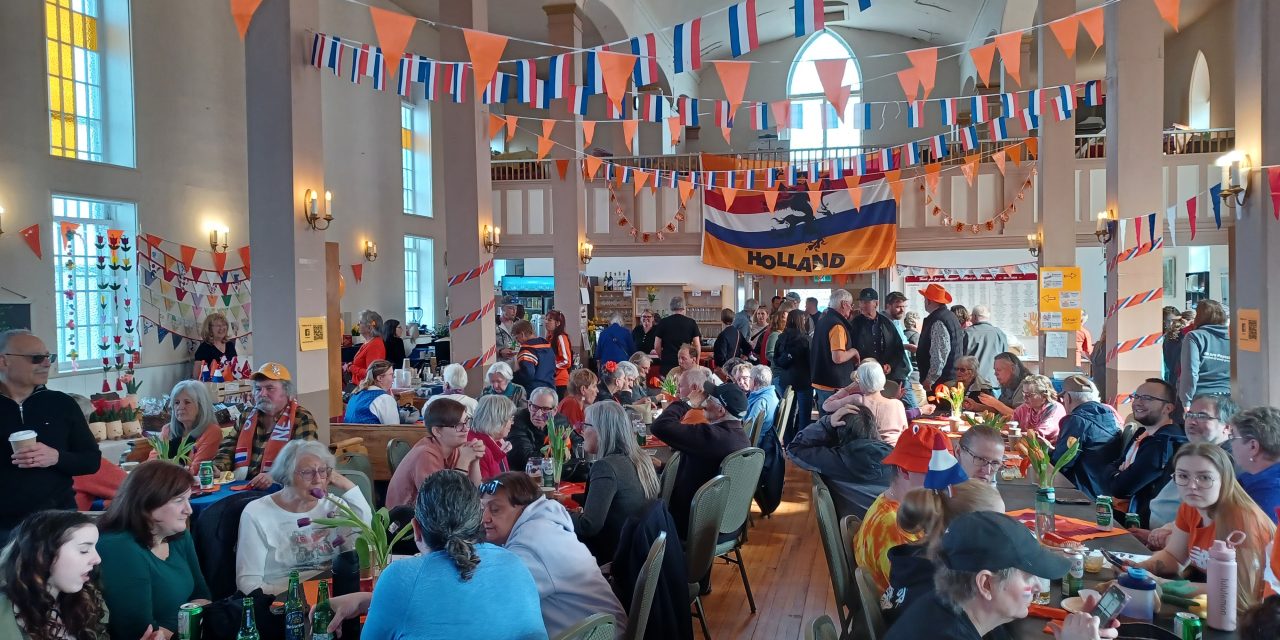
April 27 is the birthday of King Willem-Alexander of the Netherlands, and for the third year in a row, the local Dutch community organized a superb celebration of what is a national holiday in the European country.
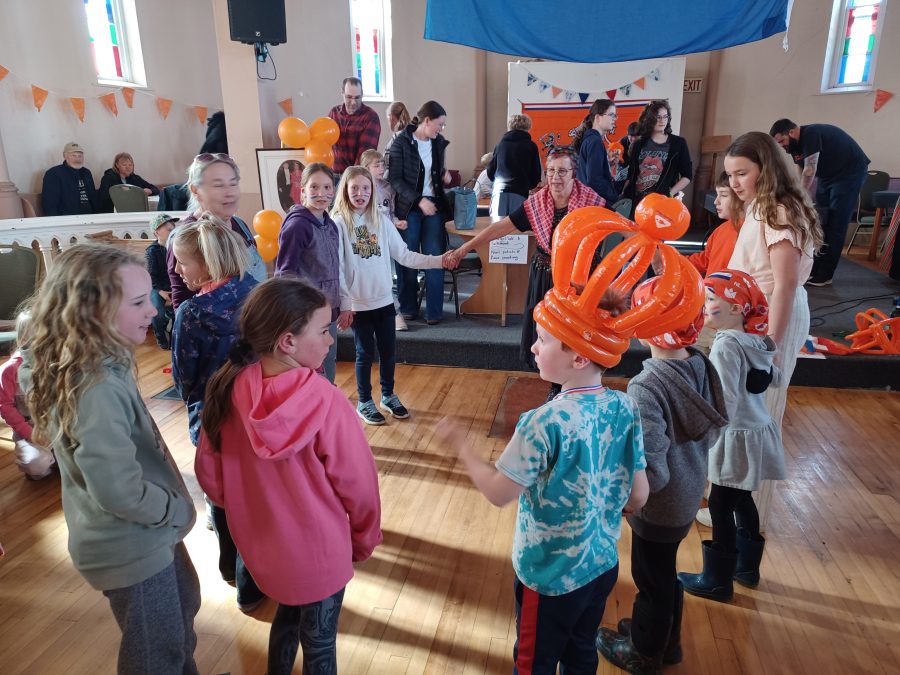
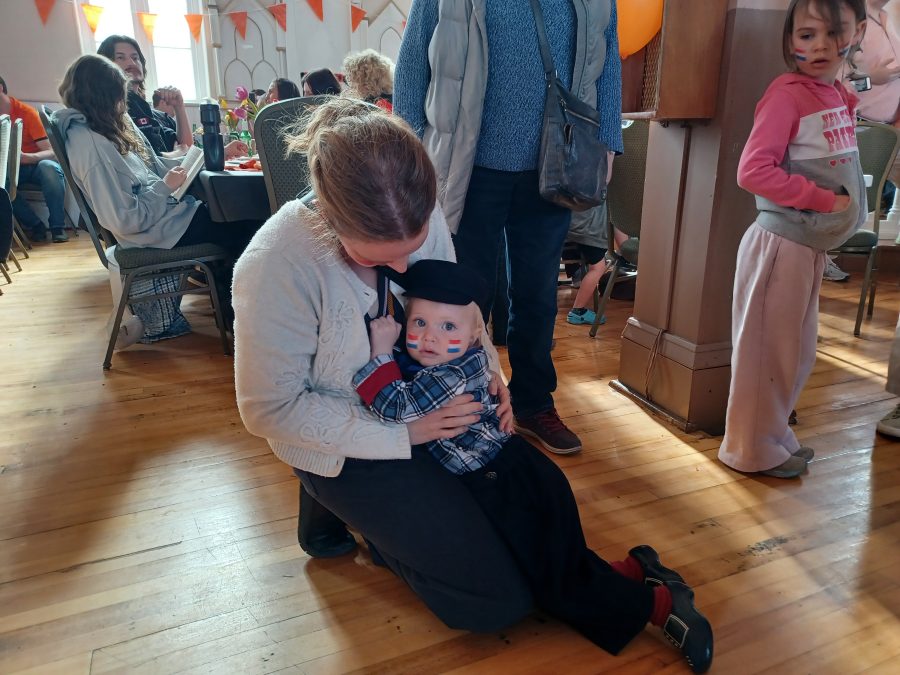
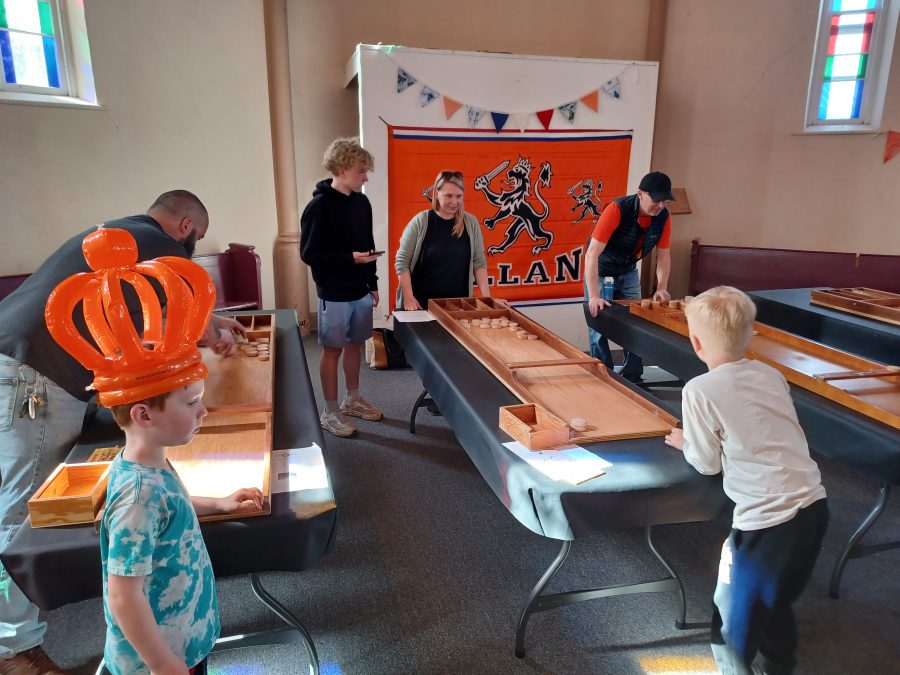
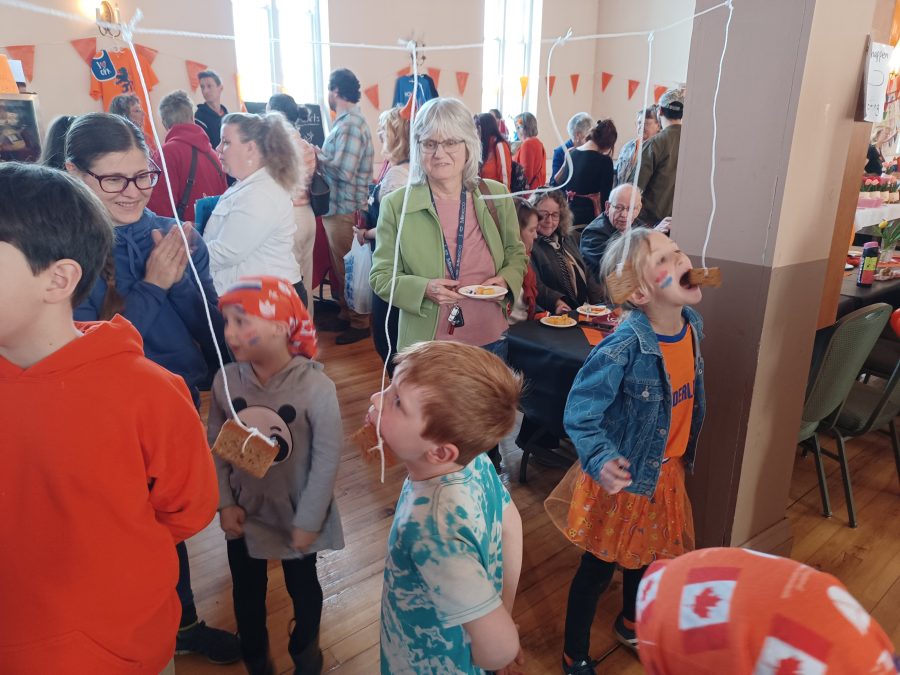
A Koningsdag (King’s Day) celebration was held at the Lochiel Centre on Saturday, April 25. The event included Dutch specialty foods including the amazing beef or chicken kroketten (croquettes), erwetnsoep (pea soup), and tompouce, a Dutch variation of mille feuille. Dutch games were enjoyed, particularly by children, including the challenge of eating a piece of cake suspended from a string. There was also an opportunity to try traditional Dutch clog dancing.
Corry Olsthoorn of Chute-à-Blondeau, who moved with her husband Ben and their family to Canada from the Netherlands in the 1970s, said the idea for a local Koningsdag celebration began three years ago during a conversation with her daughter Iris Clark. She had noted that other ethnic groups often have community events to celebrate their national heritage, and that led to the first local Koningsdag event.
“It’s a Dutch holiday, everybody celebrates,” Olsthoorn said.
The event has always been well attended, but the 2026 edition had the largest crowd yet, with many people coming from beyond local communities.
“They came from Ottawa. They came from Montréal,” said Oolsthoorn.
The royal family of the Netherlands is the House of Orange-Nassau. As a result, the official colour of the Netherlands is orange. Many of the people at Saturday’s celebration were wearing orange, and orange decorations were throughout the hall. Even the top of the tompouce was orange. In English history, King William III and his wife Queen Mary II were also from the House of Orange-Nassau.
Willem Alexander became King in 2013. In 2026, he is turning 59.
There are more than 1 million Canadians of Dutch descent. Dutch immigration has been part of Canada since the colonial days, particularly among Loyalists of Dutch background in New York and Pennsylvania, including Simeon Vankleeck, the namesake of Vankleek Hill. During World War Two, Canada was significantly involved in the liberation of the Netherlands from Nazi occupation. Many Canadian military personnel met Dutch spouses who immigrated to Canada after the war. There was also significant Dutch immigration to Canada for economic reasons during the late 1940s and throughout the 1950s. Dutch immigration to Canada has continued to occur since then.
Photos: James Morgan