

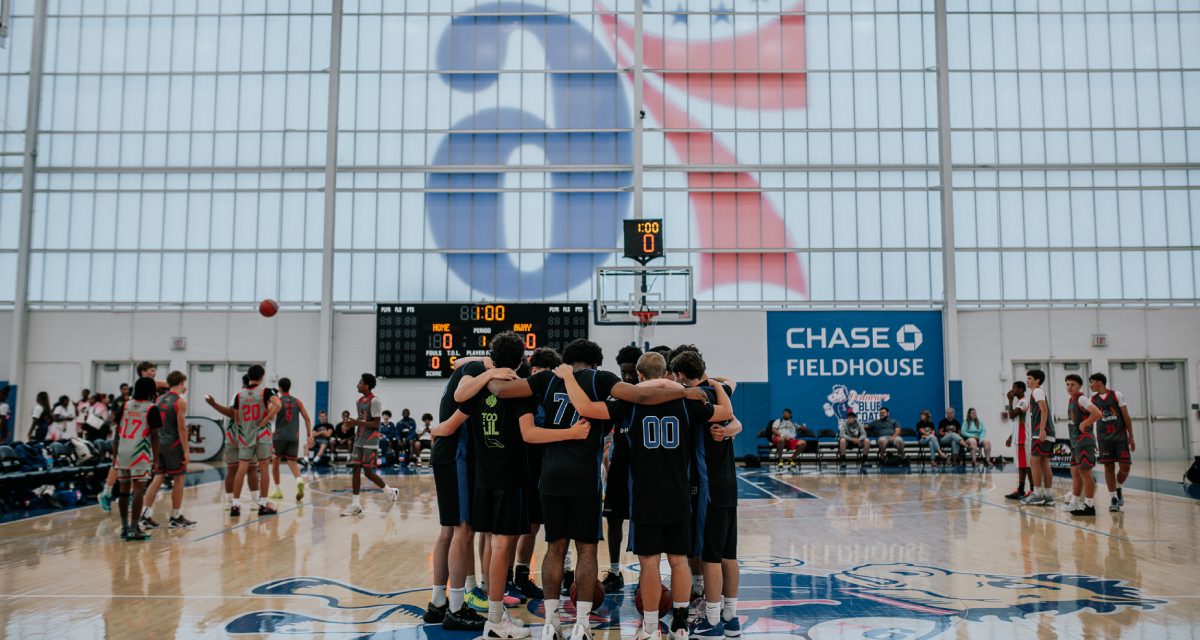
What started with a desire to get young people away from their screens and onto the basketball court has quickly grown into a competitive program drawing athletes from across Eastern Ontario and beyond. Q-Hoops Basketball, based in Alexandria, is entering its second year and has quickly grown into a program capable of competing against some of the top basketball teams in North America.
The program began with group training sessions before expanding into a summer AAU team and eventually launching its fall AAA program.
Today, Q-Hoops typically operates two teams in both its summer and fall programs, with approximately nine to 12 players on each team. While Alexandria remains at the heart of the organization, athletes now come from across Stormont-Dundas-Glengarry (SDG), as well as Ottawa and Montréal.
For Founder and Coach Quaid George, the goal was to provide young athletes in Alexandria and the surrounding area with opportunities that might otherwise require travelling to a larger city.
Having grown up in Montréal, George said he saw firsthand the impact sport could have on a young person’s life.
“Basketball was instrumental in my own development, and when I moved to Alexandria, I wanted to create that same opportunity here in our community,” he said.
“There is tremendous talent and potential in our area, and Q-Hoops was created to help develop that while giving young people a place to belong, work hard, and pursue something they are passionate about.”
That vision has been on display this summer, with Q-Hoops teams travelling throughout the United States to compete against programs from some of the continent’s larger basketball centres.
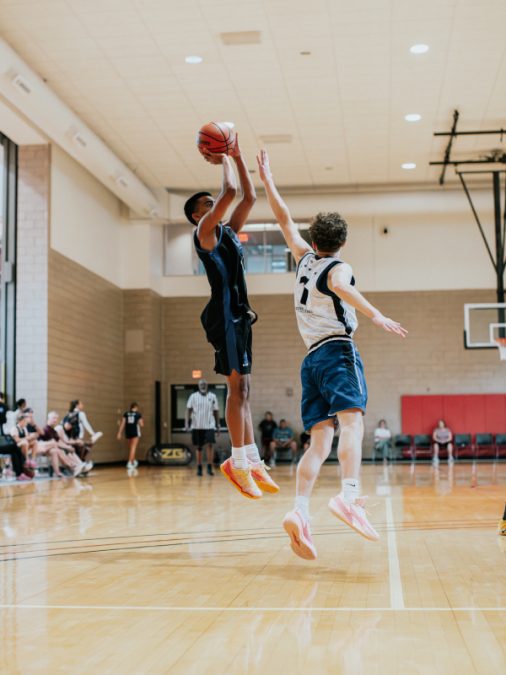
The U14 team won four of its six tournaments, including the Hall of Fame National Invitational in Springfield, Massachusetts. Both the U14 and U16 teams also reached multiple tournament finals during the summer.
For some of the players, the tournaments marked their first opportunity to travel and compete outside Canada.
“Getting to watch our players walk into some of the top basketball facilities in the United States and compete against some of the best programs in North America has been an incredible experience,” George said.
But he said the experience has been about more than the results.
The players had to navigate unfamiliar surroundings, compete against new opponents, and play in front of large crowds.
“These are experiences that I hope they’ll carry with them for a long time,” George said.
The program’s success has also required a commitment from the families behind it. Parents have driven groups of players across the border, spent long days in gyms, and supported the teams from the sidelines.
“We are also incredibly fortunate to have such supportive families behind the program. Q-Hoops really is a community effort,” George said.
While developing basketball players is a central part of the program, George said the organization’s ambitions extend beyond the court. He describes Q-Hoops athletes as “student-athletes,” emphasizing that they are students first and athletes second.
Having played Division I basketball himself, George said he understands that opportunities at the university level require more than athletic ability.
“We ask to see our players’ report cards so that we can understand how they are doing academically and have meaningful conversations with them about their future,” he said.
Q-Hoops also places a strong emphasis on character, with George saying players are expected to conduct themselves with honesty, integrity, humility, generosity, and respect. The organization has a policy against cursing on the court or bench and expects players to represent themselves, their families, and their community appropriately.
The program also incorporates its Canadian identity when travelling, with the Canadian flag appearing on its jerseys and other gear.
“We want our players to take pride in representing where they come from and to understand the responsibility that comes with it,” George said.
That sense of representation takes on added importance when Q-Hoops teams leave Alexandria and compete in larger basketball centres. Players from a small community can suddenly find themselves competing against teams from New York, Boston, Philadelphia, Montréal, and Toronto.
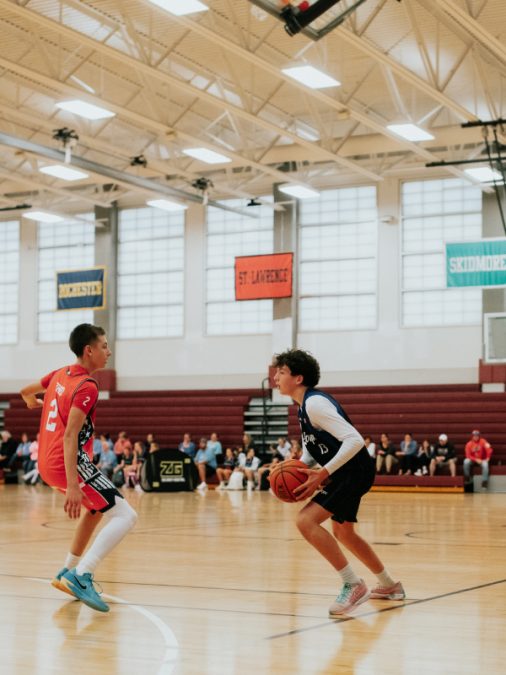
For George, those experiences can change how young athletes see themselves and their own potential.
“They’re learning that the size of the community you come from doesn’t have to determine the size of your dreams,” he said.
The organization hopes to continue expanding its competitive opportunities in Canada and the United States while staying focused on its original goals.
George said Q-Hoops would like to eventually add more age groups and potentially introduce girls’ teams. He also sees the growth of other basketball programs in the area as a positive development rather than a threat.
“To us, that’s not competition in a negative sense: it means more opportunities for young people to get involved in sport,” he said.
George said the ultimate goal is to see more young people put down their screens, get into gyms, and find something they are passionate about.
“We want to be thoughtful about that growth and make sure we’re maintaining the culture and standards that Q-Hoops was built on.”
The wins may be putting Alexandria on the basketball map, but George believes the program’s bigger success will be measured by what its young athletes discover about themselves along the way.
