

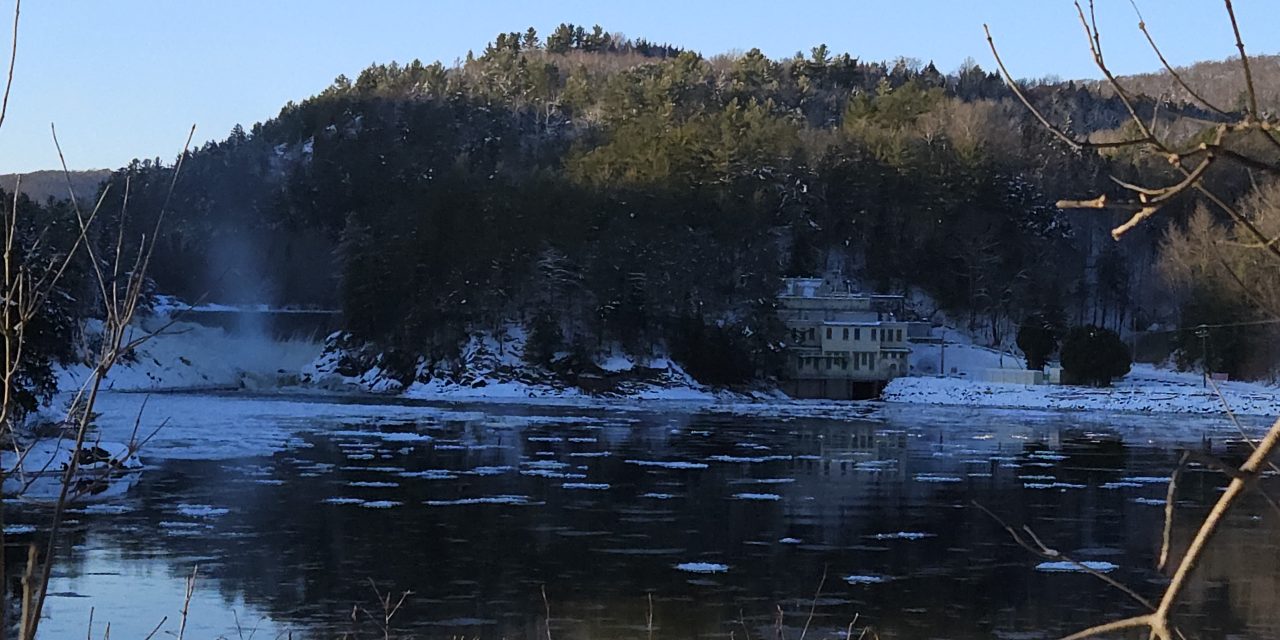
Hydro-Québec will need an additional 12,000 megawatts (MW) of electricity to meet the province’s needs by 2041, but it is not clear if the turbines at the disused Bell Falls hydroelectric station on Rivière Rouge will again turn to help meet those needs.
On November 3, Hydro-Québec announced it is entering a critical period during which it will be dealing with rapidly growing electricity demand, which will require a carefully managed implementation of its energy projects, according to a new report titled Overview of Hydro-Quebec’s Energy Resources. The report is part of the state-owned utility’s Electricity Supply Plan 2027–2041, which it has submitted to Québec’s utility regulatory agency, the Régie de l’énergie. The report outlines the projected evolution of Québec’s electricity needs over a 15-year period, as well as the measures planned to meet these needs.
By 2041, Québec customers’ energy needs will increase by approximately 60 terawatt hours (TWh), reaching 240 TWh, primarily due to the electrification of transportation and the increased demand from the industrial sector. Combined with the end of certain existing supply agreements, this growth will create a gap between demand and currently available resources. As for the power required to meet winter peak demand, it will increase by approximately 12,000 MW, with a peak of 52,000 MW projected for 2041.
Constructed in 1915, the Bell Falls station has been idle since 1999 but once produced up to 10 MW of electricity which is enough to supply about 5,000 homes. Since that time, Hydro-Québec has continued to operate the dam to regulate water flow on Rivière-Rouge during flood events. In December 2025, Hydro-Québec approached the Municipalité régionale de comté (MRC) d’Argenteuil and the Indigenous communities of Kanesatake near Oka and Kitigan Zibi near Maniwaki regarding the potential restart of the Bell Falls hydroelectric station, with the municipal and First Nations groups acting as promoters and taking on responsibility for renewed generation capacity.
However, nearly one year later, it is still not clear if Bell Falls is part of the plan to meet Québec’s future electricity needs.
“Our Supply Plan does not list each project individually but rather the production chains,” said Hydro-Québec spokesperson Cendrix Bouchard.
However, there is a recent example of municipalities and Indigenous governments taking over operations of a Hydro-Québec owned hydroelectric station. In October, the municipality of St-Narcisse, the MRC des Chenaux, and three Indigenous communities began the process of reactivating the idle St-Narcisse station on Rivière Batiscan near Shawinigan.
“Hydro-Québec is open to replicating this model for other currently inactive assets of a similar size,” Bouchard said.
In a more general sense, Hydro-Québec is taking measures to meet the anticipated electricity needs inaccordance with Québec’s Integrated energy resource management plan. The three main points of that plan are preserving what exists: involving current power purchase agreements: Making better use of energy and adding new capacity.