
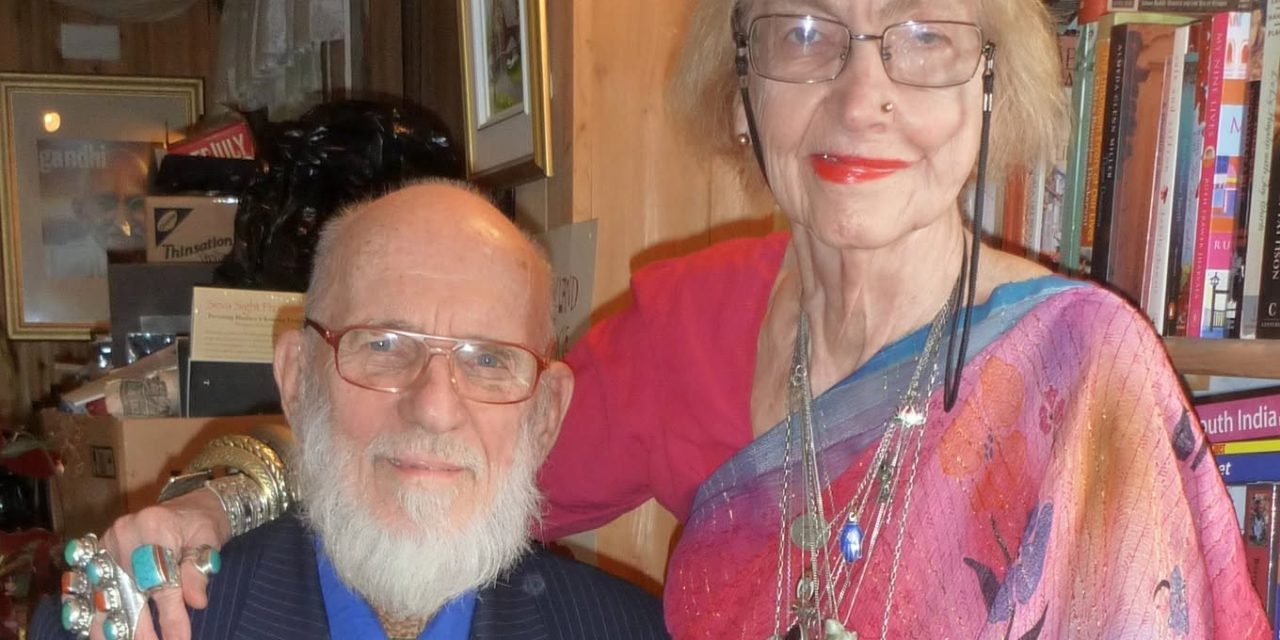
Fred Cappuccino, a founder of Child Haven International, died on Thursday, August 6, 2026, at age 100 while holding the hand of his beloved wife Bonnie and surrounded by many of his 21 children and their children as well.
According to a social media post from Child Haven International, Cappuccino was born on January 28, 1926, in Scranton, Pennsylvania. Drawn to the ministry, he studied at Drew University in New Jersey, Crozer Theological Seminary in Pennsylvania and Garrett Biblical Institute in Illinois. He also spent three years in Japan working with young people and teaching English through song after World War 2.
It was at Garrett that Fred met the love of his life, Bonnie McClung. Fred and Bonnie were married in 1953 in Dundee, Illinois. He was a 27-year-old Methodist minister and Bonnie McClung, a 19-year-old student nurse, raised on farms in Illinois and Minnesota.
From the beginning the Cappuccinos shared a passion for social justice. They decided to have only two children born to them, in keeping with Zero Population Growth. Two sons were born to them, and they adopted 19 more children from eleven different cultural and national backgrounds. In 1955, their first adoption, a tiny half Japanese, half black 5-year-old child from Japan, created a rift in their Chicago Methodist congregation and a third of the members left. The social media post quotes the late Cappuccino as saying, “the fear was that we were bringing blacks into the community,” adding that the 1950s was a different time, full of fear. The rest of the congregation was supportive, but racial tensions continued to run high. In 1963, Cappuccino decided to leave the Methodist ministry and become a Unitarian Universalist minister, serving a congregation in Silver Spring, Maryland, a suburb of Washington, D.C. Meanwhile, the family continued to grow.
While there, the Cappuccino family joined the 1963 March on Washington and heard the famous “I Have a Dream” speech by Martin Luther King Jr. Two years later, Cappuccino joined the Selma, Alabama Civil Rights March upon hearing that his fellow Unitarian minister and good friend, James Reeb, had been brutally beaten there by angry white segregationists. While Cappuccino was there, Reeb died of his wounds. The five-day Gandhian non-violent standoff between the marchers and the police in Selma was successful, contributing to the enactment of the Civil Rights Act in 1965.
The Cappuccinos’ opposition to the Vietnam War helped draw them to Canada in 1967. Fred became minister at the Lakeshore Unitarian Church in Pointe-Claire. It was there that a group led by Bonnie, with Fred’s support, formed Families For Children (FFC), to help needy children in overseas countries to find adoptive homes with Canadian and U.S. families. They also established an orphanage for those who couldn’t be adopted.
As part of their Families for Children work, the Cappuccinos began a series of overseas trips that would continue for decades. In 1972 they travelled to Bangladesh to rescue 21 war-orphaned babies.
Fred left his Lakeshore job in 1974, and the family moved permanently into a 170-year-old log house, in Maxville. Their pioneer-built home was located halfway between Ottawa and Montréal on 100 acres of rocky fields and woodland. There they continued to help run Families for Children, raised their many children, and revelled in rural life. Fred also worked as a therapist in an extended-care home.
In 1976, the Cappuccino family temporarily pulled up their stakes at their Maxville farm, sold almost everything they owned and moved with their 7 youngest children to Sri Lanka and India for 16 months. There they established a Children’s Home in Coimbatore, India for 400 children.
In 1985, on leaving FFC, the Cappuccinos, together with their family doctor, Natubhai Shah, launched a new charity, Child Haven International. Child Haven now supports 1,300 formerly destitute children in India, Nepal and Bangladesh. An additional Home in Tibet was eventually closed by the Chinese government. Another aspect of Child Haven’s work is uplifting the lives of local women through direct employment, education, medical aid, legal aid, and vocational training opportunities.
Cappuccino was a strong supporter of unions and worker’s rights and would jump at the opportunity to join a picket line belting out Solidarity Forever and union anthems in his soaring baritone to the delight of all on his side of the line.
The Cappuccinos have won many awards for their work including the Order of Canada in 1996, the Baha’i Race Unity Award, and the UNESCO Prize for “The Teaching of Human Rights”. But their biggest satisfaction came not from awards and recognition but from the work itself, in which they found great joy and sustenance.
In his humorous 2015 tome entitled, Bonnie and her 21 Children, Fred wrote, “Bonnie had pre-school children in our family for an uninterrupted period of 26 years… No husband should have to endure such massive inconvenience and disruption.” In fact, he loved it and fully supported enlarging the family. He was thankful for each new member of his family.
Bonnie and her 21 Children also appeared as a series of stories in The Review.
According to the social media post, Cappuccino’s life was a testament to the power of active love and the belief that each child regardless of where they are born, the colour of their skin, gender, or religion, are precious wondrous beings, each possessing unique and precious gifts that only they can offer to the world.
Novelist Shilpi Somaya Gowda, one of their Child Haven patrons, described the Cappuccinos this way: “Bonnie and Fred have lit a lamp for the whole world to see.”