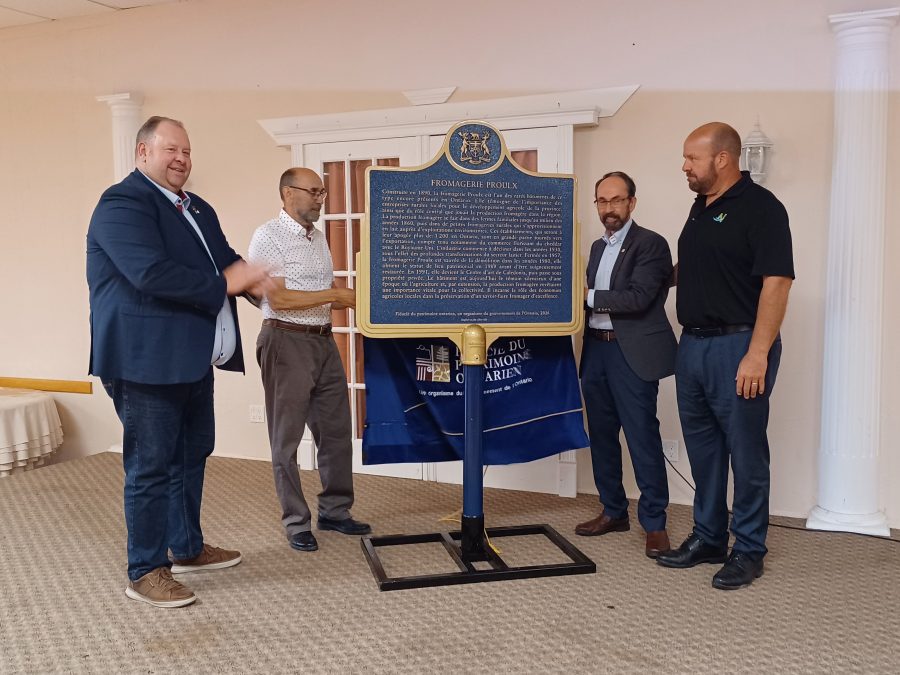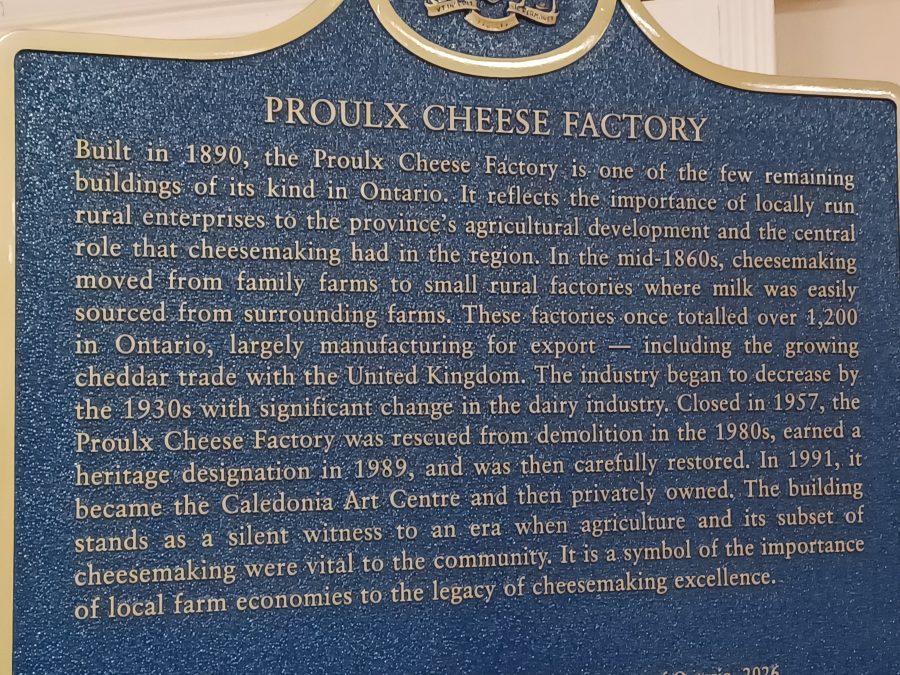
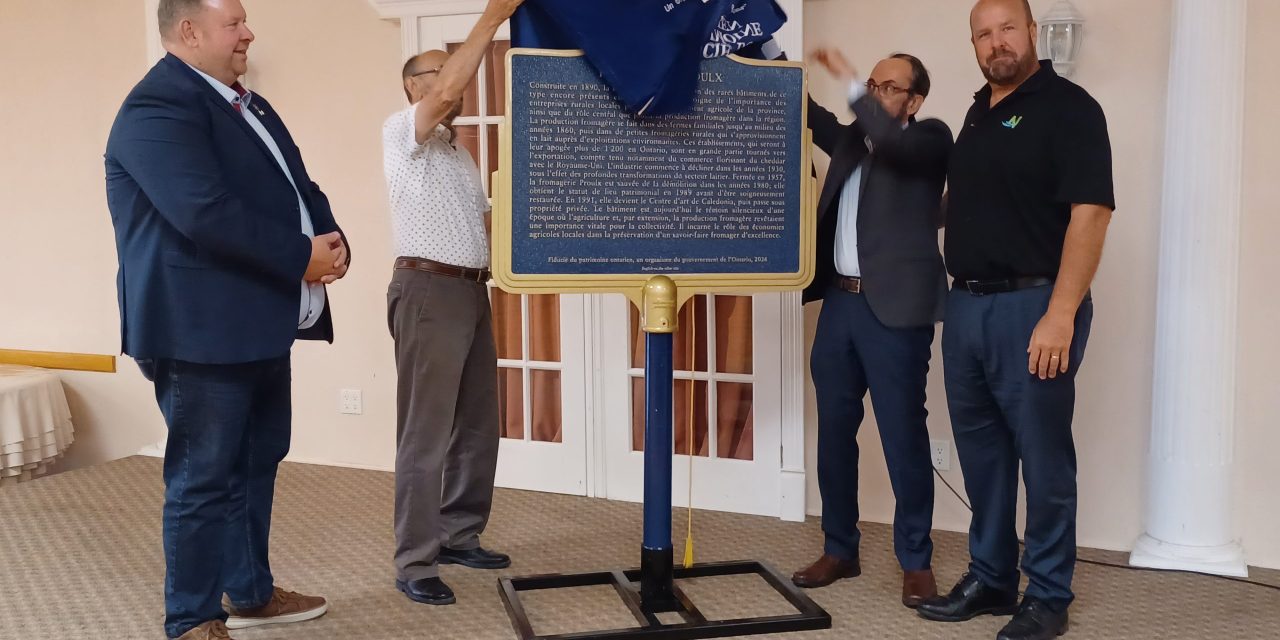
At one time, rural cheese factories were almost as ubiquitous as barns in rural Ontario. That has changed, and now the sites of some of these former early dairy product processing facilities are becoming historic landmarks. On June 26, an official Province of Ontario historic plaque was unveiled for the site of the former Proulx Cheese Factory near St-Bernardin.
The blue plaque with gold lettering is one of hundreds like it across the province that highlights historic sites and events through the Ontario government’s plaque program administered by the Ontario Heritage Trust.
Glengarry-Prescott-Russell Member of Provincial Parliament Stéphane Sarrazin said the plaque commemorates an example of rural Ontario’s cheesemaking heritage.
The unveiling of the plaque follows three years of effort by The Nation Municipality’s Heritage and Culture Advisory Committee.
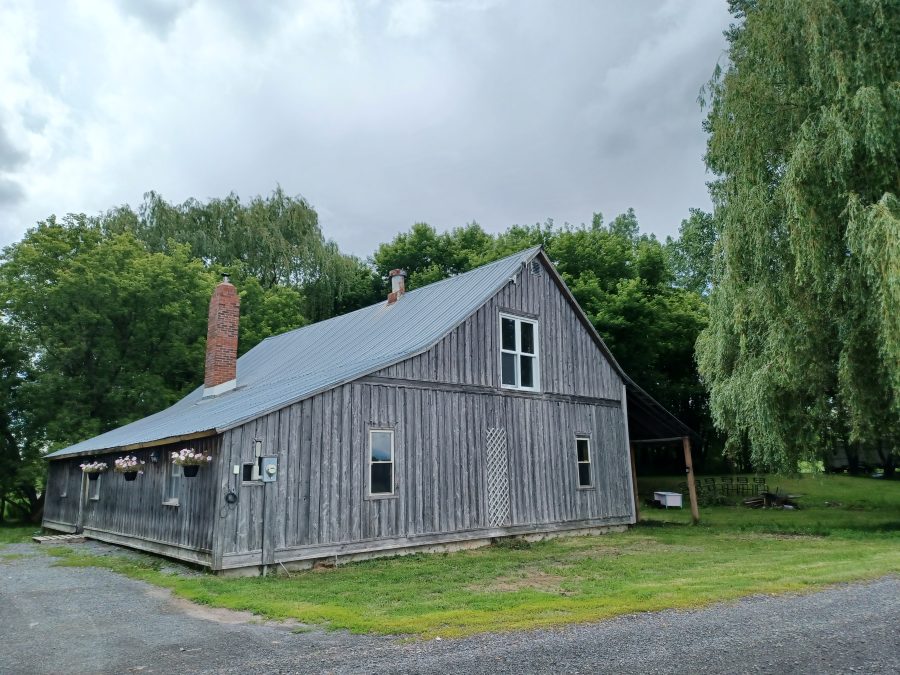
McGill University Professor Dr. Jodey Nurse is an expert on rural history and prepared the background paper for the effort to have the plaque installed. She said early cheese factories were crucial at a time when dairy production was increasing in Ontario and were an important source of income for farm families. The Proulx Cheese Factory, named after the historic settlement, where it was located, began production in 1918. It was located on what is today called the Roger Lalonde Sideroad, just north of Concession Road 6, Caledonia Township, now part of The Nation Municipality. The building, now used as a private home, received municipal heritage designation in 1989.
Nurse said Proulx Cheese Factory and others provided an outlet for milk processing, employment opportunities, and encouraged cooperation among farmers. The cheese was produced for local consumption, but significantly for export to Great Britain.
“When times were good, these exports were important economic drivers,” Nurse said.
Local cheese factories were often farmer-owned cooperatives while others, including the Proulx factory, were privately owned.
Arthur Régnier purchased the Proulx Cheese Factory in 1935 and operated it until it closed in 1957.
At one time, there were more than 1,200 rural cheese factories across Ontario, by the time the Proulx factory closed in 1957, there were just 113. Modernization and consolidation in the dairy processing industry led to a steady decline in the number of small cheese factories across Ontario.
Local dairy historian William Byers explained the origins of cheese production in Ontario, dating back to the 1830s in Oxford County near Woodstock. The first Eastern Ontario Cheese factory opened near Bainsville and was owned by David Murdoch MacPherson. Known as the “Cheese King,” MacPherson ended up operating a syndicate of 30 cheese factories in Glengarry County and in Châteauguay and Huntingdon counties in Québec.
In Prescott County, W.E.N. Byers of Hawkesbury was instrumental in establishing the local cheese industry through exports to Britain. Cheese factories in the area once included Hawkesbury, Ross Cheese, Greenlane, and Little Rideau. In 1911, there were 71 cheese factories in Prescott County and 64 in Russell County. By 1973, there were four factories left in Prescott County, including Saint-Eugène, Plantagenet, Lefaivre, and Greenlane, which closed that year.
Byers said the introduction of supply management in the dairy industry contributed to the further demise of small, local cheese factories.
“The demise of these factories came when their quotas were reduced,” he said.
Vankleek Hill was once a centre of cheese marketing. The local auction, where buyers would come and purchase cheese for export or further retail distribution, was located there from the 1890s until the 1930s before a centralized auction site was established in Belleville. Neil Fraser and his son John owned and operated a cheese warehouse and transport business in Vankleek Hill.
Byers said further challenges for local cheese production arrived in the 1950s when the British government placed an embargo on importing cheese from Canada. Changes in milk classification in the 1960s also reduced the amount of good quality milk available for smaller factories to process. The St-Albert cheese factory, a farmer-owned cooperative, is the last remaining independent cheese factory in the United Counties of Prescott and Russell.
Since the Proulx Cheese Factory closed in 1957, the building has seen various uses, including being used as an artisan studio from 1987 to 1991, and then as the Caledonia Art Centre. Today, it is the home of Reid and Julia Quan. Visitors who travel to the site to see the historic plaque beside the road should respect the surrounding private property.
Photos: James Morgan