

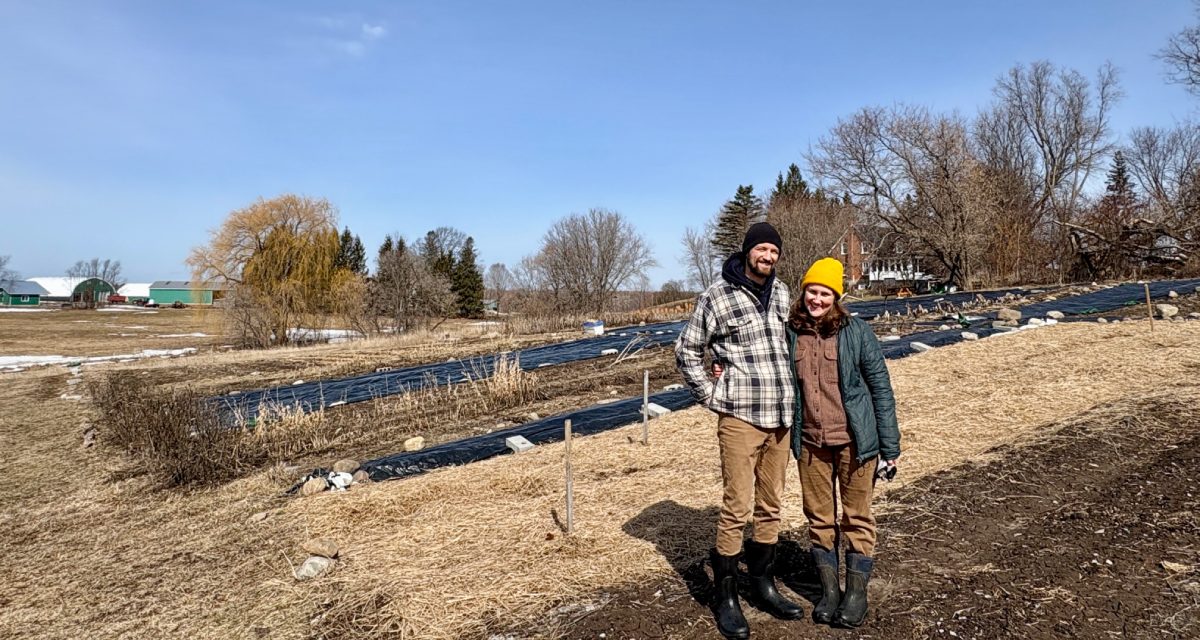
As the growing season approaches, preparation is already well underway for one local farm, even if much of that work is not yet visible in the fields. For Maggie Winchester and Mattson Griffiths, who operate as tenant growers on land in Vankleek Hill without permanent infrastructure, the season begins not in the soil, but at home.
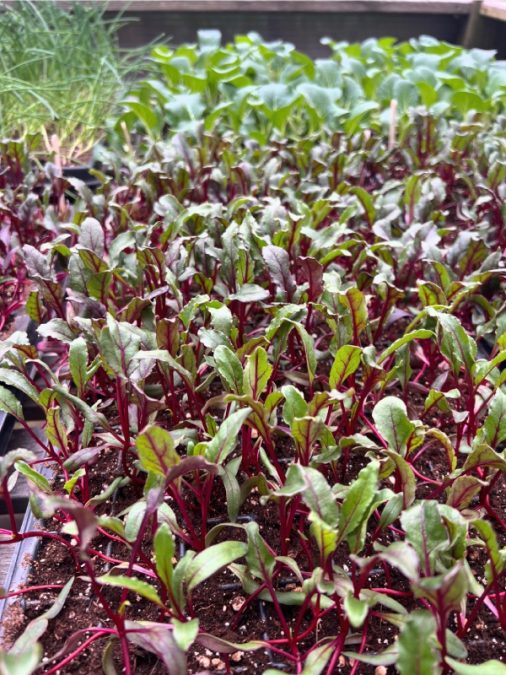
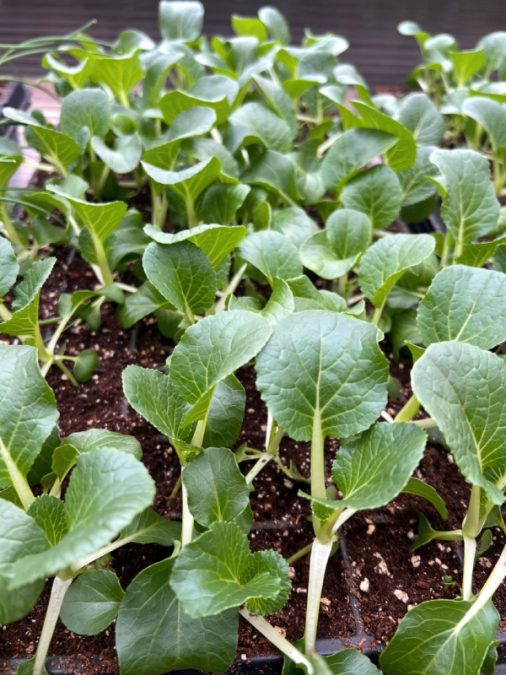
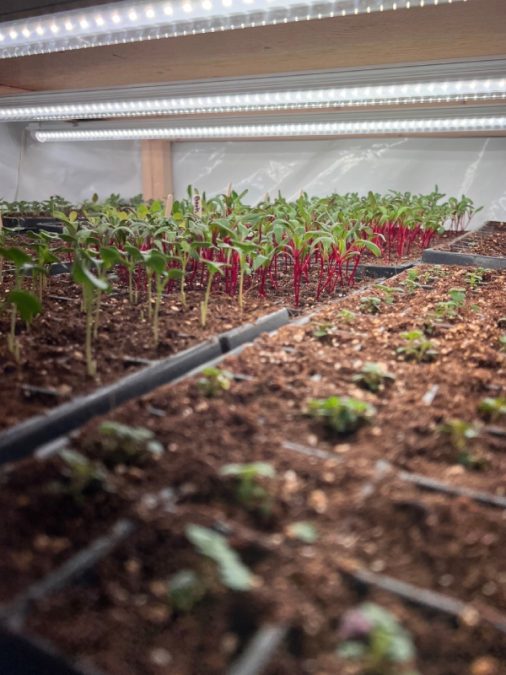
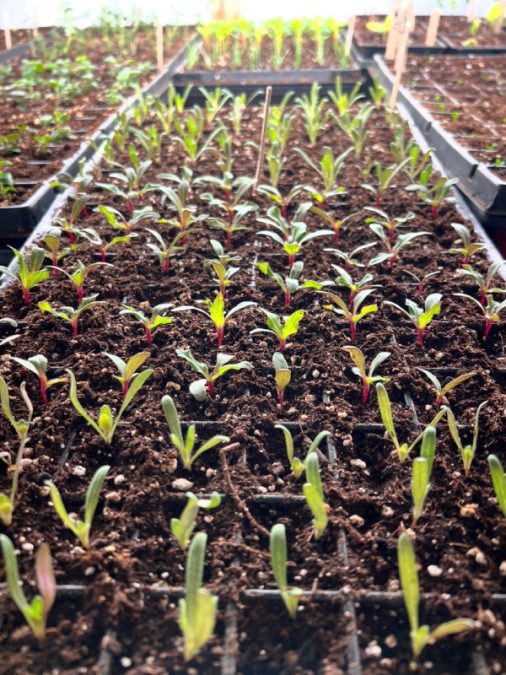
“We actually start our farm season from our house in town. We start all of our seedlings in a grow room in our basement,” Winchester said.
Since early March, seedlings have been developing indoors, marking the transition from months of planning into active production. That planning process begins long before spring arrives.
“The spreadsheets start back in September or October. We always do a good review of the past season: what we want to keep doing, stop doing, or start doing. That informs our plan for this season,” Winchester said.
Their operation at Parachute Farm is now entering its fourth year and relies heavily on detailed planning and data collection. Rather than relying on trial and error alone, the farmers analyze profitability and performance crop by crop.
“Instead of using the crystal ball method, it’s actually looking at what is the profitability of each crop per bed foot. It takes a bit of the guesswork out of it,” Griffiths said.
That level of detail extends throughout the growing season, with crops planted in carefully timed successions.
“It’s not like we plant everything in the spring and then we’re done. Every two weeks, we’re keeping up with plantings to make sure we have a constant supply of certain crops,” Winchester said.
While planning is precise, external pressures continue to shape decision-making. Rising input costs, particularly for seeds, remain a consistent concern.
“Every year, those costs increase. If you can afford it this year, next year is another few per cent more,” Griffiths said, noting that unused seeds are sometimes kept as a form of investment for future seasons.
Despite those increases, the farmers say they have been cautious about raising their own prices, creating a difficult balance between affordability and sustainability.
“You need to be able to afford to eat, but we also have to afford to live. It’s a tough conflict, a balancing act,” Winchester said.
Out in the fields, preparation is focused on soil health and efficiency. Much of the land remains covered with tarps from the fall to suppress weeds, allowing for a smoother transition into planting.
“We try to keep it as simple as possible,” Griffiths said, explaining that soil is amended with organic manure and custom fertility blends based on prior soil tests, then loosened without being turned over to preserve soil structure.
Crop rotation and field mapping also play a significant role.
“It’s like a big puzzle: we know where the worst weeds were last year, so that guides what we plant this year,” Griffiths said.
The impacts of last year’s drought are still influencing decisions, particularly when it comes to expansion. While the farm has considered scaling up production, infrastructure limitations have made it difficult.
“We’re learning the limits of our scale of production. We would love to scale up, but we need that baseline infrastructure first,” Winchester said.
An irrigation pond, expected to be installed in the coming weeks with support from a conservation agency grant, is one step toward addressing that issue. However, uncertainty remains.
“We’re hopeful we’ll be in a better position than last year, but we don’t know this pond or its capacity yet. It still felt like too much of a gamble to expand just yet,” Winchester said.
That uncertainty is compounded by the proposed Alto high-speed rail project, which has created concern among landowners and farmers across the region.
“It’s a bit of a waiting game right now. That uncertainty adds to the gamble agriculture is already working with,” Griffiths said.
For now, attention is focused on weather conditions as the farm prepares to move operations into the field.
“We’re watching moisture and temperature,” Winchester said, noting that planting typically begins in mid-April, depending on conditions.
The farm grows approximately 60 different crops, ranging from staples such as carrots, kale, and tomatoes to a variety of herbs and greens. While diversity remains a priority, the farmers say they are beginning to narrow their focus to crops that perform best on their land.
“We’re still growing a bunch of different crops, but narrowing in on what we do best,” Griffiths said.
Even with the challenges, both farmers say the work itself remains a strong motivator.
“Even on the hardest days, that’s the part we love,” Winchester said. “What keeps us coming back is the love of the labour, the meaning in it.”
They also point to the importance of community support, particularly through local markets.
“People need to challenge the perception that they can’t afford to go to the market. It’s better quality, it supports your neighbours, and it connects you with your community,” Winchester concluded.
As the season begins, that connection remains at the heart of their work, even as they navigate the uncertainties of farming.
