
Water is the lifeblood of agriculture, but climate change and shifting weather patterns are straining access. Longer droughts, heavier downpours, and greater competition for resources are forcing producers to rethink irrigation, crop choices, and land management.
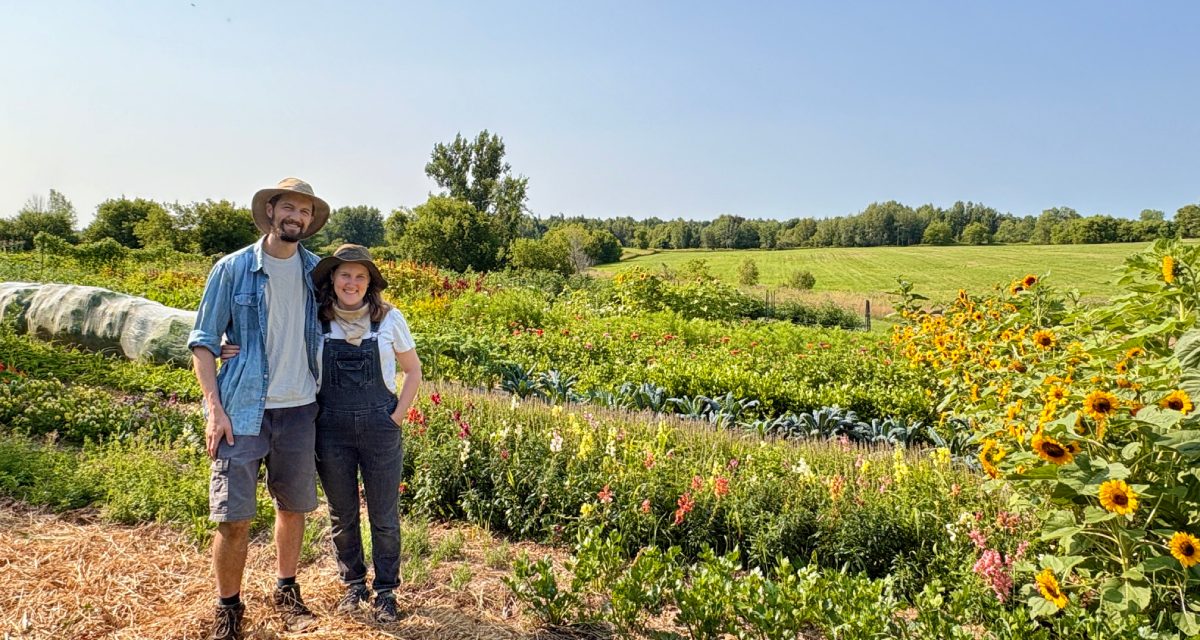
Farmers Maggie Winchester and Mattson Griffiths of Parachute Farm in Vankleek Hill are working to conserve water during another dry spell in the region. The pair has been farming on a third of an acre of family-owned land, producing mixed vegetables and cut flowers using organic practices.
Having worked on established farms for approximately a decade, Winchester and Griffiths said that they often witnessed farmers needing to drill new water wells at a cost of $12,000 or more, just to replace the irrigation source depleted by drought.
“This is only going to get more extreme. Realistically, we can design farms to be more resilient to that inevitable change in climate. We’re seeing our irrigation pond dry out because it hasn’t been replenished due to a lack of rain.”
Ontario Soil and Crop Improvement Association (OSCIA) Director of Member Services and Business Development Nicole Mackellar stated that extreme droughts and heavy rainfall are becoming more intense and unpredictable.
“It is essential to adapt agricultural production methods to address these changes. Without the adoption of best management practices by farmers, the stability of our food supply chain could face serious risks,” Mackellar said.
In Eastern Ontario, the South Nation Conservation Authority (SNCA) has monitored the region’s increasing vulnerability to drought, floods, and degraded water quality.
An SNCA 2021 impact report found that climate change and land use were significantly altering river flow in the South Nation River Watershed.
By 2050, river flows could increase by as much as 80 per cent in some areas due to more frequent extreme weather and urbanization, while drought risk is also expected to rise. The SNCA report cited the 2012 growing season as one of the lowest recorded surface water levels in 50 years.
Québec Ministry of Agriculture (MAPAQ) Press Officer Louise-Andrée Genest explained that water quality and increased demand are two of the main challenges facing the province.
Genest said water use conflicts have been documented in several regions, and water quality needs to be improved in rivers such as the Rivière Rouge and Rivière du Chêne. “In response, MAPAQ has launched projects to develop tools for better assessing water needs and withdrawals and to find solutions for improving water use and facilitating its sharing in areas prone to usage conflicts.”
Genest estimated that conflicts over water access may intensify with climate change, whether from excess water or drought. Additional issues may arise for producers, including “limited water storage volume in irrigation ponds, low aquifer productivity, and reduced low-flow river discharge linked to changing climate patterns.”
The 2025 Québec Water Resources and Aquatic Ecosystems (QWRAE) report explained that with the continuous dry summers in southern Québec, periods of low water availability are expected to increase in frequency and severity.
The report also warned that intensive field crops such as corn and soybeans continue to degrade water quality through fertilizer and pesticide runoff from agricultural operations.
Common practices for agricultural water consumption
Mackellar said that many agricultural producers have already taken some steps to reduce their water consumption on farms.
“We’re seeing a lot of engagement from Ontario farmers who are motivated to improve their adaptability to extreme weather events. Practices which reduce soil erosion, such as the use of cover crops, help increase soil water uptake and storage, allowing it to better endure extended dry periods,” Mackellar explained.
“The restoration of wetlands can slow down water flow, allowing particles to settle out and purify the water. The construction of water retention ponds can also give excess rainfall a place to flow during periods of intense rain, where it can be stored for irrigation use during droughts.”
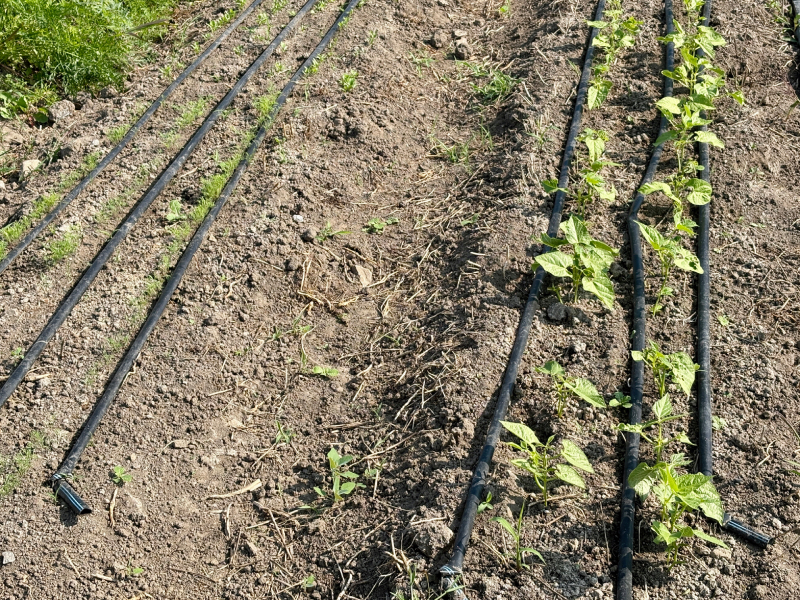
At Parachute Farm, Winchester and Griffiths are using a combination of water conservation methods, including drip irrigation to target water right to the roots and eliminate evaporation. Additionally, they use mulching, straw, and geotextiles to help retain moisture and humidity of the soil.
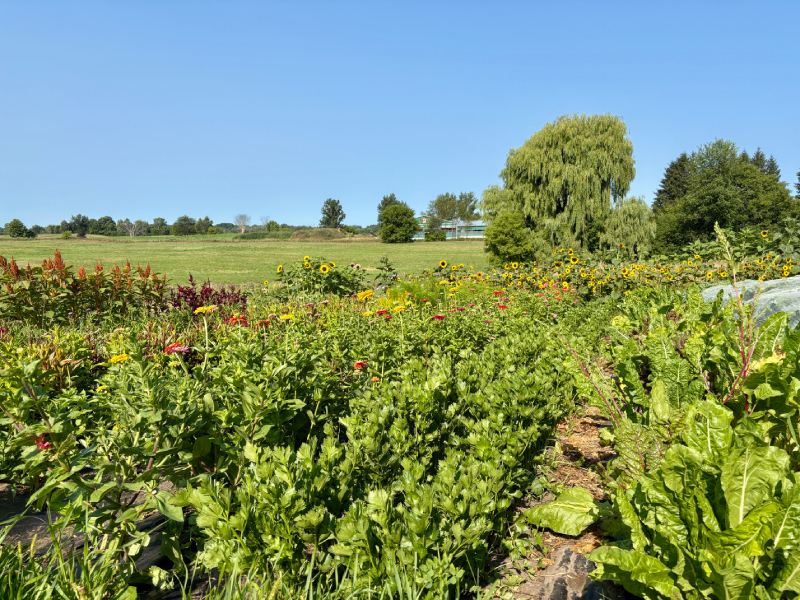
Even with these methods, Griffiths fears that the pond will dry up. “We’re probably going to run out of water at a certain point. It’s not if, but when.”
Many practices mirror those in Ontario and are outlined in MAPAQ’s sustainable agriculture regional action plan, which aims to reduce soil loss into waterways and optimize water source management as necessities for addressing the impacts of climate change.
Genest explained that some water conservation practices are already in use and include planting cover crops to reduce runoff and erosion and optimizing fertilizer use.
“Producers are also optimizing pesticide use to prevent groundwater contamination, diversifying crop rotations, and installing riparian buffers and other hydro-agricultural structures along waterways to stabilize banks and prevent soil erosion,” Genest said.
Sustainability resources for producers
OSCIA offers numerous cost-sharing programs to support farmers who want to implement water conservation practices. Mackellar said programs include the Resilient Agricultural Landscape Program (RALP)—part of the Ontario Agricultural Sustainability Initiative—and the On-Farm Climate Action Fund (OFCAF).
“Programs like RALP allow farmers to access a per-acre funding rate to undertake their water conservation project, depending on the practice. Other programs like the OFCAF have covered up to 65 per cent of a farmer’s cost to buy and plant cover crop seed,” Mackellar emphasized.
In addition to financial aid, OSCIA continues to work on water conservation and soil health education through interactive events where experts and farmers can learn more about the benefits of these management practices.
In Québec, Genest highlighted that MAPAQ has an advisory program for producers, which provides access to technical advice, soil and irrigation management, and its Prime-Vert Program.
The program offers financial support for agricultural producers to install hydro-agricultural structures, purchase or rent irrigation water management equipment, and build water supply and storage structures. Additionally, the Prime-Vert Program helped fund 48 collective projects focused on water management from 2021 to 2025.
MAPAQ has also funded two other water conservation projects, focusing on rainwater valorization in dairy production and testing water treatment systems to maintain adequate water quality for various agricultural production,” Genest said.
Both agencies stress that water conservation is not just a farm issue but is also directly tied to food security. Consumers can help by buying local and recognizing how extreme weather shapes the food they eat.
Winchester emphasized the continued need to see food and its production as a necessity, not a commodity: “We need to get away from this mentality. There needs to be more action by governments to preserve and maintain prime agricultural land and those who work in production. This ultimately limits the ability for small farmers to invest in conservation methods and technology because the primary focus becomes profit.”
“Agriculture is impacted by climate change, but it also impacts the climate. Through conservation, we can choose how we manage resources, and those choices will shape future food production,” Winchester concluded.
