

The rolling farmland of Eastern Ontario and Western Québec inspires awe through its natural beauty, fertile fields, and wide green pastures. Small-scale farmers across the region are working long hours to build sustainable, community-focused agriculture despite growing economic pressures.
Farmers like those at Jardins Stonefield and La Ferme Tabouâte face complex regulations, limited support, and increasing financial burdens as they navigate an agribusiness dominated by large-scale operations. Yet whether producing organic vegetables or premium beef, they continue to transform their passion into viable food production.
Both farms are part of a larger regional movement that highlights local foods, markets, and experiences for those wishing to reconnect with their food and to the farmers who produce it.
Even outside the growing season, farmers remain busy planning, marketing, and caring for livestock year-round.
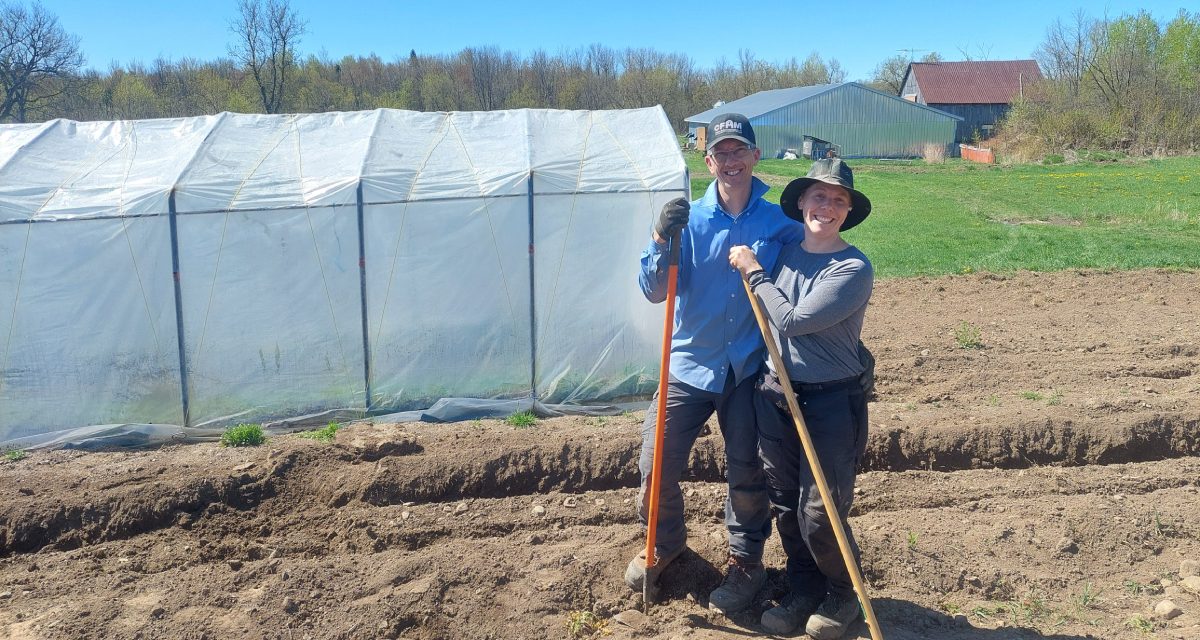
Roxanne Jasmin-Larocque and her partner, Michael Pelletier, launched Jardins Stonefield in 2022, bringing decades of agronomic experience to their certified organic farm in Brownsburg-Chatham with a vision for healthier local food. Both advise other growers and greenhouse operators as agronomy consultants and maintain additional jobs to support their farming venture.
Like many new farmers, Jasmin-Larocque and Pelletier had to overcome the high cost of farmland to get started, with many of the properties valued at over $1 million.
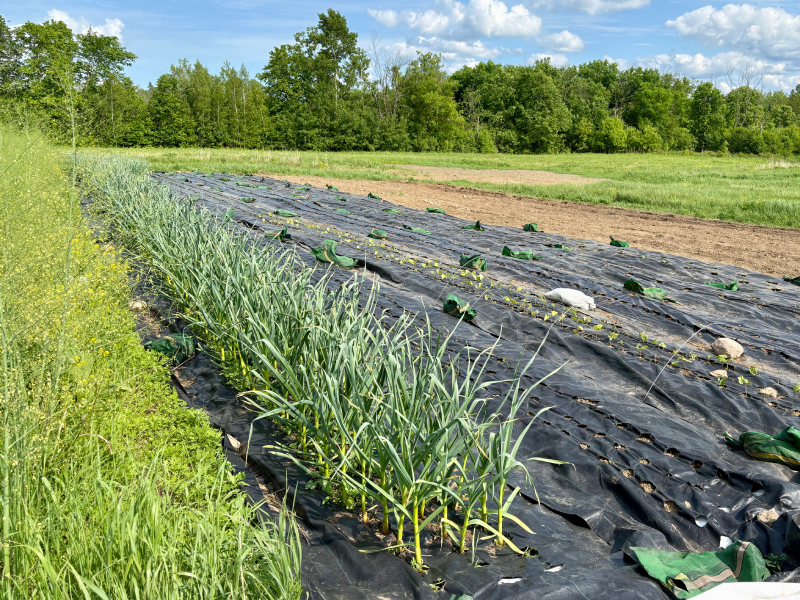
Their farm is centred on a Community Supported Agriculture (CSA) model, where customers purchase seasonal baskets in advance. Their baskets include a variety of seasonal organic crops such as asparagus, garlic, tomatoes, and watermelon.
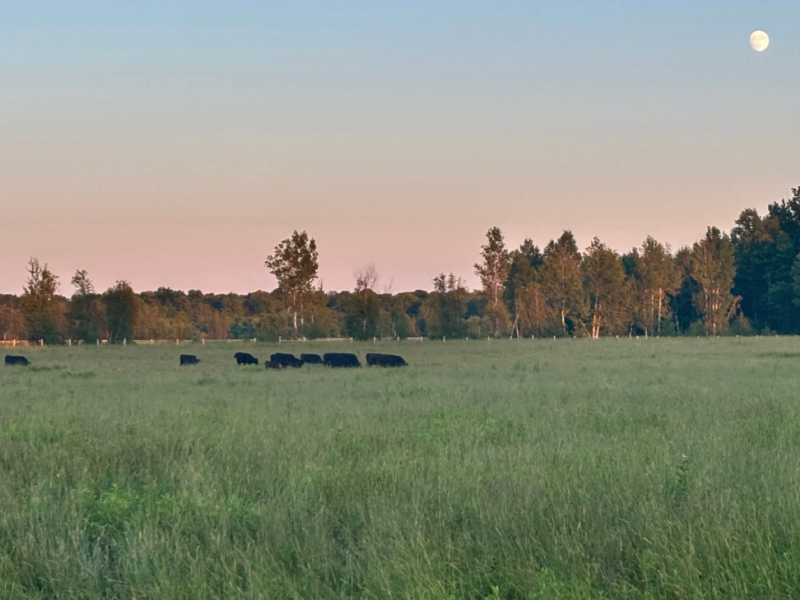
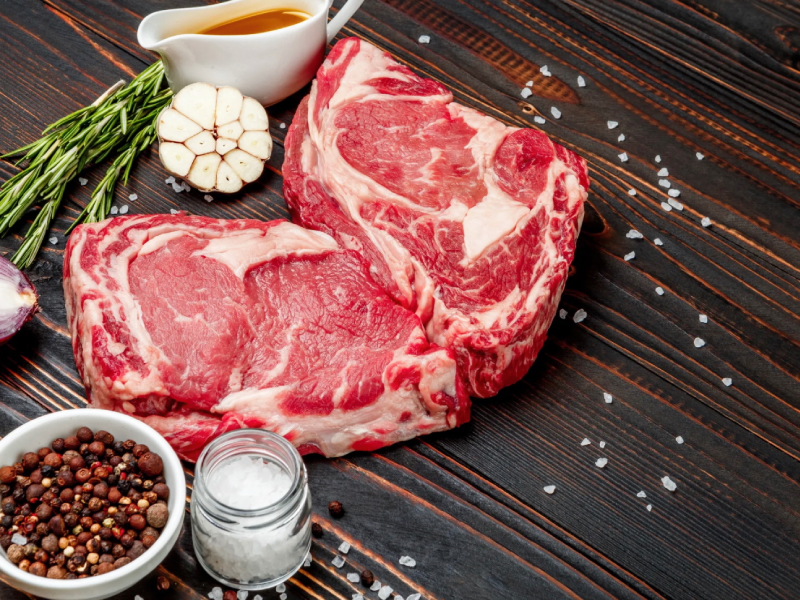
Across the Ottawa River and raised in the area, Carla and Niels Ksonzek also began farming in 2022 after returning to the region. La Ferme Tabouâte is near Hawkesbury and focuses on regenerative cattle farming, specializing in raising Angus and Wagyu beef in a low-stress, free-roaming environment across a span of 110 acres.
Carla describes their farm-to-table approach as “basically getting the customer to go back to purchasing their products directly from the farm.”
The farm is currently open by appointment only, with plans for a storefront launch just in time for harvest season that will offer a boutique shopping experience and a closer connection to their products.
Costs and Challenges
Operating a small-scale farm in the region requires creativity and resilience to manage the financial strain and bureaucratic hurdles. Jardins Stonefield, for example, does not rely on traditional tractors due to high upfront costs and maintenance.
Like many new farmers, Jasmin-Larocque and Pelletier make do without large machinery.
“We don’t even have a tractor,” Jasmin-Larocque said. “It’s just too expensive.”
Instead, they use a walk-behind machine for tasks like bed shaping and soil aeration. Doing so consumes far less fuel than a conventional tractor. This kind of equipment choice reflects a broader reality for emerging farmers who must balance affordability with efficiency.
La Ferme Tabouâte has invested in newer, more efficient tractors that meet environmental standards and require less fuel.
“We came in with a regenerative approach. Our goal was not to become part of the wholesale industry, rather, we wanted to bring people to our food,” Carla explained.
“We’re seeing savings both financially and environmentally,” she said. “Though it hasn’t all been easy.”
This approach has come with its own challenges for La Ferme Tabouâte, including being grouped with large wholesale producers in legislation, dealing with high consulting fees, and fewer financial incentives reaching small-scale farmers.
Despite some government programs aimed at sustainability, both farmers described the disconnect between policy intentions and the realities farmers face on the ground.
Many funding programs are slow and costly to access, with much of the money being absorbed by consultants and administration. Farmers themselves rarely receive the full benefit.
Trade Barriers and Legislation
Interprovincial trade regulations often limit where and how small-scale farmers can sell their products, creating barriers to growth.
For example, Jasmin-Larocque cannot sell prepared food products across provincial borders without costly certifications, further preventing growth opportunities in new markets.
“I can sell my prepared food in Ontario without the need for extra certification, but here in my home province of Québec, I would be required to apply for one,” Jasmin-Larocque explained.
“It makes zero sense,” she said.
For Carla, it is not just where you sell, but how producers are categorized by governments. She wants laws to recognize the scale of agricultural operations; “Why is someone raising 20 cows regulated the same as someone exporting 1,000 calves? We need legislation that supports smaller-scale, local food providers.”
“I would love to see legislation that would allow free trade for those under the $1 million gross revenue mark, perhaps,” Carla continued. “Or at least something targeted toward small-scale farms, in particular.”
Environment
Staying true to their environmental and organic standards, Jasmin-Larocque’s team relies on reusable geotextiles to control weeds. She hoped to reuse the same geotextiles yearly to prevent unnecessary agriculture-related plastic from entering landfills.
It is common for farmers to use plastic to prevent weeds without the use of herbicides, though this can contribute to increased plastic pollution if not reused or recycled properly.
Jasmin-Larocque also strongly recommends consumers reduce their carbon footprint by shopping smart and local, “people may go to the grocery store and think: ‘Product of Canada, so this must be local.’ But that’s not the case. True local products come from your local farms, provided to you by your local farmers.”
“We believe people should know their farmer and trust their food. That’s what keeps us going,” Jasmin-Larocque concluded.
Carla said, “A lot of the financial incentives offered by governments at different levels have been dedicated toward climate action on the farm, which is fantastic since we’ve been focusing our project with climate action on our minds.”
She clarified that a lot of government money has been invested in educating farmers and the industry about environmental standards and sustainability. However, Carla wants to see governments direct investments in purchasing or developing environmentally sustainable methods on the farm itself where the money is desperately needed, rather than mainly on education initiatives.
Carla joked about her humbling experience as a farmer, “If we wanted something profitable that could turn around in six months, we would’ve started an arms company.”
To learn more or schedule a visit to Jardins Stonefield, visit: https://www.jardinstonefield.com. For details on products and offerings at La Ferme Tabouâte, visit: https://lafermetabouate.com.
