
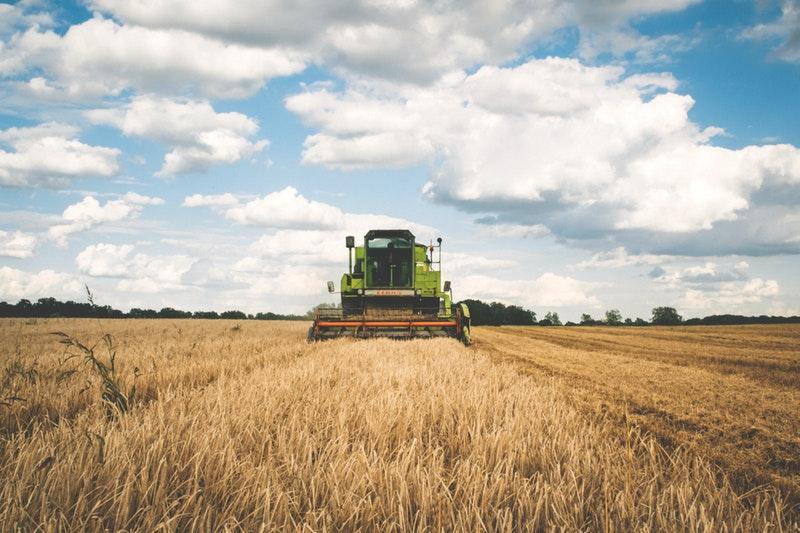
The size of contemporary farm equipment is large, and so are farm properties. Farmers often own several hundred acres in various parcels, or they rent land that is not connected to their own properties. This often requires tractors and machinery to travel between lands. The Township of North Glengarry has reached a solution to help reduce these challenges for farmers and landowners. On July 22, council adopted a bylaw allowing tractors and farm machinery to use unopened road allowances throughout the municipality so access can be more easily gained to farmland.
Director of Public Works Tim Wright told council the issue of using unopened road allowances was examined by the township’s Rural Committee, and its members had recommended the adoption of the bylaw.
Wright said road allowances are often poorly defined and that unlike the deeds and titles private property owners have for their land, municipalities do not possess paper titles for road allowances. He said that the new bylaw in North Glengarry will still prevent farm equipment from unauthorized travel on other private property, but it allows road allowances to be modified so they are suitable for equipment to legally use when permission is granted between landowners. Wright said the public has a common right of passage over all road allowances unless restricted by the municipality. Additionally, municipalities are not required to maintain unopened road allowances.
“A lot of these road allowances could be swampy. It may not look like a road at all,” Wright said.
The new bylaw in North Glengarry allows unopened allowances to be used for the passage of farm equipment. Farmers are required to complete an application to the township and obtain permission from adjacent landowners. The applicant must contact the other landowners for signed consent, establish common landmarks. There is a fee for the application. The township will also install a sign at the site indicating it assumes no liabilities associated with the access, the road is unopened, and not a public thoroughfare like other township roads.
If one of the property owners along the route objects, a land survey is required, at the farmer’s cost. Wright emphasized that the township does not want to assume the role of adjudicator in any disagreements associated with gaining access to the road allowances.
In establishing the road allowance access for farmers, an on-site meeting is required, and a map must be established. The applicant has seven days to contact the affected residents and they have 60 days to respond. If no response is received within 60 days, it is considered that the adjacent landowners have rejected the farmer’s request. The farmer then has the option of contacting the landowners again or paying for a survey.
Councillor Michael Madden asked if allowing farm vehicles to use road allowances could open up the possibility of all-terrain off-road vehicle users wanting to access road allowances.
Wright responded that all-terrain, off-road vehicles are only permitted on paved roads. He said those vehicles may already be using road allowances and doubted the bylaw will change that practice. Wright said the main issue is easy access for tractors and machinery due to the size of current equipment.
“The farm equipment is getting wider,” Wright said.
Councillor Gary Martin asked how wide the road allowances are.
Wright said most of them are just around 10 metres (33 feet), because of when they were planned.
“Their idea of what would be going down there was probably more like a buggy and a pony than a truck,” remarked Wright.
Mayor Jamie MacDonald was pleased a solution had been reached.
“Good job to the Rural Committee and thank you for bringing this forward,” he said.