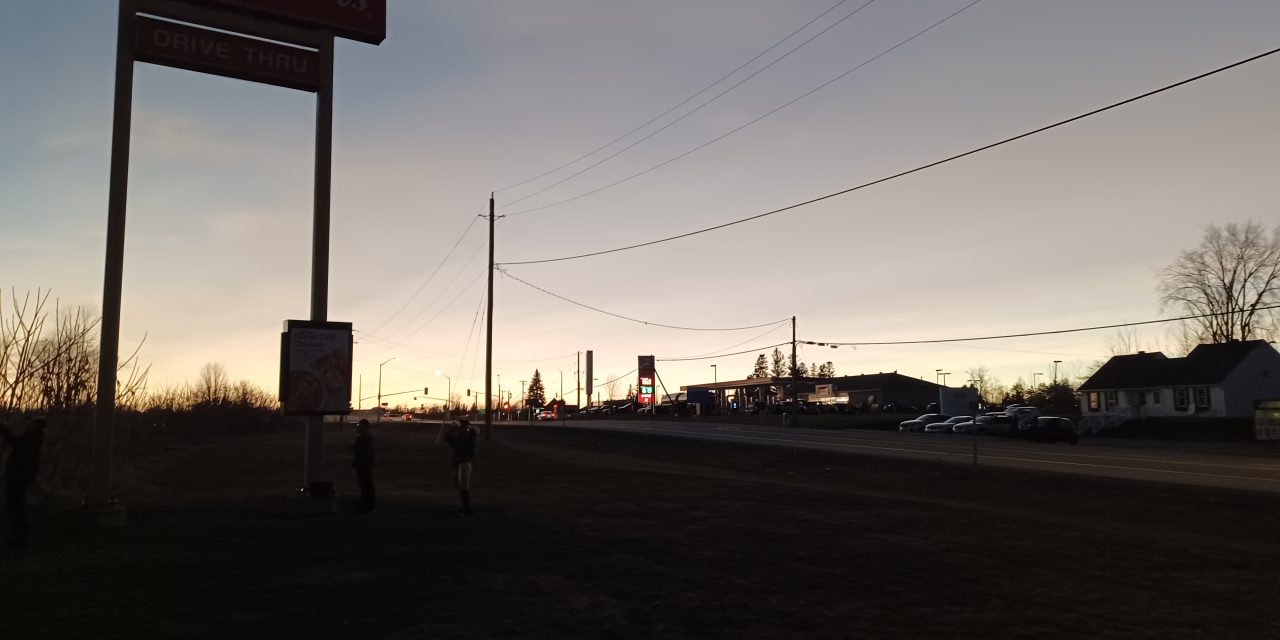
Natural history passed over our heads during the afternoon of Monday, April 8, 2024.
A solar eclipse, with complete totality in South Glengarry and the Soulanges area of Québec thrilled casual observers and genuine astronomers alike. Prescott-Russell was not in the path of totality for the eclipse, but the moon still covered 99.49 per cent of the sun in Vankleek Hill at 3:25 pm., according to the US National Solar Observatory (NSO).
Thousands of people drove to various places in South Glengarry, which was right in the path of totality, to see the eclipse. At 3:25 pm., 100 per cent of the sun was covered by the moon for one minute and 57 seconds in Lancaster, according to the NSO.
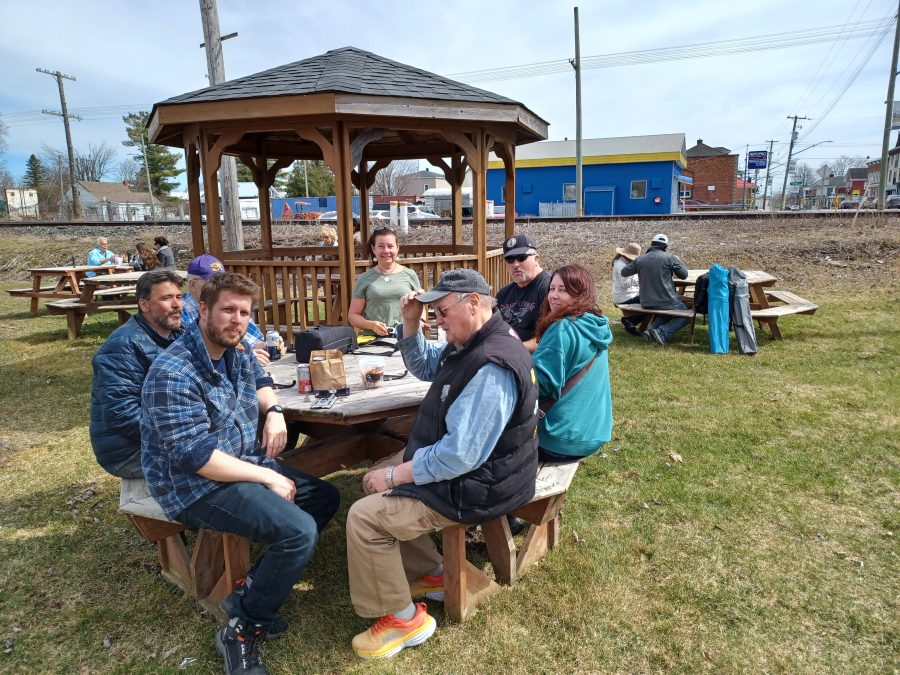
In and near Lancaster, residents and visitors alike were set up outside with lawn chairs, telescopes, and pairs of eclipse glasses with lenses made of material that make it safe to stare at the sun.
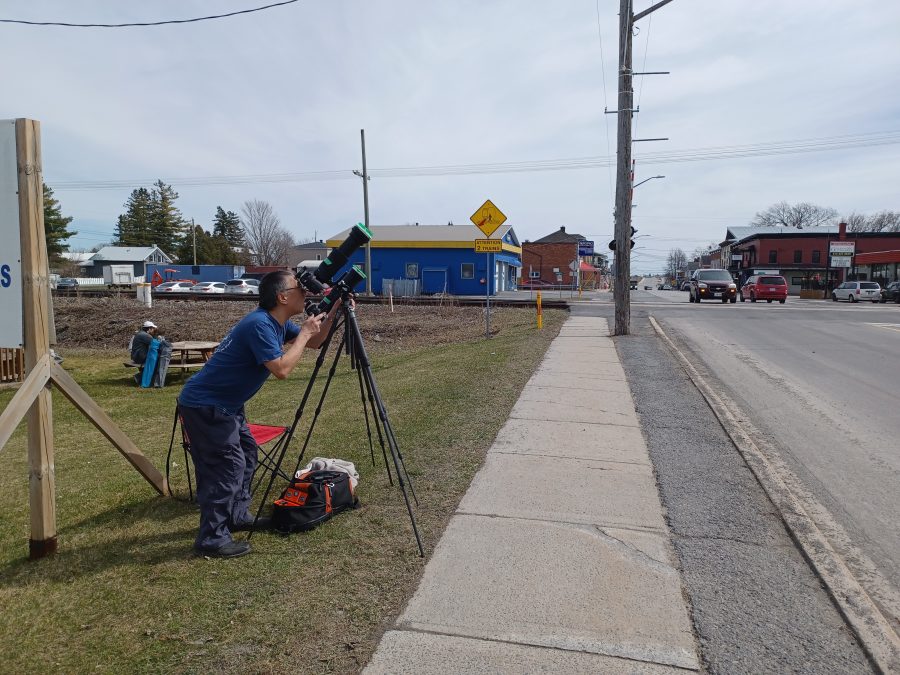
“It’s one of the things on the bucket list,” said Yung Ma of Edmonton, who had his telescope set up outside Loretta’s Chip Stand in Lancaster. He and his friend Stan Wereschuk had just decided last week to make the trip to see the eclipse.
“I knew we’d have to come east,” Wereschuk said.
Nearby at Glengarry Park by the St. Lawrence River, a couple from Ottawa were watching the eclipse with friends visiting from Albany, New York. Schools across Eastern Ontario and Southern Québec had been canceled for the day out of concern for the safety of the children’s eyesight, but many parents used the day as an opportunity to watch the astronomical phenomenon with their families. Luc Rainville and his sons Matteo and Tyson traveled from Casselman to Glengarry Park to see the eclipse.
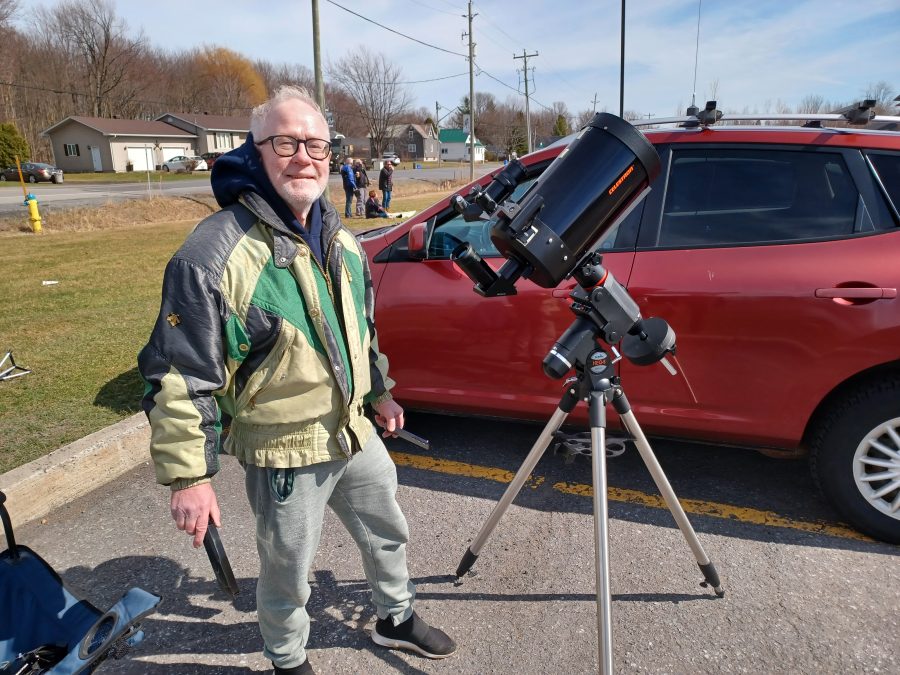
The mood was festive in the parking lot of the Tim Hortons located in Lancaster near the Highway 401 interchange where many people had gathered. One of them was astronomer Richard Alexanderowich of Alexandria, who also runs an astronomy program at the Champlain Library in Vankleek Hill. Alexanderowich, who had a large telescope set up beside his car, said he had been planning for months and making sure he had the right equipment.
As totality approached in Lancaster, the sky became darker and the temperature became cooler. Birds and crickets chirped. Streetlights came on as a feeling of dusk fell. When the sun became completely obscured, children and teenagers cheered. Alexanderowich was excited as he watched through his telescope.
“I see Baily’s beads!” he exclaimed.
Also known as the diamond ring, Baily’s beads are an effect created when sunlight shines through the mountains and craters of the moon during an eclipse.
The one minute and 57 seconds of totality in Lancaster felt more like it was sundown and not total darkness. Full sunlight was visible to the north with a darker looking sky over the south side of the St. Lawrence River. The centre of the path of totality was a diagonal, northeast line across the Adirondack Mountains.
As totality ended in Lancaster, the sky began to slowly brighten and the impromptu parties ended. Long lines of cars followed the roads leading away from the area.
Photos: James Morgan