

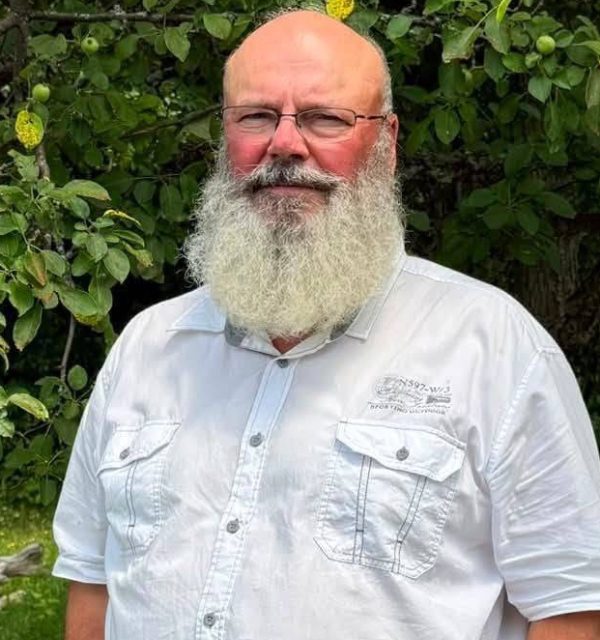
Victor Brassard says he did not come to North Glengarry with a political career in mind. Ten years after moving to the township with his wife, Julia, Brassard is now seeking the mayor’s seat, saying his decision is rooted in the community and the life his family has built there.
In November 2016, the couple purchased 45 acres just outside Alexandria. The property eventually became Anastasia’s Domain, named after their youngest daughter, and grew into a farm with trails, cabins, gardens, and other features that have welcomed thousands of visitors.
“What started as a piece of land became our home,” Brassard said.
The couple raises animals, keeps bees, and grows food, while Brassard says they have tried to be good stewards of the land.
His professional background is in business and construction. He has spent much of his career building and running companies and managing employees, budgets, and projects, while also working with nonprofit, humanitarian, coaching, and community organizations. He currently serves as chair of the Friends of the Glengarry Trails Association.
Brassard is a husband, father of seven, and grandfather of 13.
“I didn’t move to North Glengarry looking for a political career. I came here to build a life with my family. Somewhere along the way, this community became home,” he said.
Brassard said that experience is now motivating him to seek the mayor’s position and put his skills to work for the community.
Three priorities
If elected, Brassard said his priorities over the next four years would centre on financial accountability, community health and growth, and infrastructure.
Financial accountability, he said, means residents should have a clear understanding of where their tax dollars are going, what the municipality’s priorities are, and what its long-term financial obligations look like. That means carefully examining the numbers, establishing priorities, and ensuring taxpayers are receiving value for the money being spent.
Brassard also identified housing, economic development, local businesses, and agriculture as important parts of North Glengarry’s future.
He said economic development should not focus exclusively on attracting new businesses from outside the township. Instead, municipal officials should speak with businesses and farmers already operating in North Glengarry to find out what is preventing them from growing.
“The people actually doing the work usually know where the obstacles are,” he said.
That could mean examining municipal processes and removing unnecessary barriers where the municipality has the authority to do so.
Agriculture, meanwhile, must remain central to the township’s economic planning, Brassard said.
“Farming isn’t something that happens outside our economy. It is one of the foundations of our economy and part of the character of North Glengarry.”
Infrastructure is the third priority he identified. Roads, water, wastewater, and other infrastructure may not be glamorous subjects, he said, but they will help determine what North Glengarry is capable of supporting in the future.
With major infrastructure projects underway and additional decisions ahead, Brassard said the municipality needs to balance maintaining existing infrastructure with planning for future growth.
Underlying the three priorities, he said, is trust between the municipality and its residents.
“People need to understand what their municipality is doing, why decisions are being made, and what those decisions are costing them.”
Housing and growth
Brassard said the municipality cannot solve housing affordability on its own, but it can influence some of the conditions that determine whether housing gets built. Planning, zoning, approvals, servicing, and infrastructure are all areas where the municipality can have an impact.
The question, he said, should be whether municipal policies are creating unnecessary barriers to housing that could reasonably be built in North Glengarry.
He said the township needs a variety of housing options to accommodate residents at different stages of life, from young families seeking their first home to seniors looking to downsize while remaining in the community.
That does not mean approving every development proposal.
“Growth still has to make sense for the community,” Brassard said.
Representing the township
North Glengarry’s communities have their own histories and concerns, and Brassard said the mayor needs to make an effort to hear from residents throughout the township. During his campaign, he said he has been travelling throughout the municipality, including Glen Robertson, Apple Hill, Dalkeith, Dunvegan, Greenfield, and Lochiel, as well as rural areas and concessions.
“North Glengarry isn’t simply Alexandria and Maxville,” he said.
Brassard said a mayor should not wait for residents to come to municipal offices or council meetings to make their concerns known. He also emphasized the role of council as a whole, saying councillors bring knowledge of their respective communities to the decision-making process.
With both Francophone and Anglophone communities in North Glengarry, Brassard said residents should be able to participate and be heard in either language.
“I want us to think as one North Glengarry without losing the identity of the individual communities that make the township what it is.”
Communication and transparency
Brassard also wants to see changes in how the municipality communicates with residents. For him, transparency means more than posting documents online after decisions have already been made.
Residents should receive clear, plain-language information about municipal finances, major projects, and priorities, he said, along with accessible council meetings and recordings and regular updates on project progress.
“Not everyone uses Facebook. Not everyone attends council meetings,” he said.
Some residents may prefer town halls, online forms, telephone conversations, or face-to-face meetings.
“Government doesn’t become more transparent simply by producing more information. It becomes more transparent when ordinary people can understand that information and have a reasonable opportunity to participate,” Brassard said.
First 100 days
If elected mayor, Brassard said his first 100 days would focus on understanding the municipality’s current position before making major changes. He would want to sit down with council and municipal staff to review the township’s finances, existing commitments, major projects, and infrastructure priorities.
He would then compare those realities with what he has heard from residents during the campaign before establishing a set of priorities that residents could see and measure.
Brassard said his experience managing organizations has taught him that a new leader should not immediately start changing things simply to demonstrate that they are in charge.
“You listen to the people who know the operation, understand what is working, identify what isn’t, and then make decisions.”
He also stressed that he would not enter office assuming everything currently being done is wrong.
“There is good work already being done in North Glengarry,” he said. “I’m not coming in with an eraser.”
