The market competitive advantage for artisan winery owners in Ontario is changing for the better, according to news recently heard through the grapevine.
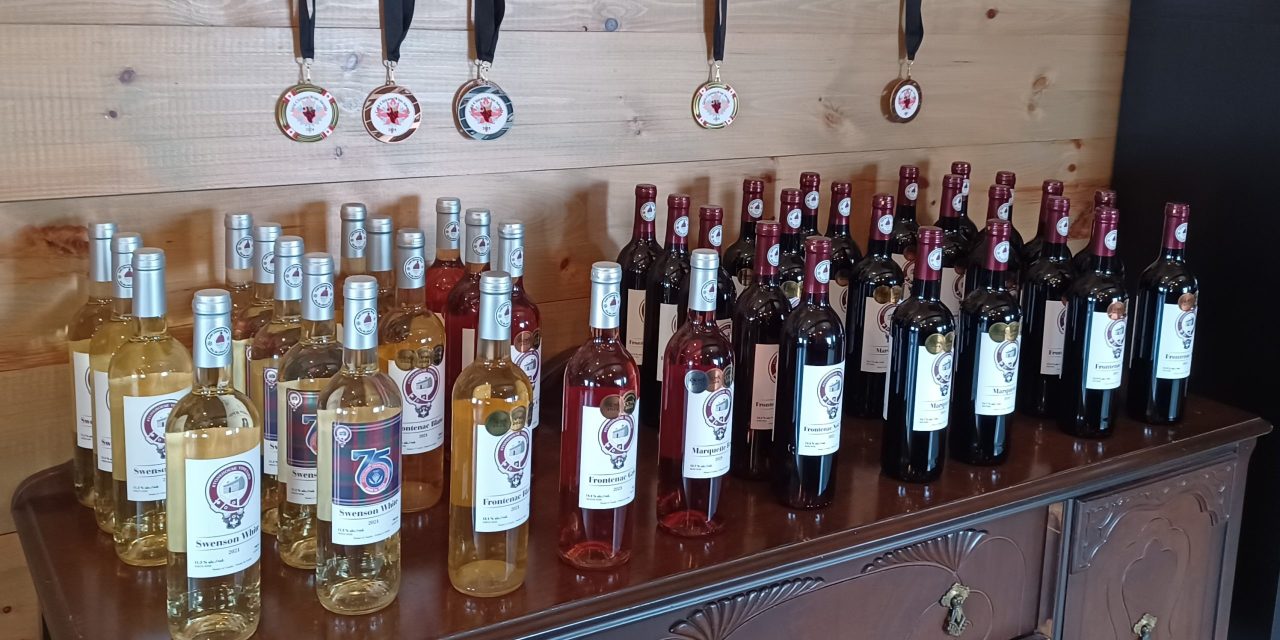
Stonehouse Vineyard in Lochiel Co-Owner and Chair of Ontario Artisan Wineries (OAW) Craig MacMillan recently learned that as of January 1, 2026, the Liquor Control Board of Ontario (LCBO) has harmonized the tax treatment of 100 per cent Ontario Non-Vintners Quality Alliance (VQA) wine with VQA wine when selling direct to a licensee in Ontario, such as restaurants, event venues, and caterers.
VQA in Ontario is an appellation system primarily dedicated to traditional European warm climate grape varieties that confirms the quality of a wine in terms of origin, vintage and label. OAW wineries are not part of VQA. Both VQA and OAW wineries use 100 per cent Ontario grapes. OAW members are very small independent artisan wineries that specialize in cold climate grapes which are ideally suited to the climate in Ontario and have been developed to be disease resistant and cold-hardy, in keeping with climate-smart viticulture.
Until recently, the LCBO imposed a 71.5 per cent mark-up and wine levy on 100 per cent Ontario Non-VQA wine sold direct to licensees, which effectively closed off this important sales channel for winemakers like MacMillan.
The change means that local wineries producing 100 per cent Ontario Non-VQA wine can now sell direct to local licensees because they are subject to the same lower charges that are imposed on VQA wine.
“This is a big win for local artisan wineries and local agritourism, as 100 per cent Ontario Non-VQA wineries simply could not afford to sell their wine to local licensees as they were paying a cumulative ‘tax’ of over 50 per cent,” said MacMillan.
Due to the changes, MacMillan is really hoping that local, licensed establishments such as restaurants will see this as an opportunity to support local wineries, particularly because the recent years have been challenging for the artisan wine industry due to the pandemic and now tariff issues with the US.
According to MacMillan, OAW members, who make less than 2,000 cases of wine annually, were told for years by the wine-industry that this change could never happen, and that legislative amendments would be necessary. MacMillan said that after considerable research, the OAW established that the charges levied by the LCBO were purely policy decisions, which the Minister of Finance could directly change, but it took four years and multiple delegations and presentations to provincial ministers and officials to finally get action.
MacMillan and the OAW have been advocating for the changes for the past four years. MacMillan thanked municipal councils and other organizations across Ontario for their support for his advocacy. He specifically thanked North Glengarry Mayor Jamie MacDonald and the township council, county councils in Stormont, Dundas and Glengarry, Prescott and Russell, Leeds and Grenville, and city councils in Cornwall and Ottawa which adopted resolutions or wrote to the Minister of Finance after receiving a presentation from the OAW on the negative impact the LCBO charges were having on local, 100 per cent Ontario Non-VQA wineries and agritourism.
The Glengarry Federation of Agriculture under Duncan Ferguson, was also a key supporter of MacMillan’s efforts, which led to support from the Ontario Federation of Agriculture, as was support from Restaurants Canada, several chambers of commerce, and the Eastern Ontario Agriculture Food Network. Hundreds of letters were also signed and submitted by members of the public to the Minister of Finance. MacMillian said that without this broad-based support, this change would not have happened.
The OAW is pleased that the province did harmonize the treatment of 100 per cent Ontario Non-VQA wine and VQA wine when selling to a licensee. However, MacMillan said there is still more work to do to overcome what he calls fundamentally unfair elements to the wine marketplace which do not reflect the government’s promise of a modern, open and competitive market.
Photos: James Morgan