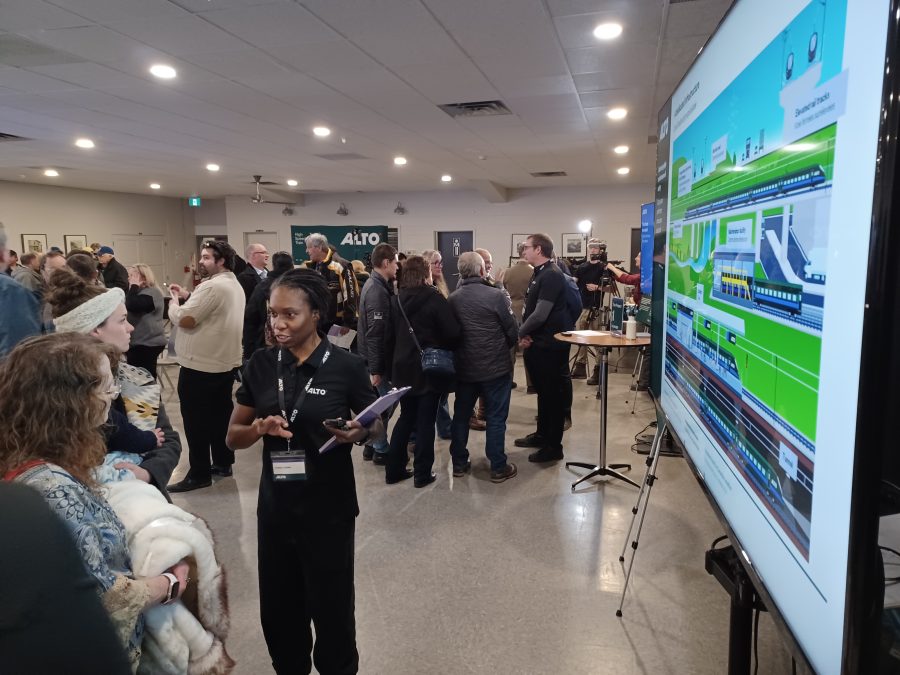

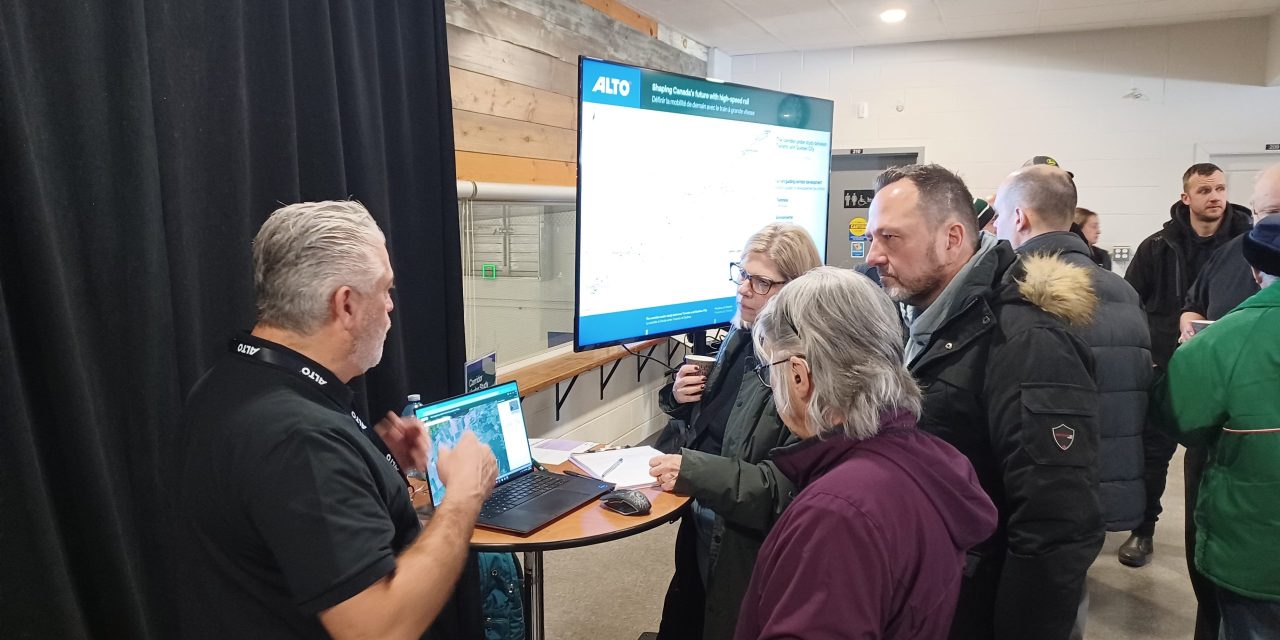
The railroad did not come to town on Thursday, January 29, but discussions about it certainly did. Two information sessions about Alto, the federal government high-speed rail project, were held at the Vankleek Hill Community Centre.
There was significant attendance at the sessions. Benoit Bordeau of Alto Media Relations said 268 people attended the morning session alone in Vankleek Hill, which was more than the number of participants at a previous session in Montréal. A morning session on January 29 in St-Philippe attracted 294 participants.
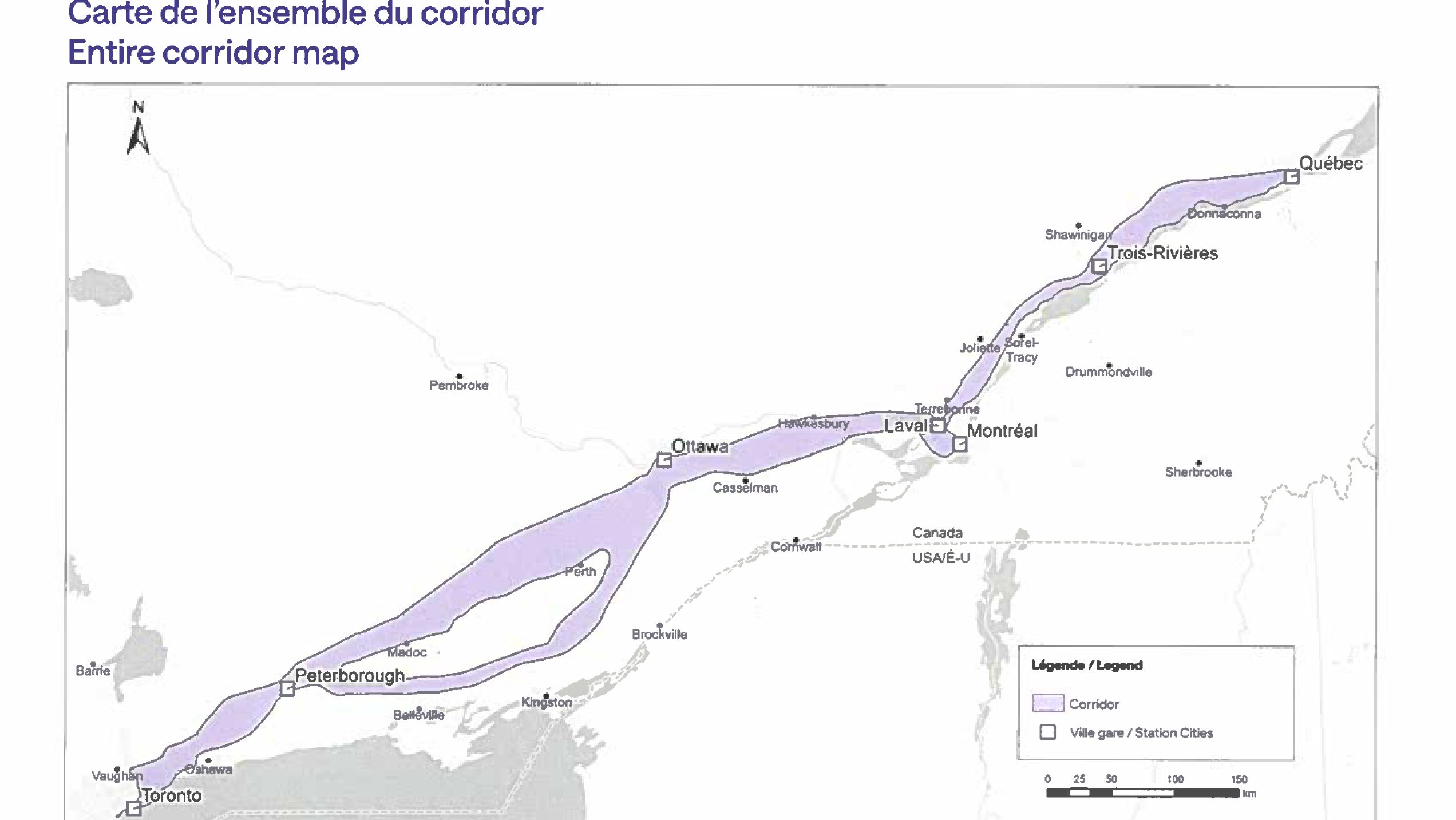
Eventually, the Alto system is to connect Toronto, Ottawa, Montréal, and Québec City. The first phase of the project is to be between Ottawa and Montréal. Construction of the rail line, which will carry electrically powered trains travelling up to 300 kilometres per hour, could begin by 2029. Currently, a total of seven station stops are planned for the entire Alto system. They are Toronto, Peterborough, Ottawa, Laval, Montréal, Trois-Rivières, and Québec City.
The federal government, and by extension Alto, says the project will move more people, more quickly, with fewer emissions than motor vehicles or airplanes in the area where nearly half of Canada’s population resides. More than 18-million people live in the Toronto to Québec City corridor, and that number is projected to increase by 30 per cent to 24 million people by 2041.
Once Alto is fully operational, it is expected to be financially self-sustaining. The federal government has already allocated $3.9 billion over six years for the design and development of the project. An additional $368.3 million over six years has also been allocated to fund Alto operations. While Alto is a federal crown corporation, it is also a public-private partnership involving a consortium of companies under the Cadence umbrella. Two partners in Cadence are Air Canada and French rail company SNCF Voyageurs.
Alto contends the project will add 1.1 per cent to Canada’s annual gross domestic product (GDP), create 50,000 construction jobs, and remove the equivalent of 100,000 cars off highways because of people travelling by rail instead.
A 10-kilometre-wide corridor crossing the northern part of Prescott and Russell counties is under consideration for the Alto route.
“There is no alignment yet,” said Katie Feenan, the Stakeholder Engagement Lead with Alto.
Feenan explained that the purpose of the consultation process is to find out from residents and property owners what the “no-go zones” are within that 10-kilometre corridor for the eventual alignment of the tracks. The eventual alignment will not be 10 kilometres wide. Feenan added that due to the high speed of travel, the alignment will need to be as straight as possible. The Alto line will be secured by fences on each side for safety. Feenan also noted that unlike in major projects in past decades, environmental and Indigenous concerns are a priority in the planning process for Alto.
Bourdeau also emphasized the route has not yet been finalized, and the information sessions are about knowing what the public will or will not accept in a final decision.
“That’s exactly why we’re here,” he said.
Bourdeau said expropriation, the process where land could be taken for the Alto route, is a last resort.
“That’s not what we’re aiming to do at all,” he said.
Bourdeau said Alto would rather sit down and negotiate with property owners.
“The compensation will be more than fair,” he assured.
Alto hopes to have the route finalized by the end of 2026, and a second round of consultations will follow.
“We want to give predictability,” Bourdeau said.
The online Alto consultation process continues, and further sessions are planned in communities across Eastern Ontario and southern Québec. For more information, please go to https://www.altotrain.ca/en/public-consultation.