

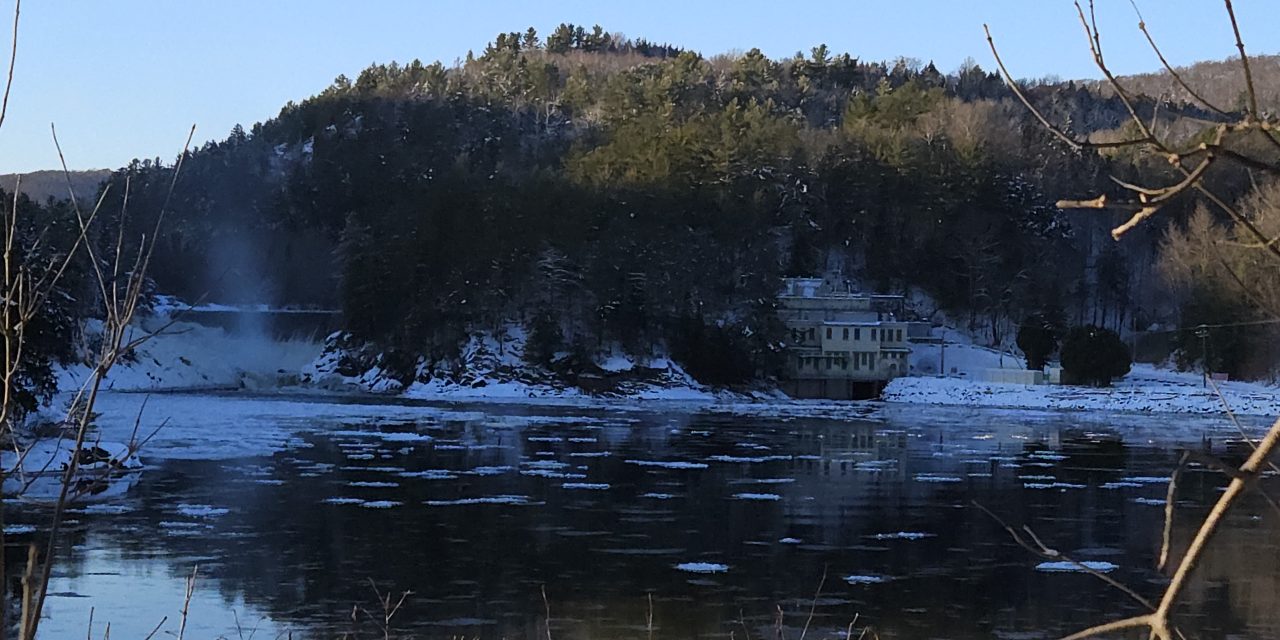
Hydro-Québec has approached the Municipalité régionale de comté (MRC) d’Argenteuil and the Indigenous communities of Kanesatake near Oka and Kitigan Zibi near Maniwaki regarding the potential restart of the Bell Falls hydroelectric station, with the municipal and First Nations groups acting as promoters and taking on responsibility for renewed generation capacity. The Bell Falls station was constructed along the Rivière Rouge in Grenville-sur-la-Rouge in 1915.
Restarting the station could help advance these goals through reinvestment in the decommissioned site.
Bell Falls once generated up to 10 megawatts (MW) before being decommissioned in 2011, producing enough electricity to supply approximately 5,000 Québec homes.
Bell Falls now operates solely to regulate downstream water levels and prevent flooding in Grenville-sur-la-Rouge. The April 2019 Rivière Rouge flood prompted Hydro-Québec to undertake a comprehensive retrofit project between 2019 and 2021. The work included expanding the weir to increase discharge capacity, modifying the two turbines to handle higher volumes, and installing anchor walls and excavating bedrock for stability, at a cost of $3,985,000.
Although Hydro-Québec has not confirmed whether Bell Falls will reopen, the utility approached the MRC d’Argenteuil, the municipality of Grenville-sur-la-Rouge, and the two First Nations communities to gauge willingness to share responsibility for the potential project. Hydro-Québec currently maintains the dam and is responsible for ensuring safe water flow during flood events.
Municipalité régionale de comté (MRC) d’Argenteuil Director-General and Treasurer Eric Pelletier said the MRC was the first to respond to Hydro-Québec’s request, noting Council passed a resolution supporting advancement of the project. Pelletier added that Council also offered to act as the lead entity, coordinating the project file and representing the group in negotiations with Hydro-Québec and regulators.
Consultations among the four communities are ongoing with no specified end date.
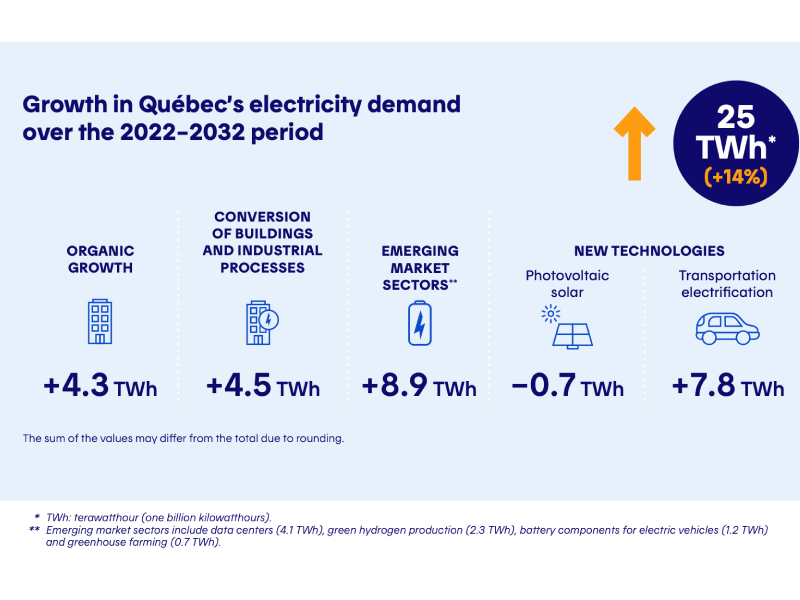
A 2022 Hydro-Québec report estimated a 25-terawatt-hour (TWh), or 14 per cent, increase in energy demand, along with a need for an additional 4,000 megawatts (MW) of capacity by 2032. This projected growth is primarily driven by transportation electrification, decarbonization initiatives, and emerging economic developments.
Hydro-Québec’s 2022-2032 Electricity Supply Plan includes pursuing projects to add 2,000 MW of capacity to the existing hydroelectric stations by 2035 and evaluating the contribution of an updated assessment of Québec’s remaining hydroelectric potential.
The 2035 Hydro-Québec Action Plan calls for adding 3,800 and 4,200 MW of new hydroelectric power by increasing the capacity of existing facilities and constructing new ones. Hydro-Québec estimates that $35 to $45 billion in investments will be required to meet this goal by 2035.
