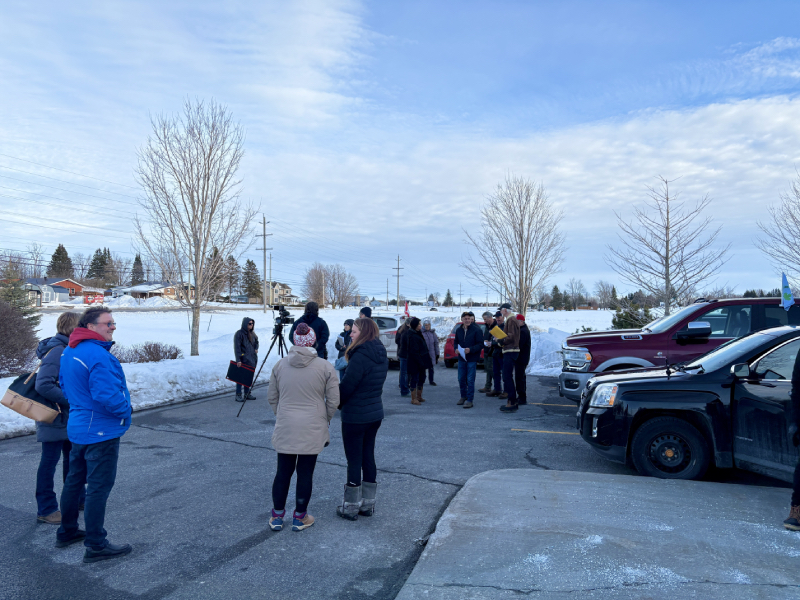

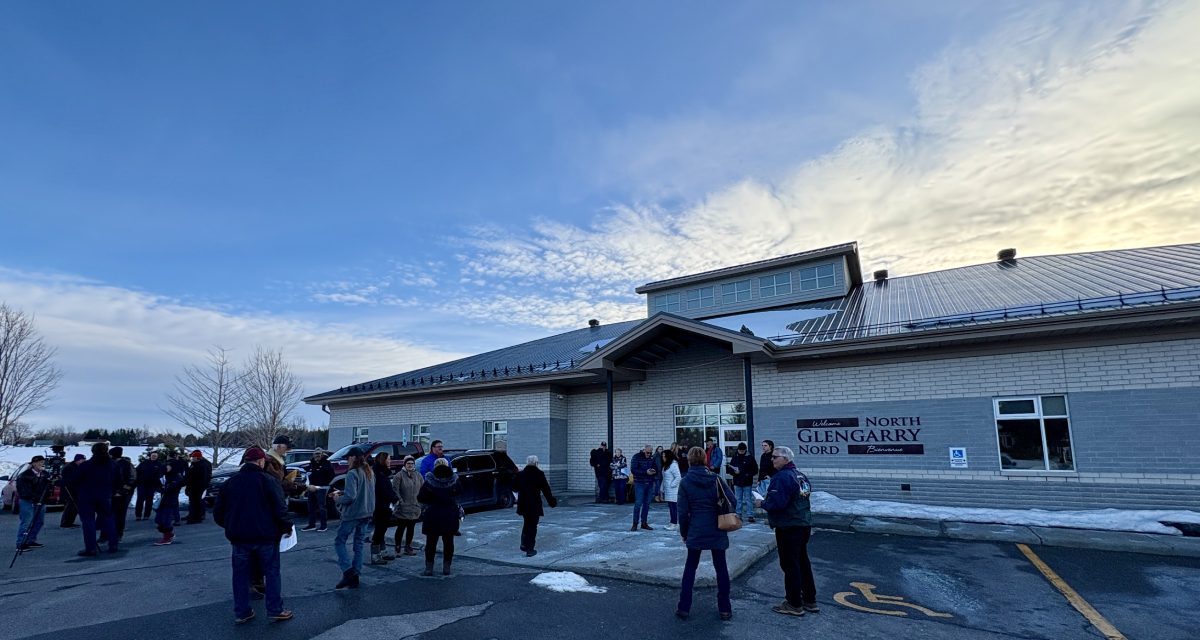
At the March 10 meeting, North Glengarry council heard from concerned citizens about the Battery Energy Storage System (BESS) project slated for Skye Road. Although the project was not on the agenda, citizens voiced their concerns during an extended question period.
Council had unanimously approved a rezoning by-law on February 24, allowing the property to be designated as general agricultural special exemption to permit the facility.
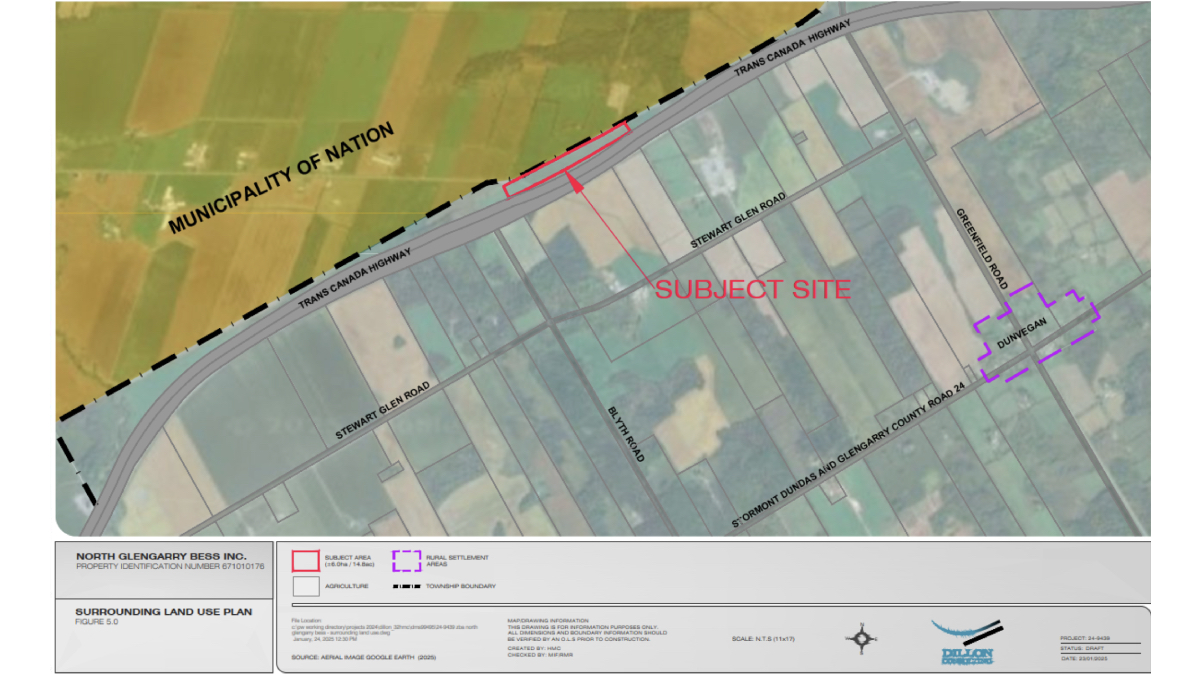
Electricity from the power grid is fed into BESS facilities and stored in batteries, then released back into the power grid at times of greater consumer demand. The proposed Skye Road project is located across the road from the Hydro-One St-Isidore Transformer Station (TS). Electricity from the TS would be stored in the BESS batteries.
Public Concerns on Transparency
Save SDG (SSDG), a citizen-led group opposing the project, attended in large numbers, citing environmental, health, and safety concerns. SSDG’s stated goal on its website, www.savesdg.com, is to overturn By-law Z-01-2025, arguing that it was passed without sufficient public consultation.
In a letter to Mayor Jamie MacDonald, SSDG’s media contact, Richard Hudon outlined concerns about fire hazards, toxic emissions, property devaluation, and long-term community impact. A key complaint was the perceived lack of transparency and public engagement.
However, a public meeting for the North Glengarry BESS was held on October 18, 2023, in compliance with the Ontario Independent Electricity System Operator (IESO) requirements. The IESO, responsible for community engagement and energy planning, clarified that municipalities are not responsible for distributing notices about such meetings.
When asked why no affected residents attended the public meeting in Dunvegan, council members responded that they cannot compel public participation. Councillor Michael Madden emphasized that multiple opportunities for engagement were provided, stating, “We can’t force people to be engaged.”
MacDonald added that the project was publicized in newspapers and on social media.
Meeting minutes and presentations have been made on the project’s website, www.northglengarryenergystorage.com, and The Review has published multiple articles on the topic between December 2023 and March 2025. Additional public meetings were scheduled for February 2025, with no citizen concerns raised.
Safety and Insurance Concerns
A resident expressed concerns about potential liability, including risks to livestock, nearby residents, and that the project could lead to insurance cancellations.
MacDonald dismissed this claim, stating, “That’s not true. I’ve lived here my whole life; I’m not about to put the Township of North Glengarry residents at risk if I don’t believe this is safe.”
Citizens then referenced incidents in South Korea, Arizona, California, and Germany as evidence of safety risks associated with BESS fires. In response, North Glengarry Fire Chief Matthew Roy assured attendees that Canadian safety standards are more rigorous and that the fire service is well-equipped to handle such incidents, with additional training to be provided to firefighters during the project’s onset.
He further highlighted that hazardous materials are already transported through the region daily, including via Highway 417 and rail lines.
One of the organizers of the SSDG project, Larissa Douglass, explained that “this project is not a vehicle for green power and local economic rejuvenation. It’s a Trojan Horse – a ticking time bomb.”
Deputy Mayor Carma Williams acknowledged the public’s concerns, stating, “I had 101 questions, and they were the same as yours. I was not going to support this project unless I was confident in its safety and utility for the region.”
Next Steps
MacDonald informed attendees that only property owners within 120 metres of the proposed site can formally appeal the project under the Planning Act. Throughout the meeting, he had to intervene multiple times to restore order as audience members shouted comments.
As the project moves forward, council maintains that all procedures have been followed in accordance with municipal regulations and that public engagement efforts were conducted appropriately.