

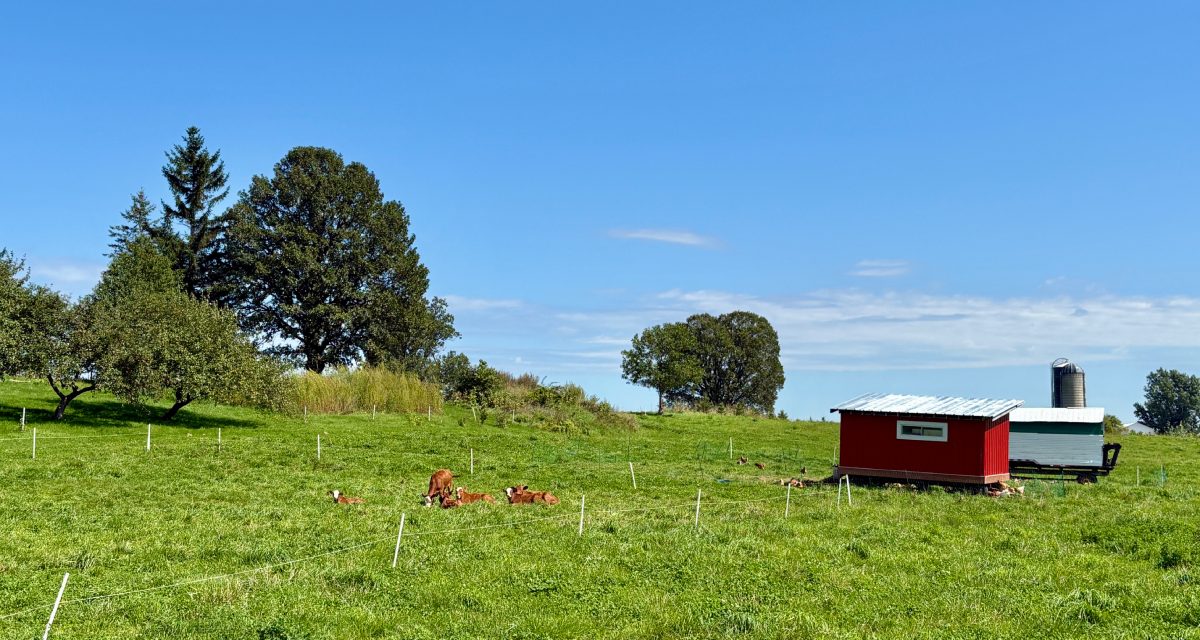
For Michael “Mike” MacGillivray at Kirkview Farms in Kirkhill, looking toward the future means, in some ways, looking back. MacGillivray is the eighth generation to steward the land, which has been in his family for generations.
About nine years ago, MacGillivray began transitioning the operation toward regenerative organic agriculture, changing how the farm manages both its livestock and its land.
“I talk in terms of it going back to the future,” MacGillivray said.
The shift toward regenerative agriculture began for personal reasons. After experiencing health issues, MacGillivray began looking more closely at the food he was eating and eventually started raising what he considered clean, healthy meat for himself and his family.
That interest grew into extensive research and visits to organic farms before the decision was made to change the management practices at Kirkview. The goal was not simply to change what the farm produced, but to create a system that could be more resilient and less dependent on outside inputs.
MacGillivray said the farm is not completely independent of outside resources, but it is trying to minimize its reliance on them, including fossil fuels.
“We’re trying to minimize the amount that we do use and try to be fairly conscious about that,” he said.
That approach is also intended to reduce some of the costs and uncertainties associated with outside inputs.
By relying more heavily on the farm’s own land and livestock, Kirkview can reduce its dependence on things such as commercial fertilizer and fuel. Livestock harvest the forage themselves and return manure directly to the land, reducing the need for machinery to perform those tasks.
The approach also provides some protection from disruptions outside the region.
MacGillivray said Kirkview’s regenerative model means it is less reliant on inputs coming from outside the area, including fertilizer transported from Western Canada. He said that can also reduce the impact of trade disruptions and American tariffs on the operation.
At the heart of Kirkview’s system is diversity.
The farm raises cattle and sheep, along with pigs and poultry. Different species have different grazing and feeding habits, meaning they can complement one another when integrated into the farm’s management system.
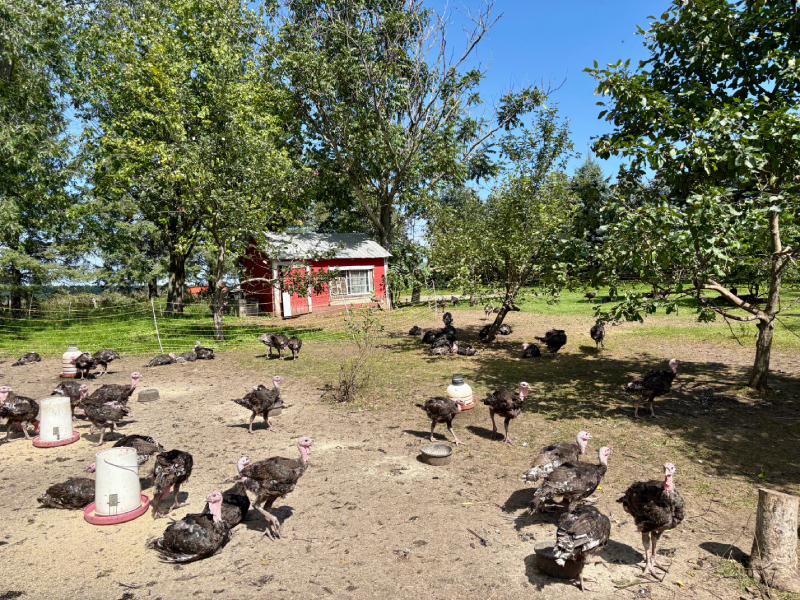
“Different species eat different plants,” MacGillivray said.
Cattle and sheep, for example, do not necessarily eat the same forage. Chickens can then provide another benefit when moved through the system, contributing nitrogen while also helping reduce insect and pest loads.
The diversity extends beyond the animals.
Kirkview’s pastures contain a variety of plant species, something MacGillivray sees as an important component of building resilience. Different plants perform better under different conditions. Some thrive in wet weather, while others perform better during droughts. Maintaining that diversity means the farm is not relying on a single forage species to perform under every possible condition.
The farm also pays attention to what grows naturally on the land.
Rather than automatically viewing every plant as a weed, MacGillivray looks at what those plants may be telling him about the condition of the soil. The dandelion is one example.
MacGillivray said cattle readily eat it, and its deep taproot can help break up soil compaction and bring minerals toward the surface.
“If you see a bunch of thistles there, you know there’s a reason they’re there,” MacGillivray said.
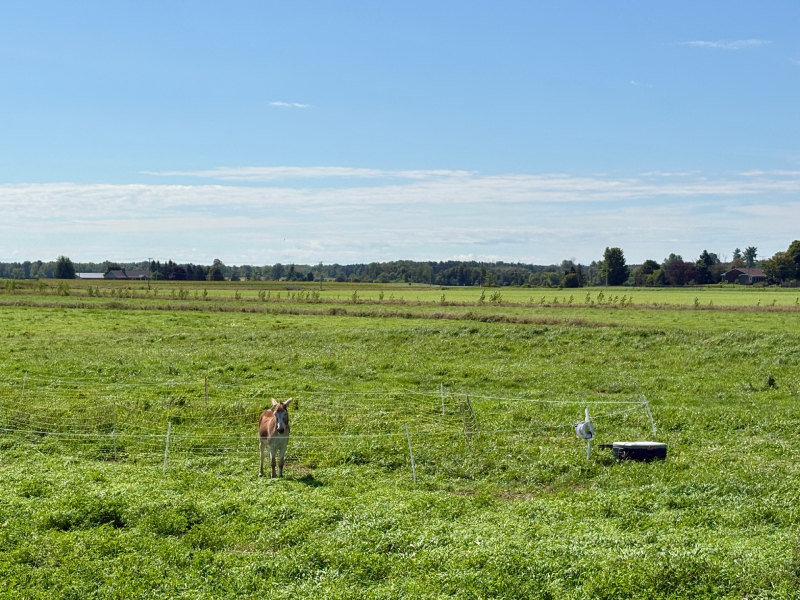
The plants, in other words, can provide feedback about the condition of the land. That approach reflects one of the broader principles behind regenerative agriculture: working with the conditions of a particular piece of land rather than trying to force it into a predetermined system.
But while regenerative agriculture may offer benefits for the land, farming remains a difficult business, particularly for small and medium-sized operations. Access to capital and regulatory burdens can create significant challenges, adding costs and administrative work to an already demanding job.
“Farmers are typically not the best at it, or it’s not their preferred thing,” MacGillivray said of the administrative side of the business. “They prefer to be farming instead of sitting in front of a computer screen or filling out reports.”
For Kirkview, another major challenge is reaching a scale that allows farming to become a full-time occupation. Without sufficient scale, farmers may need to maintain an off-farm job while building their agricultural operation. That creates its own difficulties, MacGillivray said, as time spent working elsewhere is time that is not spent focusing on the farm.
MacGillivray also sees an important role for consumers in supporting local agriculture.
As more people become interested in knowing where their food comes from, MacGillivray hopes consumers will also develop a better understanding of how livestock production actually works. That includes understanding how much meat can be obtained from an animal and the importance of using as much of the animal as possible.
MacGillivray said Kirkview sells a variety of products that might not always be found in a conventional grocery store, including chicken hearts, livers, feet, and skins, as well as carcasses. The approach is partly about respecting the animal and partly about making the most of the resources that went into raising it.
“People need to educate themselves,” MacGillivray said.
He noted that previous generations generally had a greater familiarity with different cuts of meat and how to use more of an animal. Products such as head cheese and blood pudding were once more common, while consumers today are often more familiar with a limited selection of cuts.
MacGillivray said he is seeing some consumers return to less conventional cuts and a greater interest in using more of the animal.
The farm’s long-term goals extend beyond simply expanding its own operation. Kirkview wants to help create more farmers.
The farm has hosted roughly 12 to 14 interns over the past several years, with four or five of those individuals now actively farming. It also holds knowledge-sharing events and seminars and works with people who want to learn more about regenerative agriculture.
For those considering farming, gaining hands-on experience can provide an opportunity to learn without having to make all of the same costly mistakes, MacGillivray said.
“We’ve had a lot of learning experiences over the last nine years,” MacGillivray said. “Some of them fairly expensive, so we don’t want other people to go through that.”
The farm is also interested in helping landowners connect with farmers and potentially stewarding additional land as the operation grows.
As Kirkview expands, MacGillivray said the goal is to have a positive impact on more land while helping more people enter agriculture. The farm’s vision is ultimately tied to the idea of stewardship: financially, environmentally, and within the broader community.
Kirkview’s mission is to steward the land entrusted to the current generation in a positive manner while sharing what it has learned with others.
The land has been passed down through eight generations, and MacGillivray hopes the next generation will have an opportunity to continue that tradition. He has six grandchildren, two of whom regularly spend time on the farm and have already developed an interest in farming and animals.
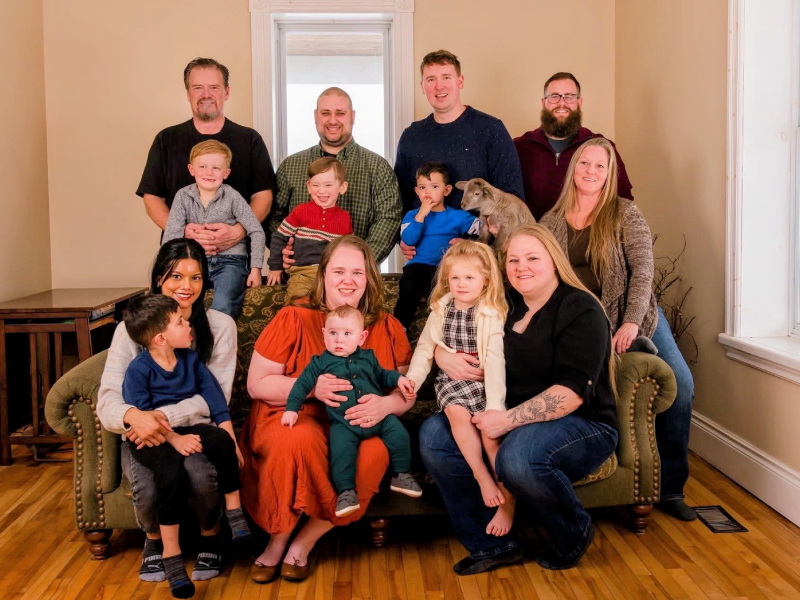
For an operation that has already passed through eight generations, that provides some encouragement that the tradition can continue. But the goal is not simply to keep one family farm operating.
Kirkview wants to see more farmers working the land and using systems that can remain viable for the future.
“Our goal for five years is to increase the number of farmers,” MacGillivray said.
“We need more farmers, not less.”
