
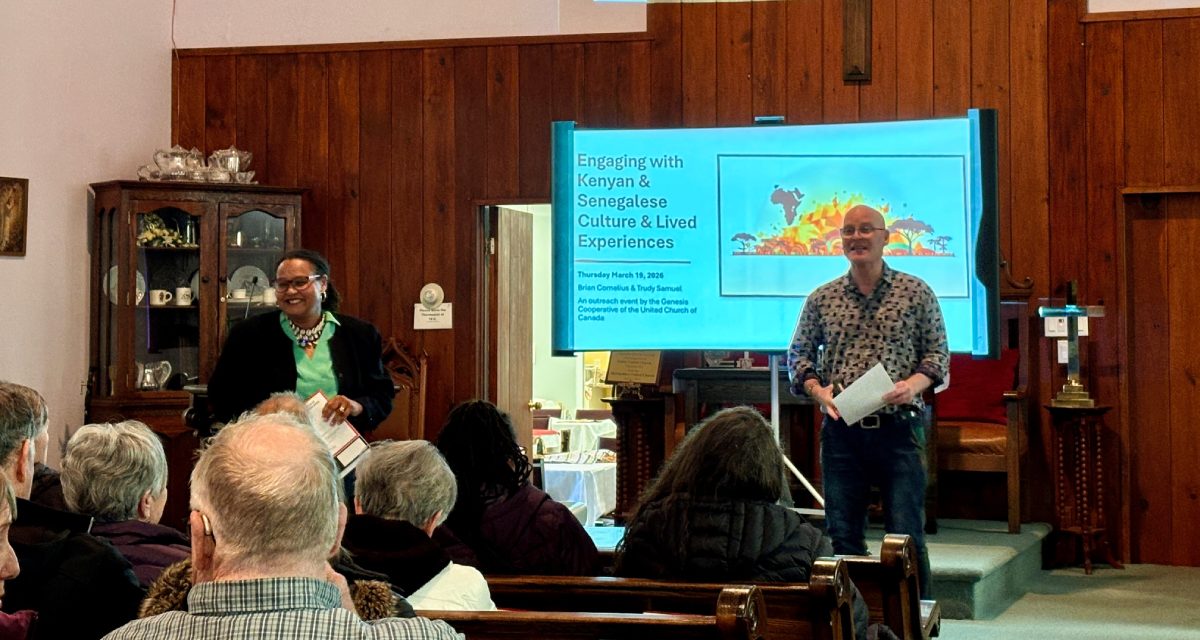
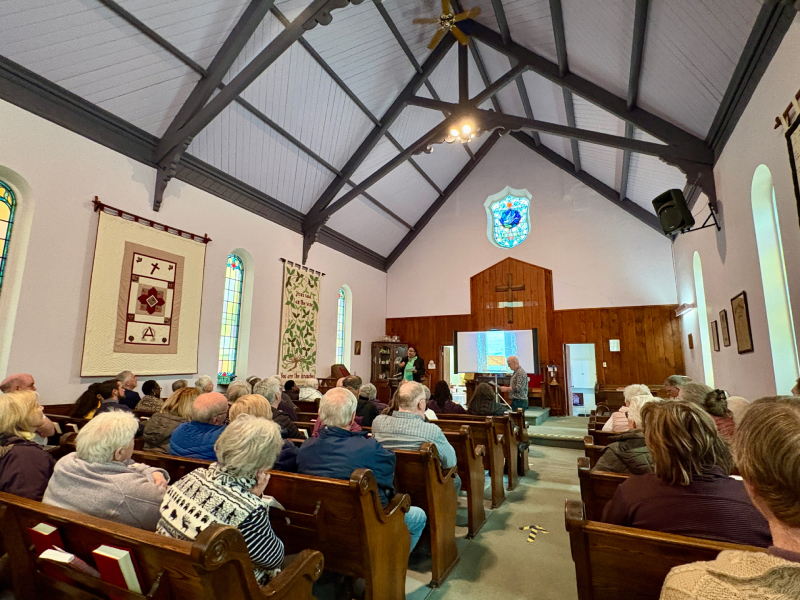
The Genesis Cooperative Community (GCC) of the United Church of Canada offered attendees at Trinity United Church in Vankleek Hill a window into life in Senegal and Kenya, blending personal experience with broader cultural and historical insights from two speakers with deep ties to the regions. On Thursday, March 19, Trudy Samuel and Brian Cornelius reflected on their trips to the African nations before an audience of approximately 40 people.
Samuel, reflecting on multiple visits to Senegal and her family’s Senegalese heritage, centred her talk on Teranga, a national value rooted in hospitality, generosity, and shared humanity.
“Teranga conveys kindness, openness, and shared connection,” Samuel said, describing it as more than a social custom. “It stresses generosity as a collective value: no matter your class, nationality, race, or religion—everyone is included.”
Drawing on her own ancestry, Samuel described Senegal as “a feeling of return, of going home,” noting that many enslaved Africans were taken from the western coast before being sent to North America.
She pointed to Gorée Island’s “Door of No Return” off the coast of Senegal, near Dakar, as a lasting symbol of that history: “It was the last place enslaved people stood before being taken across the ocean, never to return.”
Samuel’s experiences highlighted how Teranga is reflected in daily life. “No one eats alone; there’s always an invitation to join,” she said. “There is no shame in giving or receiving.”
Even small, everyday interactions left a lasting impression. In one instance, a passerby gently guided her away from traffic before continuing without hesitation. “He asked for nothing,” she recalled. “That is the spirit of Teranga.”
Samuel contrasted this with North American norms, where systems often replace interpersonal responsibility: “The rules we rely on here aren’t required for people to be kind there,” she said.
The second speaker, Cornelius, was born in Kenya in 1962 just prior to independence and offered a more personal account shaped by both childhood and return visits later in life.
“I realized how much I didn’t know about my own birthplace,” he said, explaining that he grew up in a missionary household largely disconnected from local communities. “I returned not to help, but to learn.”
Cornelius described a country marked by both progress and persistent challenges. While Kenya has a highly educated population and areas of economic success, more than 40 per cent of people struggle to meet basic needs, with many living on less than $3 a day.
“There are brilliant, successful people—but also millions struggling to survive,” he said.
Despite these challenges, he emphasized the strength of community networks, particularly informal groups known as chamas. These cooperatives pool resources to support members and fund small businesses.
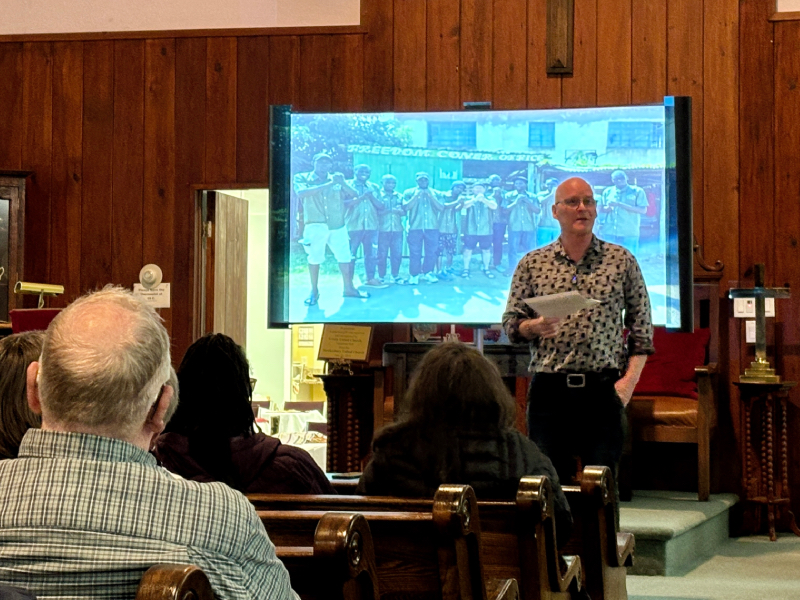
“Chamas pool meagre resources for the common good. They provide a social safety net where none exists,” Cornelius said.
He shared the story of a group of young men who formed a chama while working along a major highway. Initially helping stranded travellers navigate construction disruptions, the group built a small business by sharing earnings equally and reinvesting in their community.
“At the end of the day, whatever they earned, they shared equally,” he said. “They chose to help people instead of taking advantage of them.”
Over time, their efforts expanded into larger projects, with profits divided between workers and a development fund aimed at supporting others. “It’s not just sharing; it’s about empowering people.”
Cornelius also reflected on governance challenges, noting that corruption and policy decisions can have immediate impacts on ordinary citizens. “When governance fails, it hurts ordinary people. Big decisions are made, and small people pay the price.”
At the same time, he pointed to a younger generation pushing for change, describing a highly educated but underemployed population seeking greater opportunity: “People have high education rates, but there are simply no jobs,” he said.
Together, the two speakers offered contrasting but complementary perspectives: one focused on cultural values rooted in hospitality, the other on resilience through community organization.
Both speakers pointed to a shared lesson.
“They don’t ask how to build community,” Cornelius said. “They just live it.”
