
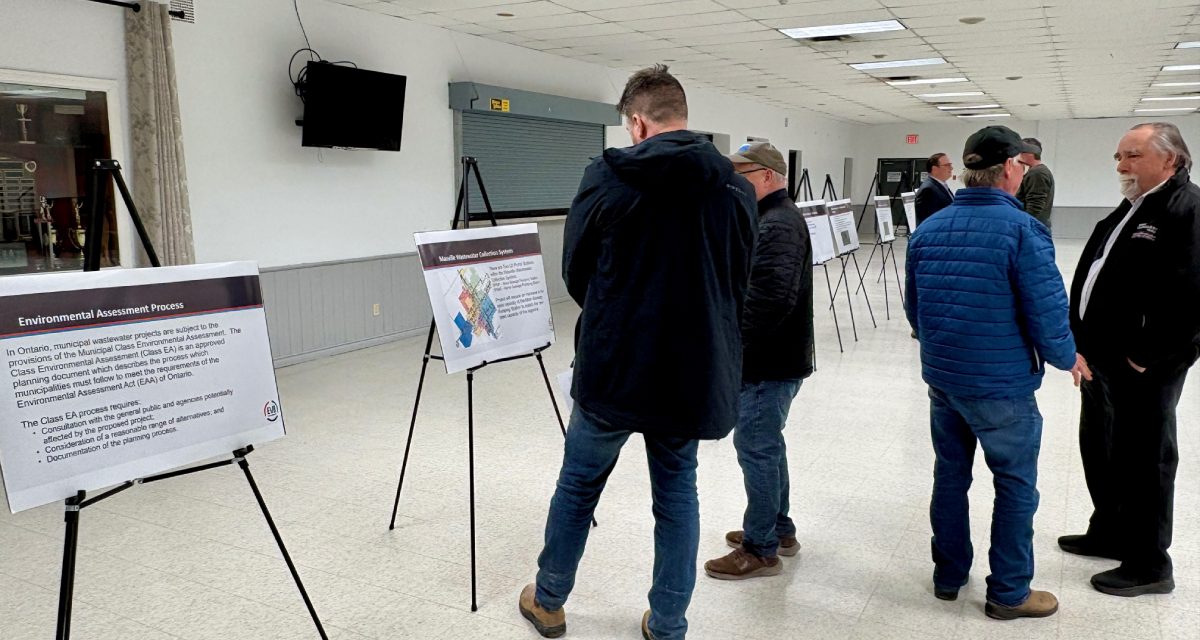
On Tuesday, March 3, the Township of North Glengarry, alongside EVB Engineering, held a public consultation session at the Maxville Arena community hall to inform residents on potential outcomes for the Maxville Lagoon Expansion Project. The township owns and operates the Maxville Lagoon and is required to begin the environmental assessment process to provide increased capacity for Maxville.
Flows within the collection system have increased and are approaching the lagoons’ rated capacity. The consultations are mandatory as part of the Ontario Municipal Class Environmental Assessment process.
North Glengarry Director of Public Works Timothy Wright said the Maxville lagoons were built before updated federal effluent regulations came into force, and the township was “grandfathered in” under older standards. He explained that increased wastewater flow has triggered regulatory requirements, requiring the township to host public consultations before moving forward with the project.
“Once you reach a certain amount of water coming into the system per day, it triggers that you have to do an environmental assessment. The municipality doesn’t have a choice,” Wright said. “Now that there’s more flow, we have to change it. We have to add that extra technology.”
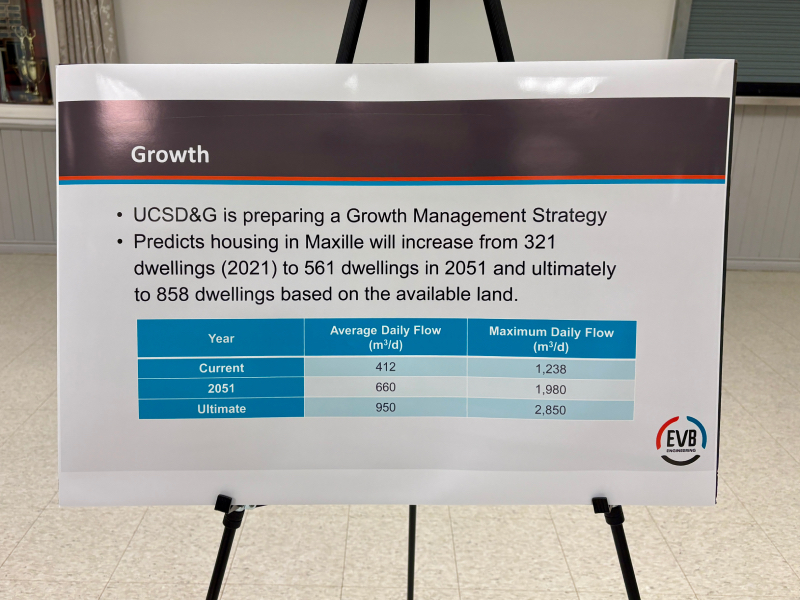
Wright cited the Maxville Water Project as having expanded access to municipal water, resulting in more wastewater entering the sewer system: “Giving people more access to water means there’s more water that flows into the sewer.” He said that rainfall and snowmelt also contribute to inflow levels.
Changes being considered include adding a polishing system to improve effluent quality and expanding capacity while contractors are mobilized. Wright said, “If you’re going to get the contractors, they’re going to come in and do this work; it’s a good time to look at capacity as well.”
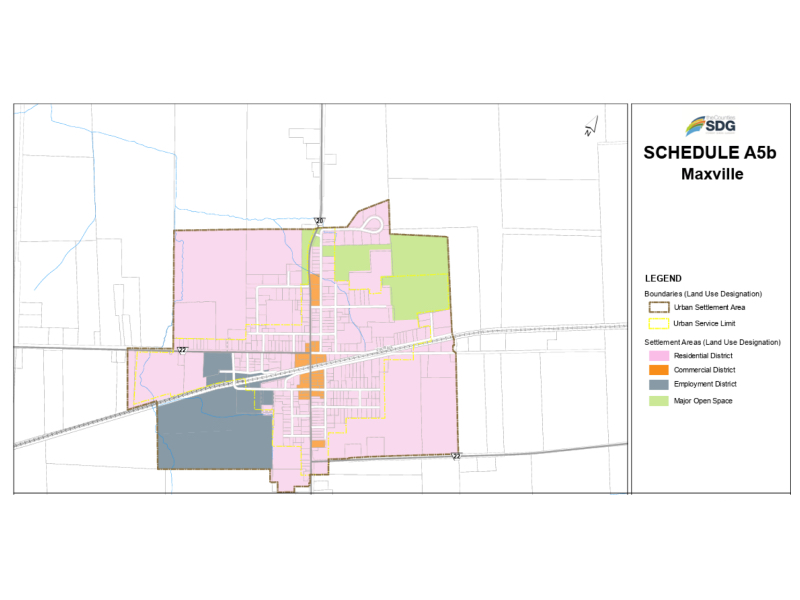
Wright said the timing presents an opportunity to address both regulatory compliance and long-term capacity planning at once. He noted the township reviewed planning maps and considered the full build-out of vacant lots within Maxville’s settlement boundary as part of the assessment.
“If everyone who has an empty lot decided to build something tomorrow, we want to make sure we’ve got enough capacity for them,” Wright said.
No major concerns were raised by residents at the public consultation, and an additional consultation is tentatively planned for May 26, 2026.
During the session, consultants outlined three primary servicing options for council’s consideration.
Of the options available to the township, increasing discharge frequency would include introducing a fall discharge period. It would require an increase in capacity, with aeration added to lagoon cells, an intermediate pumping station to transfer lagoon effluent to polishing systems, and a polishing system similar to what will be used in the Alexandria Lagoon. Construction costs would be approximately $11.8 million.
The second option would expand the existing Maxville Lagoon, increasing both cells by 33 per cent and requiring upgrades similar to those outlined in the first option. The estimated construction costs for this option would be $14.7 million.
The last viable option, though not recommended by EVB and the Township, would be constructing a new mechanical plant on the north property. This option would not reuse existing infrastructure and would encroach on setback limits to nearby residential properties, raising potential noise and odour concerns. Construction costs for this option are estimated at $16 million.
While no funding commitments have been announced, Wright said similar wastewater infrastructure projects have historically received up to 80 per cent provincial funding, including the recent Alexandria Lagoon project.
Those with questions or wishing to be added to the study mailing list should contact Wright at 613-525-1110 ext. 252 or [email protected], or EVB Engineering Project Manager Marco Vincelli at 613-935-3775 or [email protected].
