


Numerous dairy nutritionists, farmers, and producers attended the Eastern Ontario Dairy Days in St-Isidore on Wednesday, February 11, marking the first of two days focused on all things dairy. Attendees visited the St-Isidore Recreation Centre throughout the day to learn more about dairy market trends, Milk Fever prevention, and the future of dairy farming while connecting with exhibitors.
The second day of the event took place at the North Grenville Municipal Centre in Kemptville on Thursday.
The program featured Chief Business Officer Kristin Benke from Dairy Farmers of Ontario, who discussed dairy market trends and updates to the P5 payment policy. Benke noted strong growth in the butterfat market, though it is being outpaced by the protein market.
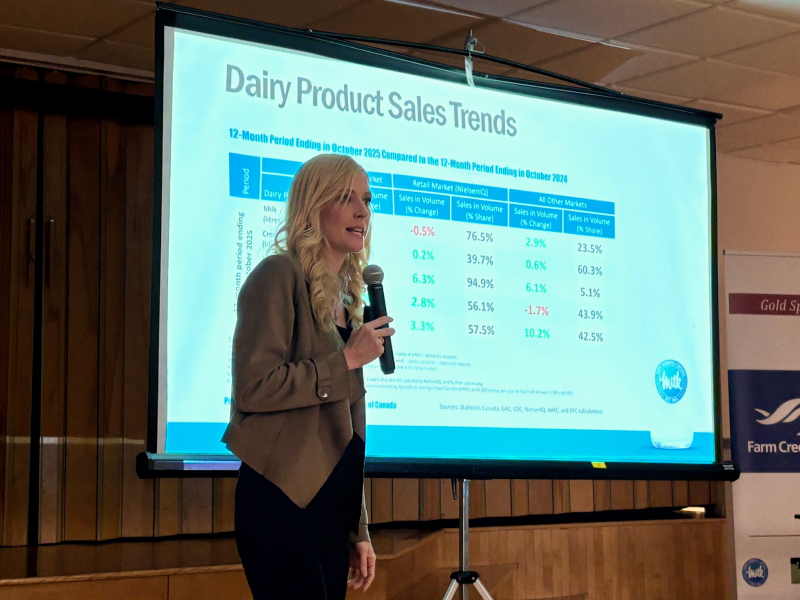
Benke explained that high-protein and protein-enriched dairy products have seen significant growth, driven by changing demographics and dietary trends. She added that high butter and cheese stock levels limit the need for extra butterfat production, encouraging farmers to diversify into other dairy products.
Benke also highlighted that Canada’s post-pandemic population growth has shifted dietary preferences. She noted that while fluid milk consumption has declined, interest in higher-protein products, such as yogurt, has increased. Benke said most of these products are made in the P5 sector, primarily in Ontario and Québec.
Protekta Research and Technical Director Meghan Connelly spoke about the importance of monitoring and maintaining phosphorus levels in cattle. She explained that preventing Milk Fever requires careful monitoring of dietary phosphorus, which is as critical as monitoring potassium.
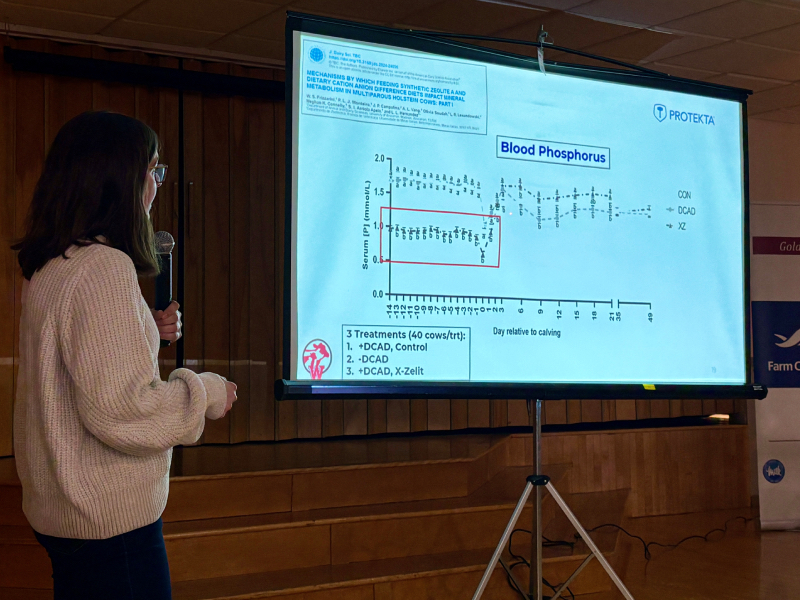
Connelly recommended Protekta’s X-Zelit to maintain phosphorus levels and improve blood calcium in cows at calving. She claimed that X-Zelit use reduces Milk Fever incidence to less than one per cent in mature cattle.
The program also featured talks on the future of dairy technology by Lactanet Canada Chief Executive Officer Neil Petreny, and the future of dairy processing by President and Chief Executive Officer of the Dairy Processors Association of Canada, Mathieu Frigon.
Petreny discussed the evolution of technology on dairy farms and the challenges producers may face as technology advances. He noted that over the past 20 years, innovations in cattle housing, smartphone connectivity, sensor and automation systems, and genetics and reproduction have helped the dairy industry flourish.
Looking ahead, Petreny highlighted potential technologies over the next 15 years, including advanced milk analysis, bulk tank sampling improvements, enhanced sensor equipment, and increased use of video and artificial intelligence applications on farms. He also warned about cybersecurity risks as farm technology advances, noting producers could lose access to critical data and operating systems.

Frigon highlighted the role of dairy processors, stating, “Canada’s dairy processors create jobs for more than 24,000 Canadians in over 470 facilities across the country, being the second-largest food manufacturing industry, and contributing more than $16 billion to Canada’s GDP per year.”
He added that the industry produces high-quality products for diverse applications while continually evolving to meet stringent food safety standards and consumer expectations.
