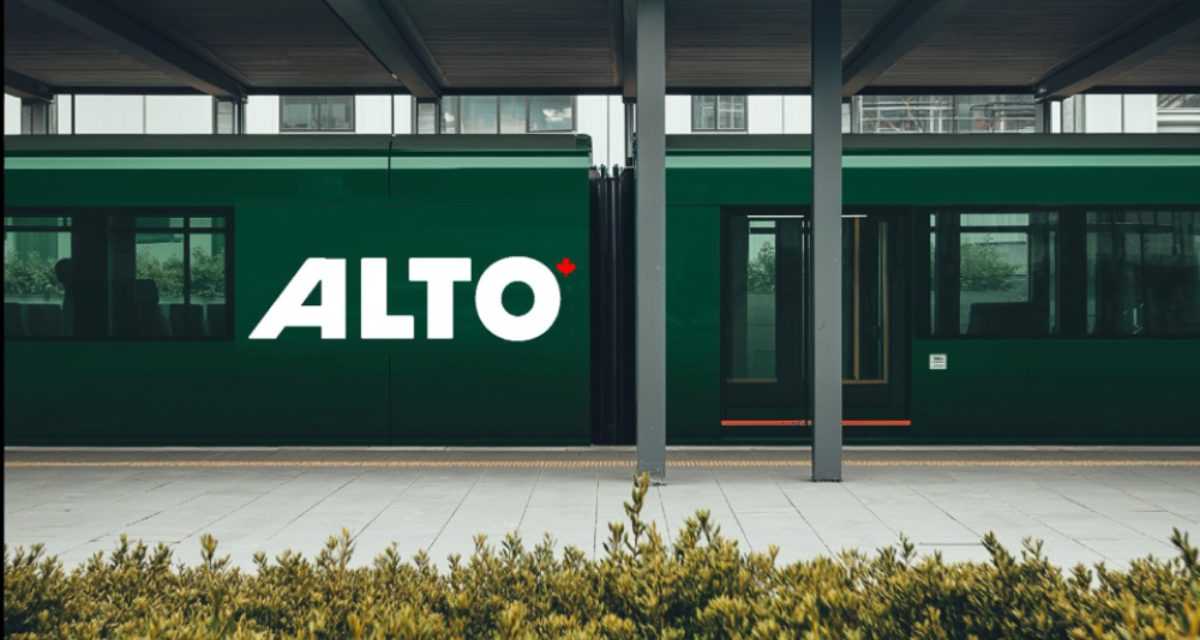
When people hear the words high-speed rail, they are likely to picture big cities, fast trains, and major transportation infrastructure — ideas that can feel far removed from everyday life in smaller communities. But in designing and building Canada’s first high-speed rail network, Alto has more in mind: it will connect people by bringing their communities closer together, support local economies, and create opportunities in places like Vankleek Hill.
What is Alto?
Alto is Canada’s first high-speed rail network, which will connect Toronto to Québec City along a corridor that is home to nearly half of Canada’s population. Spanning nearly 1,000 kilometres, the network will provide a fast, frequent, and reliable transportation option that will complement air and road travel.
Alto’s objective is to generate solid public value: increased mobility, stronger economic connections, a cleaner and low-emission travel option, and a transportation system built for future generations.
Why high-speed rail and why does Canada need it now?
The Toronto–Québec City corridor is Canada’s most populous region, and it’s growing at a pace our current intercity transportation systems can no longer support. More than 18 million people live here today, and that number is expected to reach 24 million by 2041. Highways are increasingly congested. Airports are under pressure. Travel times are unpredictable. And the country’s productivity is taking a hit as a result.
High-speed rail offers a practical solution. By moving more people more efficiently between cities and regions, it reduces traffic congestion, lowers greenhouse gas emissions, and spurs economic growth by opening up new work, education, leisure and housing opportunities.
Around the world, the benefits of similar networks are well established. France, Japan, Spain, and Italy have demonstrated that when thoughtfully designed and integrated with local transit, high-speed rail improves quality of life, strengthens regional economies, and reduces reliance on cars and short-haul flights.
The incentives are clear, and now is Canada’s time to seize the opportunities of high-speed rail. Alto will create a system tailored to our geography, our communities, and our climate that creates lasting economic and environmental benefits.
What this means for Eastern Ontario and small communities
For communities across Eastern Ontario, Alto can unlock real, tangible benefits:
- Stronger local economies through increased tourism, business travel, and investment, benefiting community businesses and suppliers
- New employment opportunities with more than 50,000 jobs created over 10 years during construction and more than 5,000 once the network is fully operational
- Improved access to education, employment, healthcare options, and services for youth, seniors, and workers
A nation-building project
Beyond mobility, high-speed rail is a major economic investment. Alto’s projections indicate the future service could generate $24.5 billion in annual economic impact, which represents 1.1% of Canada’s GDP.
Building the network will also require vast quantities of steel and other essential materials for rails, structural beams, catenaries, stations, and other core infrastructure. Few modern Canadian projects have generated an industrial demand of this magnitude. For Canada’s manufacturing sectors, it is a rare chance to expand capacity, attract new investment, and innovate for the future.
Alto will not only deliver a new mode of transportation, but also build up the country’s expertise, support businesses and help position Canada for long-term growth.
Listening first: Why community input matters
Alto’s approach is built on transparency, engagement, and collaboration.
Decisions about the network’s design and construction will be informed by technical expertise, environmental studies, Indigenous knowledge and public input. As it will lend important perspective on local priorities and potential impacts, community feedback will play a crucial part in how the project evolves.
Public consultation in Vankleek Hill on January 29, 2026
Residents of Vankleek Hill and nearby communities are invited to participate in an upcoming public open house on January 29.
At the session, community members can expect to:
- Learn more about Alto, the High-Speed Rail Network, and where the project stands today
- Speak directly with Alto team members and representatives
- Ask questions and share local knowledge and input
- Learn how feedback is collected and how it will be reviewed and incorporated into planning
These conversations help ensure the project reflects the realities of the communities along the corridor.
Details about the consultation process, including locations and schedules, are available on Alto’s website.
Looking ahead together
For Alto, success means building more than tracks; it means building trust.
Community participation, especially at this early stage, is essential. Your perspective matters.
Be part of the conversation and help shape the future of transportation in Canada!
Meet us at the Vankleek Hill Community Centre from 11 a.m. to 3 p.m. and from 5 p.m. to 9 p.m. All the details are here.