

On Monday, November 10, North Glengarry council reviewed a presentation from ALTO, a Crown corporation planning a high-speed rail network along the Toronto—Québec City corridor, and discussed the potential challenges and benefits the line could bring to the region. ALTO is currently in the development phase, with parts of the railway expected to be operational by 2037.
ALTO Manager of Community Relations in Ontario, Alexis Doyle, spoke to council on the importance of investing in the stagnating economic corridor, noting that rising transportation costs and limited infrastructural capacity are hampering Canada’s ability to compete with fellow G7 countries.
“The ALTO project aims to tackle the escalating costs of transportation between major hubs like Toronto and Montréal and reduce greenhouse emissions. Current infrastructure along the corridor cannot handle growing demand and congestion caused by rapid population growth,” Doyle said.
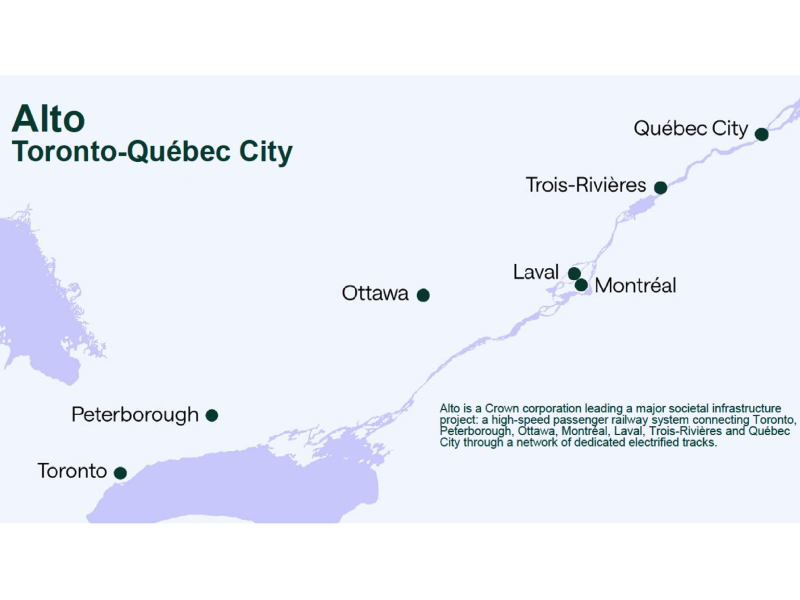
Inter-city stations are planned at seven major hubs in Ontario and Québec: Toronto, Peterborough, Ottawa, Laval, Montréal, Trois-Rivières, and Québec City. The train will operate on nearly 1,000 kilometres of dedicated, electrified track, reaching speeds of more than 300 km/h and serving more than 24 million people.
Doyle said that, during the construction phase, the project will create more than 50,000 jobs. Once operational, ALTO estimates the project could contribute roughly 1.1 per cent of Canada’s annual Gross Domestic Product (GDP), or approximately $24.5 to $35 billion, by improving productivity, workforce participation, and tourism.
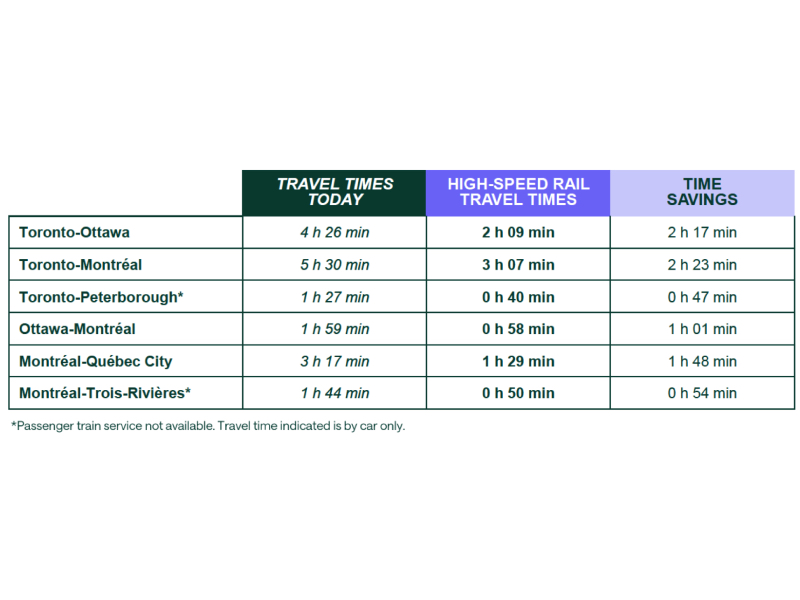
Mayor Jamie MacDonald expressed support for the project but voiced concern that regional VIA Rail stops, including Alexandria, could be affected or removed entirely.
Deputy Mayor Carma Williams echoed these concerns, saying, “We are constantly faced with questions on how to make sure that, as a rural municipality in Eastern Ontario, we’re not being left out of the picture when it comes to economic and transportation development.”
Doyle responded, “We do not see ourselves competing with VIA Rail but rather a complementary service option alongside their offerings.”
Additional municipal and public consultations will take place over the coming years to gather further input on the project.
