The Review has always been focused on news in Prescott and Russell counties, but both world wars affected the region because area citizens served in the military. The war affected the local economy, including agriculture and manufacturing. Editions of The Eastern Ontario Review, as it was known during both world wars, included local stories about the war’s impact each week. Topics generally included in which capacity residents were serving, bond campaigns, Red Cross campaigns, and sadly, casualties involving residents. Also, in the days before television and internet, even local newspapers ran stories from wire services or reprints of stories in city daily newspapers, explaining recent developments in the war situation.
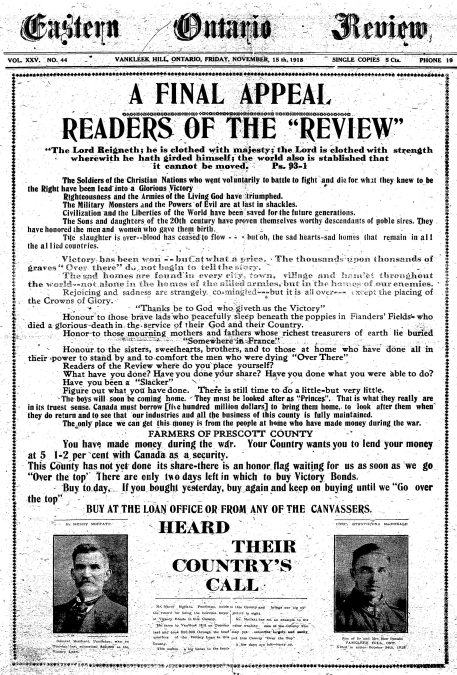
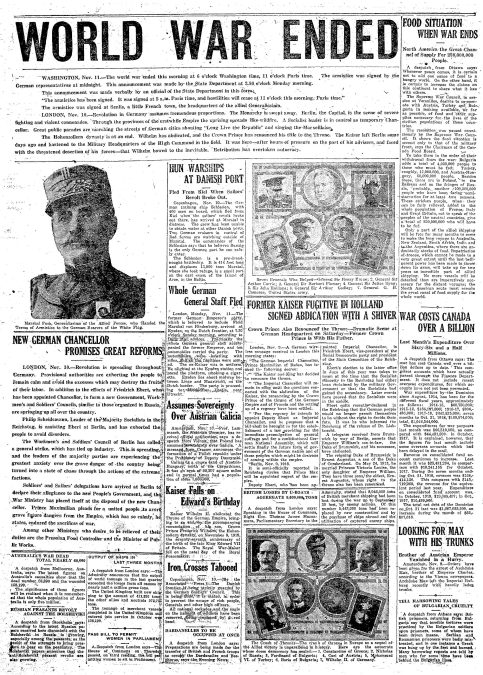
World War One, originally known as the Great War, ended on Monday, November 11, 1918. In those days, The Review was published on Fridays. The Friday, November 15 edition of The Review curiously did not have a front page covered with stories about the end of the war. Instead, it was a full-page appeal with heavy patriotic and religious themes requesting readers to keep purchasing Victory Bonds so the government could afford to demobilize Canadians serving in Europe and bring them home. A large headline proclaiming the end of the war did not appear until page six, accompanied by wire service content. That’s called burying the lead in the news business today!
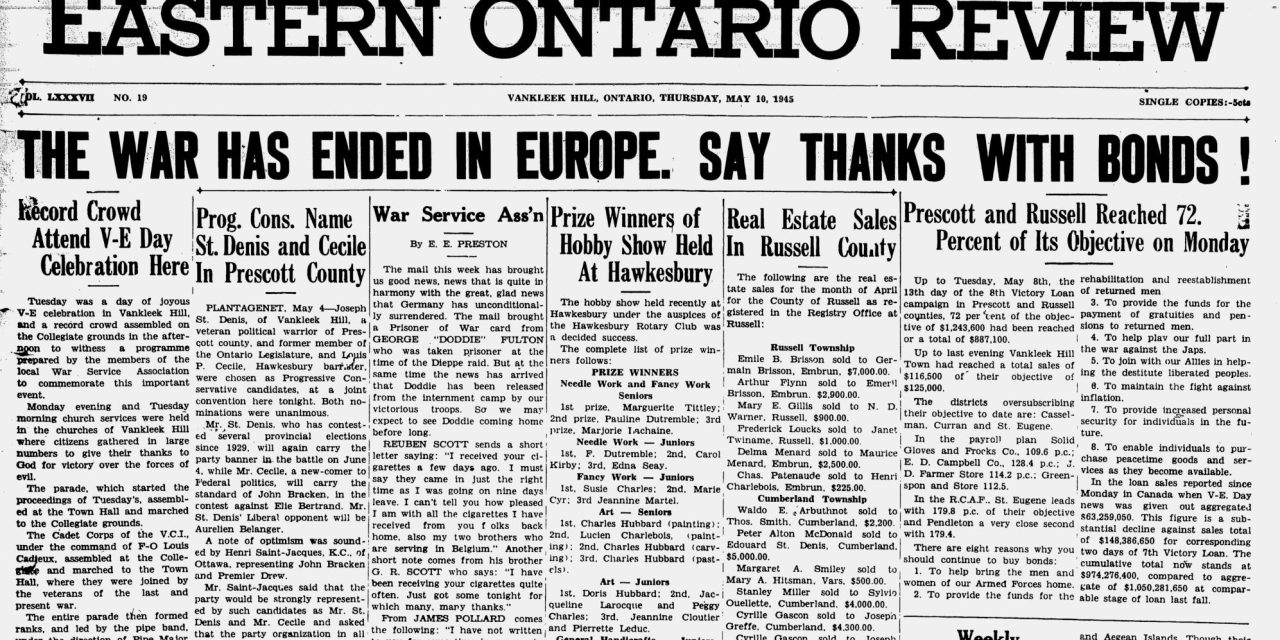
World War Two ended in Europe, 80 years ago, on May 8, 1945. The Review had switched to Thursday publication by then and the front page of the May 10 edition included a large headline proclaiming the end of the war, but for the public to keep buying bonds. Wars are expensive and bills still need to be paid.
A story down the far-left column on that same front page explains how Vankleek Hill celebrated the news of victory in Europe. A parade went from the town hall to what was the original Vankleek Hill Collegiate Institute (VCI) where an audience of about 2,000 people participated in a ceremony.
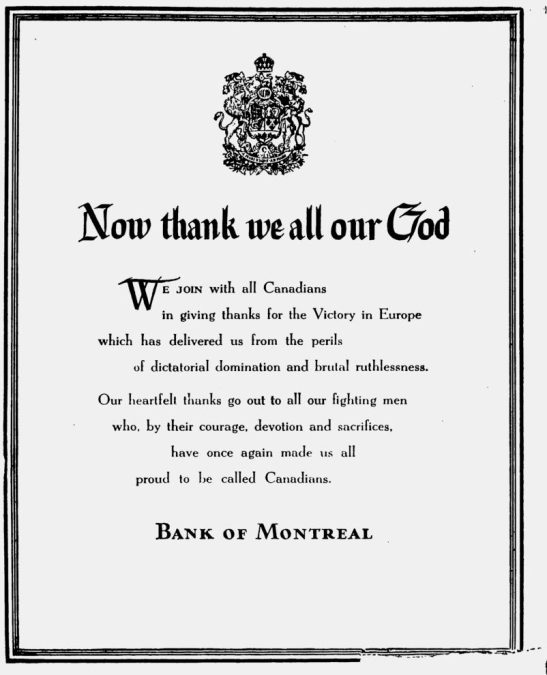
“Monday evening and Tuesday morning church services were held in the churches of Vankleek Hill where citizens gathered in large numbers to give their thanks to God for victory over the forces of evil.”
The mood of the celebrations was not all joyful. There was loss, and it was remembered during the gathering at VCI.
“There was a tense moment of silence when tribute was paid to the boys who had made the supreme sacrifice. The pipers played a lament, the cadets presented arms, and the standard bearer, Albert Seguin, dipped the flag in homage.
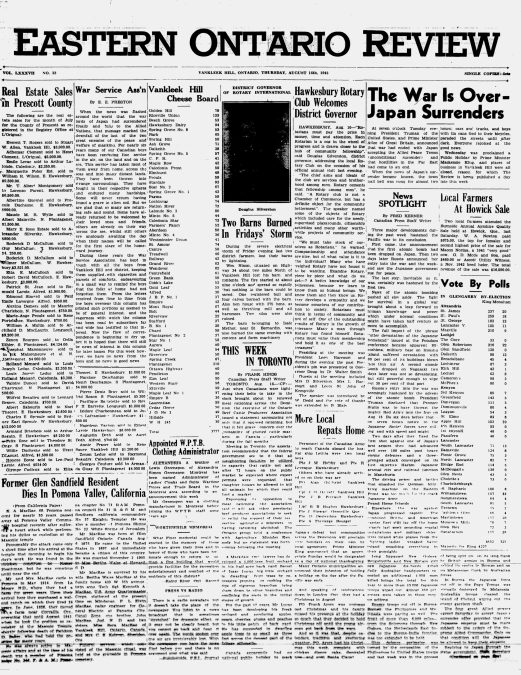
World War Two with Imperial Japan continued for three more months, ending on Tuesday, August 14. The Review was supposed to be published on Wednesday, August 15, but Prime Minister William Lyon MacKenzie King had declared Wednesday a public holiday, so The Review appeared on Thursday, August 16.
The mood around Vankleek Hill was more celebratory than it had been in response to victory in Europe.
“When the news of Japan’s surrender became known, the town hall bell was rung for almost two hours; cars and trucks, boys with tin cans tied to their bicycles, paraded the streets until after dark. Everyone rejoiced at the good news,” said a story on the front page of The Review titled The war is over—Japan surrenders.
From The Review Archives