
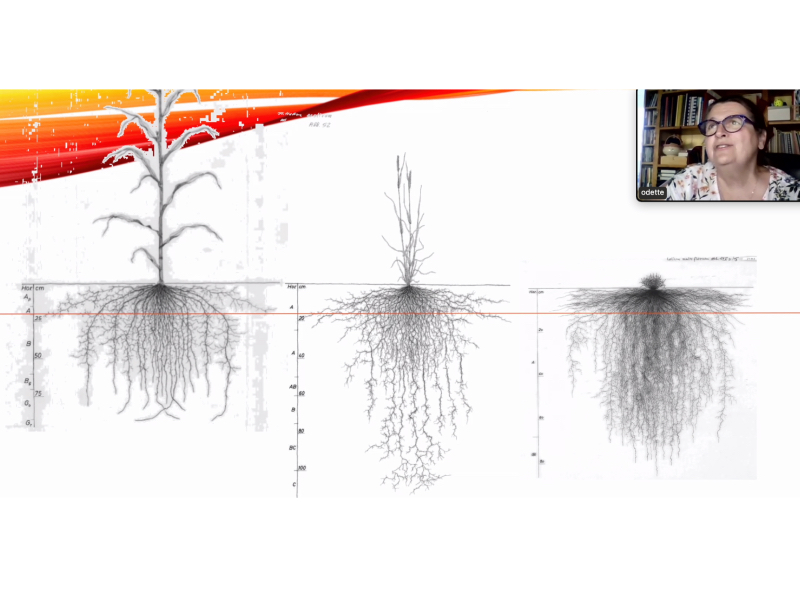
Odette Ménard, with over 35 years of experience in soil science and research, led a video conference discussion on soil health and practices on Wednesday, May 28. The session was hosted in partnership with the Québec Farmers’ Association (QFA) and discussed topics including the role of earthworms, the importance of root systems, and strategies for improving soil health in agriculture.
Ménard has been an agriculturalist with the Québec Ministry of Agriculture, Fisheries, and Food (MAPAQ) since 1988 and became a member of the Soil and Water Conservation Hall of Fame of Canada in 2005. She received the Medal of the Order of Agricultural Merit of Québec and was selected as a Nuffield scholar in 2022.
Ménard opened the discussion by posing a question to the group: “Why was the plow invented?” After some brief responses, Ménard concluded that plows were originally intended to stimulate the soil, control weeds, and improve surface drainage for a larger yield.
Throughout the session, Ménard emphasized that improving soil health is not about quick fixes, but rather about observation, adaptation, and respect for the ecosystem beneath the surface. She challenged long-held practices about tilling, soil biology, and machinery use, requesting farmers to rethink their relationship with the soil.
One key takeaway focused on the role of earthworms and their contribution to healthy soil and agricultural production.
Ménard explained that the disappearance of earthworms is just as serious as climate change because they play a central role in rejuvenating soil. Earthworms aerate and deepen the soil, recycle organic matter, stimulate microbial life, and improve the overall structural stability, all of which help root systems access nutrients more efficiently.
She added that a strong earthworm population can also reduce surface runoff, improve drought resilience, and make fields more resistant to erosion. Without them, Ménard said, it becomes a noticeable sign of degraded, compacted, or biologically poor soil.
To aid farmers in remembering healthy soil requirements, Ménard introduced CRO2P: Cover, Roots, Oxygen, and Porosity.
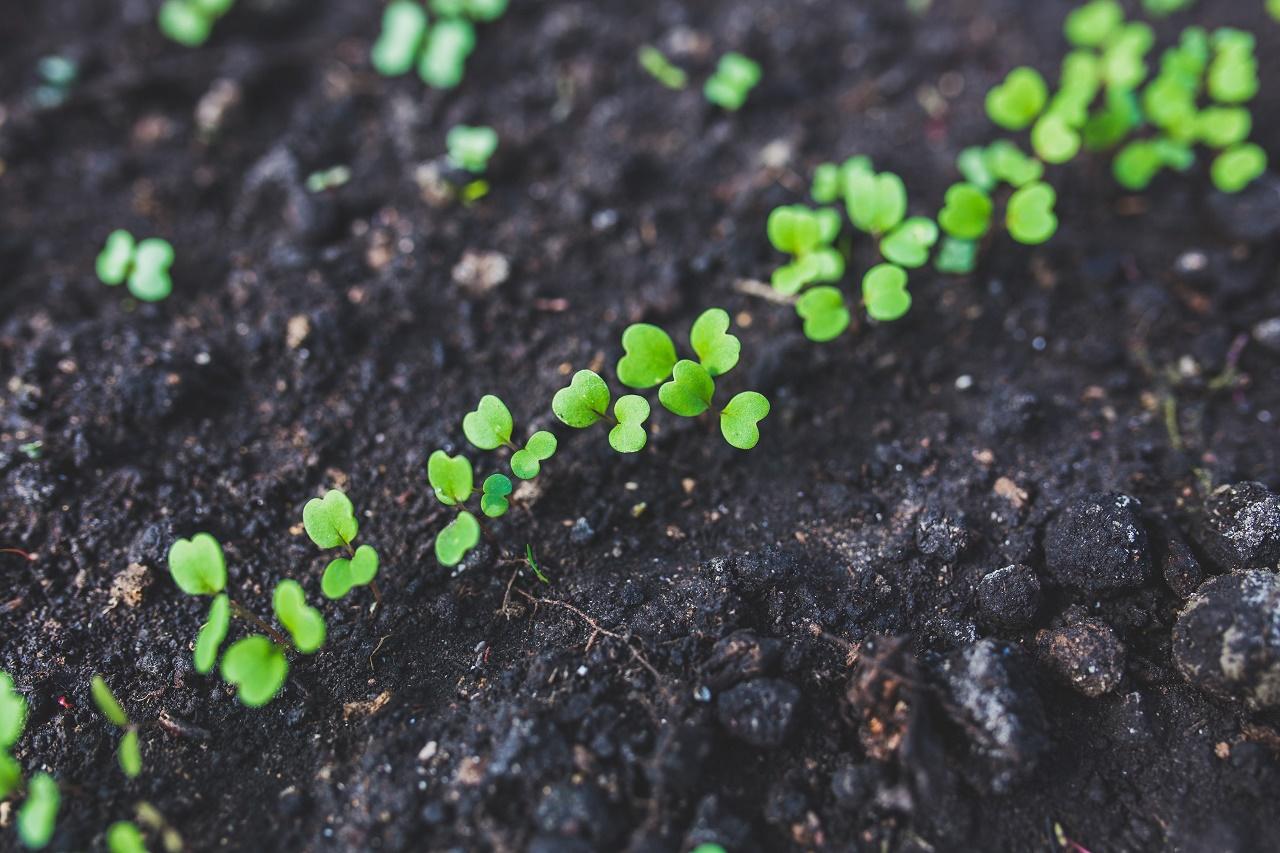
Covering crops protects against erosion and feed microbial life; roots create deep channels and distribute glucose into the soil; oxygen supports microbial processes; and porous soil ensures water movement and root growth.
By neglecting to support any of these components, farmers risk destabilizing the ecosystem and a reduction in yields over time.
According to Ménard, healthy soil is teeming with life. A single spoonful of healthy soil can contain up to a million bacteria, two million actinobacteria, three million fungi, dozens of micro-arthropods, and an earthworm.
Each of these plays a critical role in crop health and yield. Ménard said that every plant sends sugars (glucose) through its roots to feed the microbial life beneath the surface, acting as a complex and mutually beneficial exchange that drives nutrient cycling and provides the necessary building blocks for plant life.
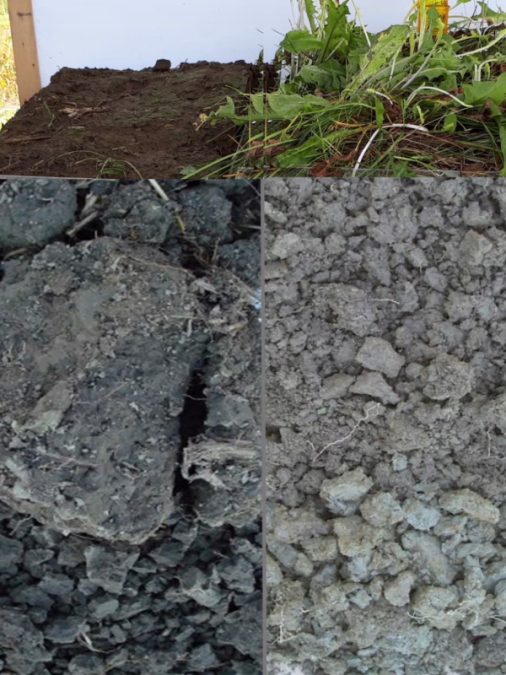
To check for soil health and quality, Ménard strongly suggested digging a simple hole measuring 30-inches deep by 30-inches wide. She encouraged farmers to dig and examine their own holes rather than relying solely on consultants.
Farmers can inspect their soil by examining the colour, odour, structure, and root development firsthand, ensuring that all aspects of CRO2P are being met and implementing changes where needed.
Lastly, Ménard discussed modern equipment and machinery’s impact on soil health. She said that although modern equipment may boost efficiency, it can come at a cost to the vitality of the soil.
Heavy machinery compresses the soil, especially when the weight per wheel and tire air pressure is overlooked. The compaction leads to limited oxygen flow, reduces overall porosity, and significantly hinders root growth.
Ménard recommended regularly checking and tracking these measurements as a way to protect soil structure and increase yields.
Soil is part of a farmer’s business investment and is also a scientific concern. Ménard explained that better soil ultimately leads to better crops, fewer losses, and more resilience in the face of climate change.
“It’s about long-term thinking with consistent observation and ensuring the ecosystem beneath our boots is thriving,” Ménard concluded.
