
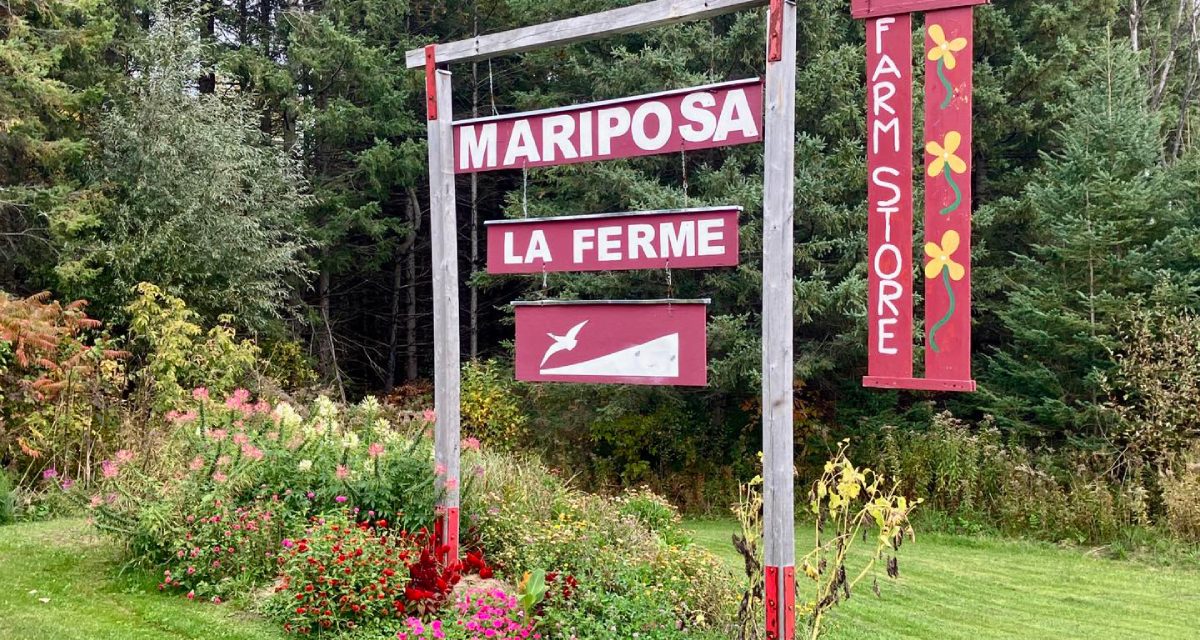
At 19 years old, Ian Walker transitioned from life on a hobby farm with his parents in Rockland to farm ownership. Today, alongside his wife Suzanne Lavoie, the couple operates Mariposa Farm, located on Highway 17 in Plantagenet. The farm is a sustainable and diversified business shaped by Walker’s more than 46 years of farming experience.
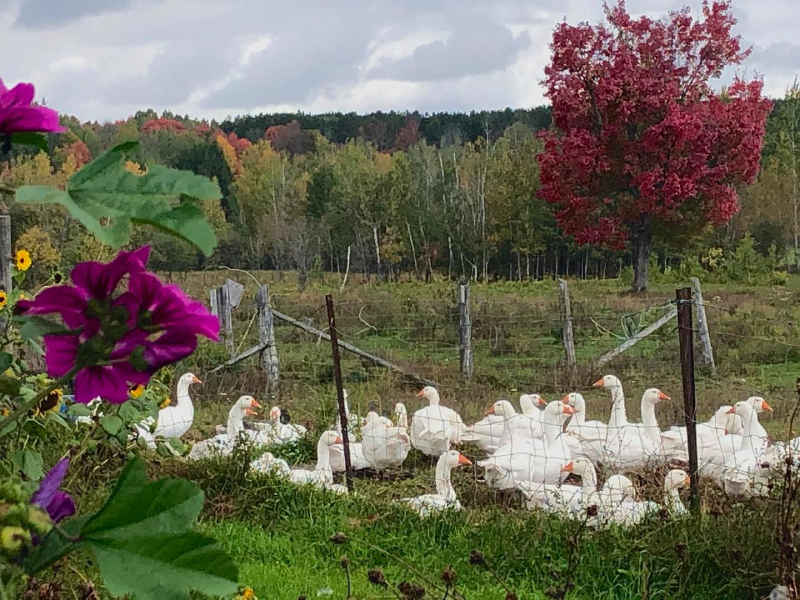
The farm raises pigs, ducks, geese, and beef cattle, and also produces a variety of vegetables and specialty items like cheese, maple syrup, and honey.
“I often think of my grandchildren and their future. There were about 15 years when I didn’t use a tractor because of the environmental impact they had. I used horses then, though this was less efficient,” Walker said. “We now have absolutely no tractors on the farm, except the lawn mower. If we ever need to use one, we have neighbours who would happily supply us with one for a while.”
To further reduce environmental impact, Walker also proposed the idea of communal tractors—where four or five farmers jointly purchase, maintain, and operate a single machine.
“There’s little to no money to be made from small-scale farming operations,” Walker said. “That’s why Suzanne and I have diversified our farm to incorporate other aspects of the business.”
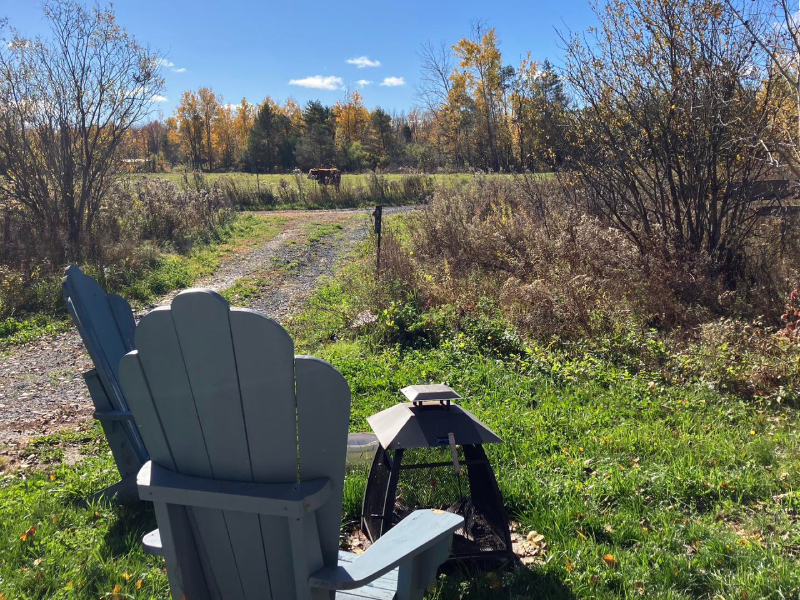
As part of their diversification efforts, Mariposa Farm features several key agrotourism initiatives, including cabin rentals through Airbnb, year-round farm visits on Saturdays, garden plots for individuals to grow their own food, and a renovated barn for events.
Similar to other farmers in the region, Walker explained that he operates numerous other businesses in addition to the farm to remain financially viable, including a distribution business which sells Mariposa’s meat to Ottawa residents.
Walker expressed frustration with regulatory oversight, stating, “Organizations like the CFIA (Canadian Food Inspection Agency) seem to always put sticks in our wheels.”
Additionally, Walker said that he does not feel supported by any level of government. Rather, he perceived the government as a barrier to being profitable and efficient.
“It seems that government agencies don’t really want small farmers like us kicking around or bothering them. This is true for financing regulations as well—they’re just unnecessary. Furthermore, as a councillor for Alfred and Plantagenet, I can say that the farmers in the region are not impressed with the lack of perceived effort by different governments and the amount of time wasted on bureaucracy,” Walker stated.
He continued, “I’m trying my best as a councillor to bring an environmentally protective by-law in place for our township. But as you can guess, it’s not a straightforward thing to do. I’m experiencing a lot of barriers from the township administration in particular.”
The initiative would seek additional protection for the South Nation River.
At Mariposa Farm, Walker has installed natural filters in the form of wetlands that he has created over the years. He suggested using this as a framework for a potential by-law, adding buffer zones where trees can prevent the detrimental effects of windstorms through massive fields of soybeans.
Walker believes individual choices matter just as much as on-farm practices.
For those off the farm, Walker suggested individuals purchase their food from local producers.
“I just encourage everybody to buy as local, as much as possible. You’re not only helping the environment and getting products from your neighbours, but you’re also stimulating the local economy we farmers live off,” Walker concluded.
For more information about Mariposa Farm’s products and agrotourism activities, or to make a booking, visit: http://mariposa-duck.on.ca.
