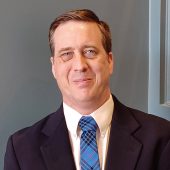


The mayors of five local municipalities will soon have more authority to make decisions without the participation of council. On Wednesday, April 9, Minister of Municipal Affairs and Housing Rob Flack announced the government proposing to expand so-called strong mayor powers to the heads of council in 169 additional municipalities effective May 1, 2025. The affected local municipalities are Champlain Township, the Town of Hawkesbury, The Nation Municipality, The City of Clarence-Rockland, and the Township of North Glengarry.
According to the province’s announcement, the expansion of strong mayor authority reflects the government’s commitment to streamline local governance and help ensure municipalities have the tools they need to reduce obstacles that can stand in the way of new housing and infrastructure development. The powers would allow heads of council of single- and lower-tier municipalities with councils of six members or more to support shared provincial-municipal priorities, such as encouraging the approval of new housing and constructing and maintaining infrastructure to support housing, including roads and transit.
Champlain Township Mayor Normand Riopel said he is unlikely to use the additional power as the head of council for a small municipality. He wants to include council in decision making.
Riopel said having the extra authority could be useful for mayors if there is a tied vote or absentee councillors are preventing a crucial decision from being made at a council meeting.
“I believe in strong mayor powers, but for a good reason,” he said.
Riopel said he prefers to continue making decisions involving deliberation and input from all council members.
“I believe in democracy,” he remarked.
At the next Champlain council meeting on May 1, staff will present a report explaining the strong mayor powers.
Hawkesbury Mayor Robert Lefebvre said he had not asked for strong mayor authority. He said having the ability to override decisions could be helpful in larger municipalities where wards are in competition with each other for municipal support, but all councillors in Hawkesbury are elected at-large.
Lefebvre said he would rather build bridges and obtain consensus among councillors when decisions are being made.
“I wouldn’t necessarily use these powers unilaterally. I would bring it to council. That’s my style of government,” Lefebvre said.
The Nation Mayor Francis Brière said having strong mayor authority will not change how he goes about making decisions.
“I have and will continue to have a team approach to anything that happens in the municipality, it will always be council’s will that will move us forward and not just myself trying to force my agenda forward. It’s never been my approach and that won’t change,” Brière said.
Specific strong mayor powers and duties include choosing to appoint the municipality’s chief administrative officer, hiring certain municipal department heads and establishing and re-organizing departments, proposing the municipal budget which would be subject to council amendments and a separate head of council veto and council override process, proposing certain municipal by-laws if the mayor is of the opinion that the proposed by-law could potentially advance a provincial priority identified in regulation, and vetoing certain by-laws if the head of council is of the opinion that all or part of the by-law could potentially interfere with a provincial priority.
Strong mayor powers in Ontario were first introduced in Ottawa and Toronto in 2022 and have since been expanded to 47 other municipalities.