

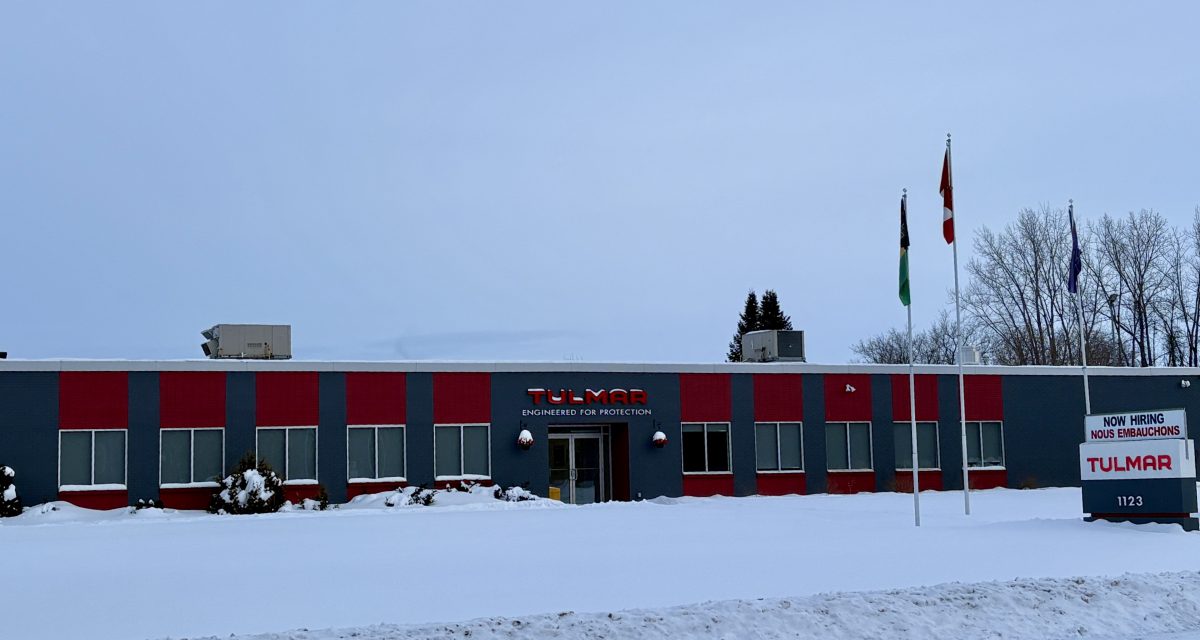
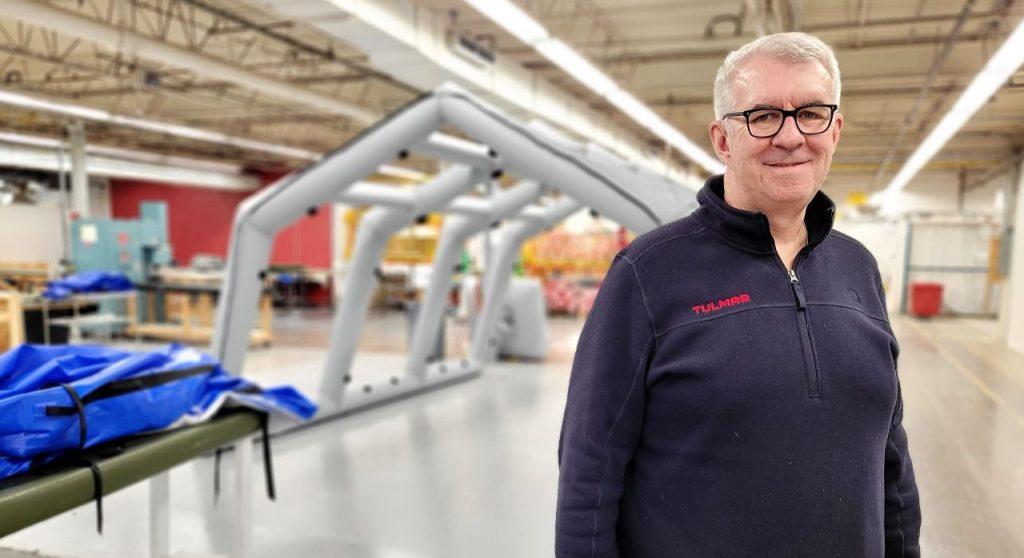
Local companies are on watch amid continued threats from US President Donald Trump to impose a 25 per cent tariff on all imports from Canada to the United States. Tulmar Safety Systems of Hawkesbury manufactures safety equipment for the aviation and defence sectors. CEO Patrick Tallon explained that while the company is watching the developments from the States, he does not believe there will be a dramatic impact on business.
“It’s not something that’s been a big concern for us. We’ve got some unique products, so I think we’d be able to pass along the cost of the tariffs, which would be taken on by our customers. In other cases, it may just delay final decisions,” Tallon stated.
Hawkesbury’s Tulmar has more than 30 years of innovation and expertise within the design, manufacturing, distribution, and service of advanced safety solutions. Numerous high-quality land, air, and sea products are produced for national defence, aviation, and civil safety industries across the globe.
Tallon explained that “about 10 per cent of our revenue goes to the United States, so we would notice it, but a lot of our expansion is in other markets. We provide products for over 160 airlines, for example, on every continent but Antarctica.”
“This is really a tax on Americans. What people have to keep in mind is that the importer pays the tariff. It’s not going to cause job loss for us. We may have some inconveniences around some suppliers, but we’re going to keep plowing ahead,” he assured.
Although the expected impact of the 25 per cent tariff would be minor, Tallon suggested that Tulmar was keeping a keen eye on the situation and will adapt when and where needed.
He also recommended that the federal government not take retaliatory measures by imposing an import tariff on raw materials coming into Canada: “Let us continue to use our existing supply chain. Don’t make this worse. I would be concerned if Canada imposed tariffs on military textiles or aviation components as well; that would be a problem for us.”
Tallon said that this is also an opportunity for provincial governments to come together and reexamine interprovincial trade barriers, alluding that provincial and trade barriers prevent simplified trade within Canada.
“I could go on for an hour about provincial barriers, trade barriers, all kinds of stuff that sometimes, it is easier for me to send my products to Europe than other provinces in the country. It’s complicated doing business within Canada,” he stated.
Tallon explained that the biggest issue right now is the uncertainty of such a large trading partner. Specifically, Tallon suggested that the “uncertainty of the next four years of the Trump administration” is something businesses are ultimately going to have to continue dealing with.
